Caroline Mazzey, Horticultural Advisor at RHS Wisley, shares the three best ways to use comfrey to make free, sustainable organic fertiliser for your garden or allotment
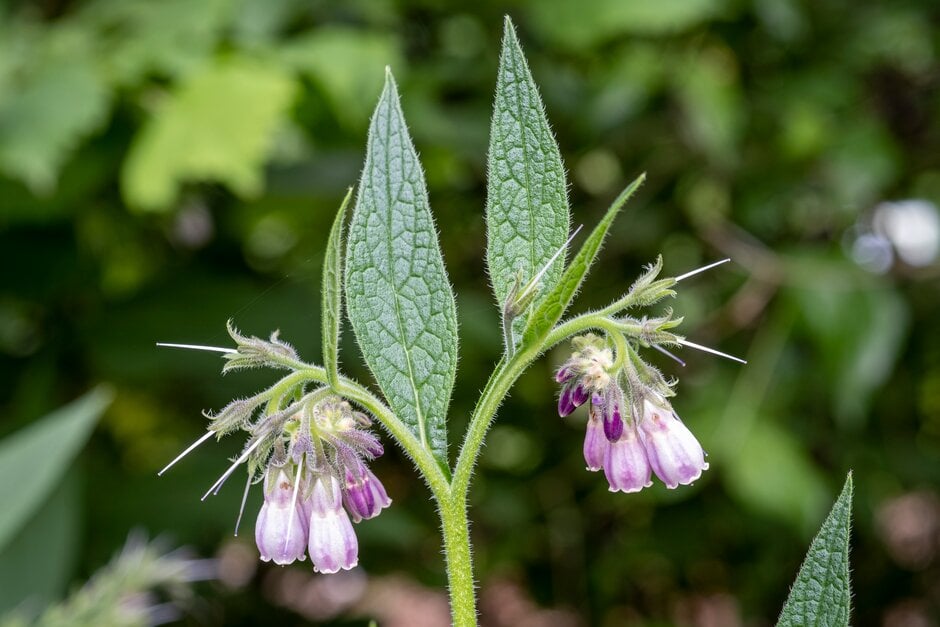
 I’ve long grown ‘Bocking 14’, the comfrey cultivar that pioneering organic grower Lawrence Hills found was the best comfrey for making plant feed. It has the highest content of the big three plant nutrients – nitrogen, phosphorous and potassium.
Lawrence ran trials for years, and ended up founding the Henry Doubleday Research Association (after the man who originally imported this type of comfrey from Russia the century before for making glue) – now re-named Garden Organic. Of all his comfrey varieties, which were methodically numbered rather than named and grew in a field outside Bocking, Norfolk, number 14 won. ‘Bocking 14’, as far as I know, is still the gold standard to this day.
It’s a mauve-flowered hybrid that rarely sets seed – so doesn’t share the vigorously spreading tendency of many comfreys. Mine has bulked up nicely over the last 25 years, so I can now give away clumps that are surplus to my needs.
 Method 1 – liquid feed
The most common way of using comfrey is to make liquid feed – a black ooze with a powerful stink. Luckily this is diluted before use, which makes it go further and not smell quite so potent.
Wearing gloves and ideally long sleeves, cut the comfrey plant to the ground with shears or secateurs. Cosily squash these into a bucket, without completely crushing them, and cover with water. Weigh the leaves down with a brick or similar to keep the leaves submerged. Leave for around three weeks, and use when the liquid is black and stinky. Dilute about one part to ten with water to use liberally when watering. Use it up promptly as it doesn’t store well.
 Method 2 – comfrey mulch
Alternatively, you can shred the comfrey leaves into small pieces and use them directly as a mulch on the soil surface around particularly hungry plants. If the weather is hot and dry, you can leave them to air dry for a few days first, and they will crumble in your gloved hands. If you don’t like the look, you can always sprinkle a little soil on top and water it to wet the nutrients into the ground.
Method 3 – enriching the compost heap
My rows of comfrey grow quite tall and end up flopping over the path, so when I get cross with them, I shear the plants off at ground level and add them en masse to the compost heap. This is actually my preferred method of using comfrey, because it’s so quick and easy, and still captures those nutrients to enhance my compost. I can do this at least twice a year, and there’s no smell!
My final suggestion is that comfrey is worth growing for the bees alone, which absolutely love it. I make sure to get the timing right for chopping it down so that I don’t suddenly remove a key nectar source. I cut down the row in staggered sections, so that some flowers remain while other plants start to regrow.
You may also be interested in:
 Look for the RHS Award of Garden Merit (AGM) when buying vegetable seed or small plants. You can also download the RHS lists of recommended cultivars.
About Andy Vernon
Andy is a Senior Horticultural Advisor based at RHS Bridgewater, finding ways to make the most of his small garden in rainy east Cheshire.