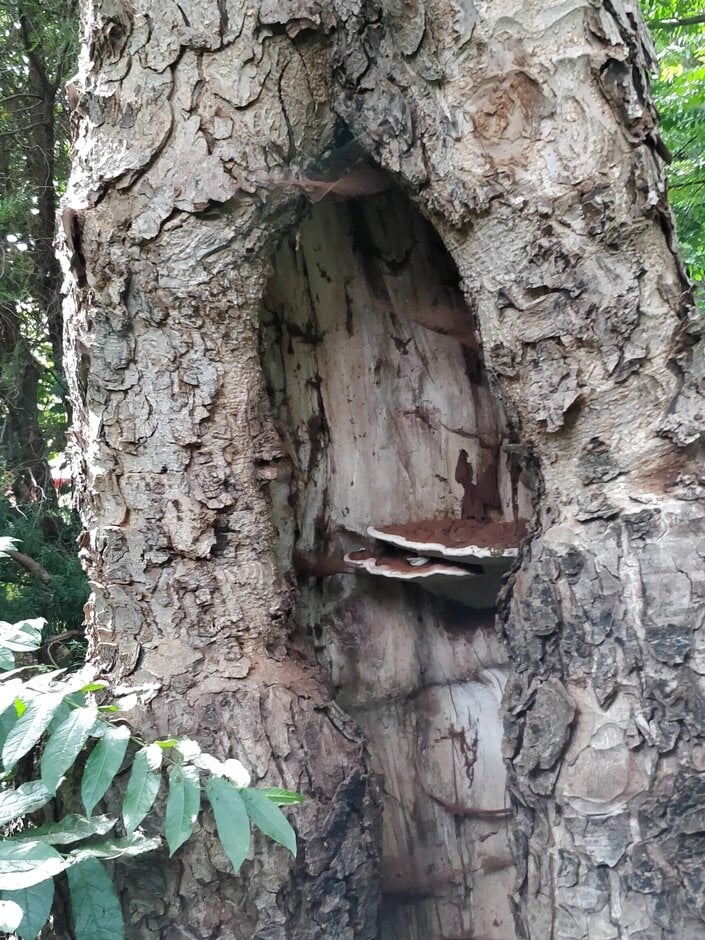


Disposing of diseased material
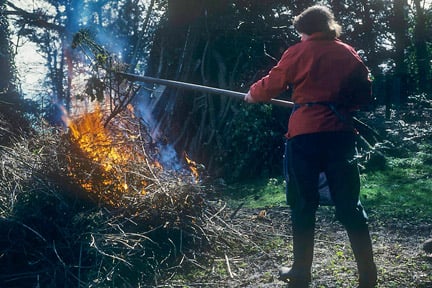
A key part of disease control within a garden is good hygiene. Infected material from plants in the garden and allotment should be removed promptly and disposed of carefully in order to limit the spread of disease.

Three species of honey fungus occur in gardens
Armillaria mellea & A. ostoyae are pathogenic and can infect healthy plants
Armillaria gallica only infects weakened plants
Infected roots become rotten, eventually killing the plant
Few plants are resistant, but stressed plants are especially susceptible
Limit its impact by removing infected plants and supporting soil and plant health

Honey fungus is the common name of several species of fungi within the genus Armillaria. Honey fungus spreads underground between healthy and infected roots or as black cords, known commonly as bootlaces and scientifically as rhizomorphs. Honey fungus mushrooms appear on well-rotted material in autumn, dropping spores which could start new infections.
The pathogenic species can attack and kill the buried parts of its host plant - roots, or . The fungus then decays the dead plant material, using it as food for several years while it finds a new host. Honey fungus root rot is the most destructive fungal disease in UK gardens.

To check whether a plant is infected with honey fungus, peel away the bark at the base. Look for a white or creamy white, paper thin layer of fungal tissue (mycelium), the consistency of the skin of a mushroom, as shown here.
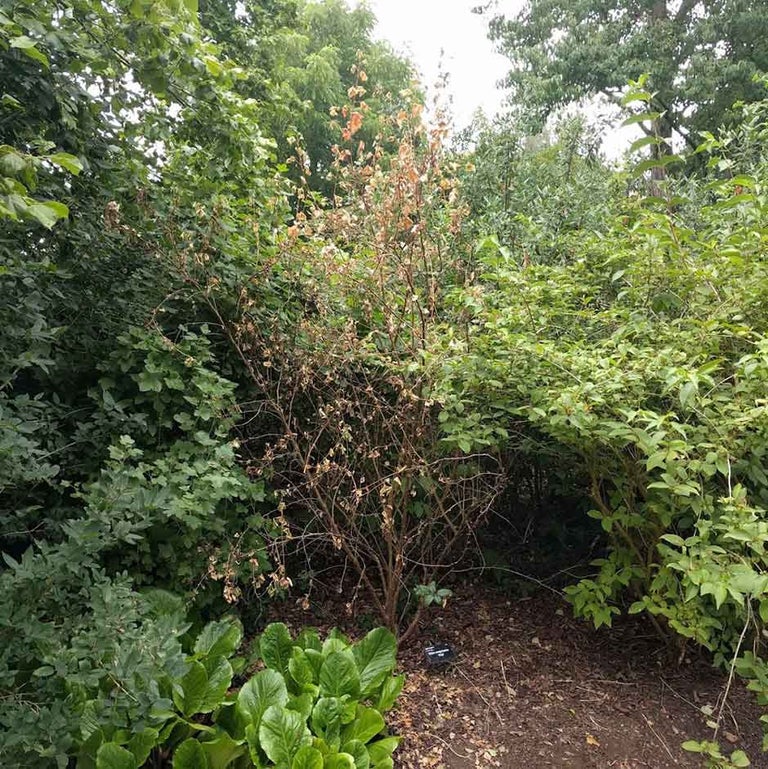
Some of the symptoms you may see:
If honey fungus is confirmed, the best approach to reduce the damage it can do to other plants is to remove as much of its food source as can be reached without damaging the roots of nearby plants. Wounded roots are open doors for the fungus to gain easy entry to nearby plants.
For a stump, this could involve grinding or digging out the trunk section and major root flare. If woody roots run under a lawn, you could uncover them and remove them too. However, if the roots overlap with the roots of other healthy-looking plants, leave them be and focus on supporting the general health of those plants instead of trying to remove every trace of the fungus. This will limit the food available for the fungus to obtain its energy from, reducing the potency of its regrowth and lowering its ability to find and infect new hosts.
Do not material colonised by honey fungus or honey fungus cords (aka bootlaces or rhizomorphs). Instead, bag material where it is found to prevent shedding infected fragments as you carry it out of the garden and add it to the black bin waste.
One honey fungus individual is the largest life form on earth, spanning over 2.4 miles across in Oregon, USA. It is estimated to be at least 2,000 years old. Such incredible survivors cannot be eradicated from a garden. Instead, gardeners should aim to minimise its ability to cause disease.
After removing an infected plant, waiting a year before replanting could help the new plant get off to the best start. Broken fragements of the honey fungus cords (aka bootlaces or rhizomorphs) will die off over time, and other recycler fungi in the soil will have a chance to establish there instead.
When replanting, choose plants that suit your garden and the care you can give it, as plants with good general health can defend against honey fungus attack. In contrast, stressed plants are easy targets for honey fungus to enter and attack their roots. Even plants that should be highly resistant to honey fungus can become infected when subjected to poor growing conditions.
Avoid the most susceptible plants and instead use plants that are rarely recorded as being affected by honey fungus. Some less affected plants include: Arundinaria (and other bamboos), Buxus sempervirens , Callicarpa, Catalpa, Chaenomeles , Chimonanthus, Cordyline, Erica, Garrya , Ginkgo , Hypericum , Jasminum, Pittosporum , Rhamnus, Sarcococca, Tamarix , and Vaccinium .
See this link for a more complete list of susceptible and less affected woody plants.
Plants are particularly vulnerable to infection during establishment. Help young plants reach maturity by ensuring they are planted at the right depth, providing a donut of mulch around the stem, watering in dry weather, and preventing competition and soil compaction.
Seven plant genera were tested experimentally for their susceptibility to honey fungus in a recent RHS PhD study. The study confirmed that Hydrangea was resistant to infection. Artemisia, Cornus , and Symphoricarpos were moderately susceptible. Buddleja , Ligustrum and Phlomis were highly susceptible. Between species of Ligustrum, L. lucidum was most susceptible, followed by L. ovalifolium, and L. vulgare was the least susceptible to infection.
A small-scale RHS experiment tested ornamental grasses and sedges for their susceptiblity to honey fungus. Two were found to be susceptible, Acorus argentostriatus and Stipa gigantea, while Carex oshimensis 'Everest' was resistant, so could be a good option for growing in areas of a garden where honey fungus is present.
Having more beneficial fungi in the soil helps to grow healthier and more resilient plants. They do this by improving the soil structure and hydration, recruiting soil fauna, releasing , and for mycorrhizae , directly partnering with plant roots. Research shows that other recycler fungi are able to outcompete honey fungus. Encourage fungal diversity to develop in your garden to make life hard for honey fungus.
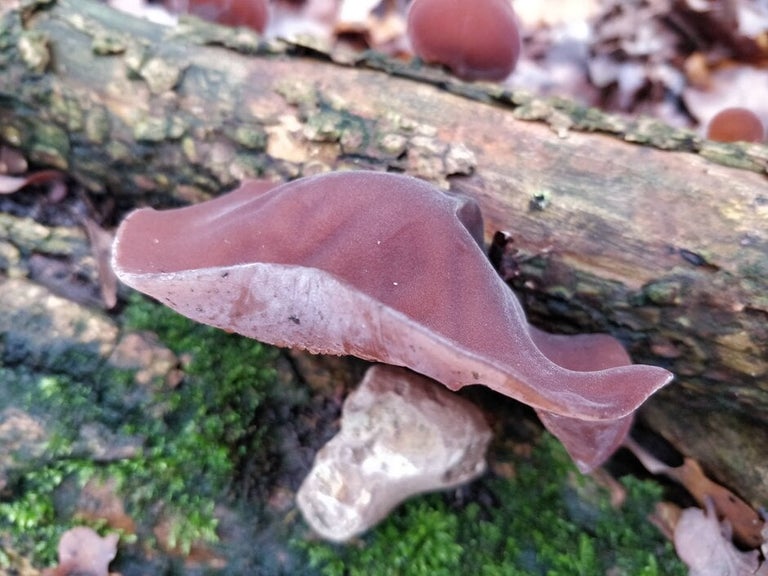
To do this, rebuild soils slowly by allowing healthy dead plant material in all its forms to rot down in the garden. To sustain the biggest range of beneficial fungi, recycle the dead wood and leaves of a wide range of plants. Avoid excessing or routine digging, as mechanical disturbance breaks up fungal networks. Leave the fruiting bodies (such as mushrooms, puffballs or jellies) of beneficial fungi be, as they are spreading spores that could form a new generation of honey fungus competitors.
The remains of plants that die from honey fungus usually only contain the fungus close to or below ground level. Rotten lower-down parts should be disposed of, but higher-up unrotten material that lacks the white fungal sheets or black cords can safely be recycled back into the garden.
Our most susceptible known host is Ligustrum (privet), but recent studies at the RHS have shown that some species of privet are more resistant than others. We would love to hear from you about what species of privet you have in your garden and how you grow it. We also want to hear if you’ve ever seen honey fungus root rot or mushrooms in your garden. The information will help us improve and verify our gardening advice.
Do you grow privet? Tell us here
You can help our research by filling in our short survey, having identified which of three common types of privet you have using the quick guide below. As privet is our most important honey fungus host, this survey will be running long-term.
How to identify your privet
Our survey aims to map the distribution of different species of privet, but you might not know what species you have growing in your garden. To help with this, please use the images below, which provide a brief description of the identifiable features of the three species featured in our survey.

Privet plants have leaves that are arranged in opposite pairs along the stem, with smooth (untoothed) margins. The flowers are white or off-white, growing at the end of the stems. A distinct feature of privet flowers is that they have four petals and two pollen-bearing stamens at the centre (see above). The fruit are small, round and purplish-black. All privet plants have white lenticels (spots) visible on the stems, although they are less visible on new shoots.

L. vulgare (wild privet) is a semi-evergreen plant, meaning that some leaves are lost in winter – this makes it more than the other species. It also has narrower leaves, which often measure between 3-6cm in length and 1-3cm in width. A distinct feature of L. vulgare is that the stems are are covered in dense, minute hairs, which are absent in both L. ovalifolium and L. lucidum. The hairs can be seen using a hand lens (see image below).


L. ovalifolium (oval-leafed privet) is a semi-evergreen plant with hairless stems and fewer lenticels (white dots on stem) than other species. Leaves are oval-shaped with quite blunt tips that are less pointed than L. lucidum, which it is likely to be confused with. Leaves range from 2.5-8cm in length and 1.5-3cm in width.

L. lucidum is an evergreen plant that does not lose its leaves in winter. It has the largest and thickest leaves of all species in our survey, ranging from 6-16cm in length and 3.5cm in width. Leaves typically have a short, sharp point at the tip, making them look more pointed than L. ovalifolium. The stems are hairless, but typically have more lenticels (white dots on stems) than the other species.
There are seven species of Armillaria in the UK. The most common species in gardens are A. mellea and A. gallica. There is a rarer occurrence of A. ostoyae. The remaining species A. cepistipes, A. borealis and closely related ringles honey fungi Desarmillaria tabescens and D. ectypa have not been found in gardens according to RHS surveys. A. mellea and A. ostoyae are the most damaging species. A. gallica is can only damage stressed plants, although more research is needed to find out how destructive it could be in the future climate.
The fungus spreads underground by direct contact between the roots of infected and healthy plants and also by means of black, root-like structures called rhizomorphs (often known to gardeners as ‘bootlaces’), which can spread from infected roots through soil, usually in the top 15cm (6in) but as deep as at least 45cm (18in), at up to 1m (3¼ft) per year. It is this ability to spread long distances through soil that makes honey fungus such a destructive pathogen, often attacking plants up to 30m (100ft) away from the source of infection.
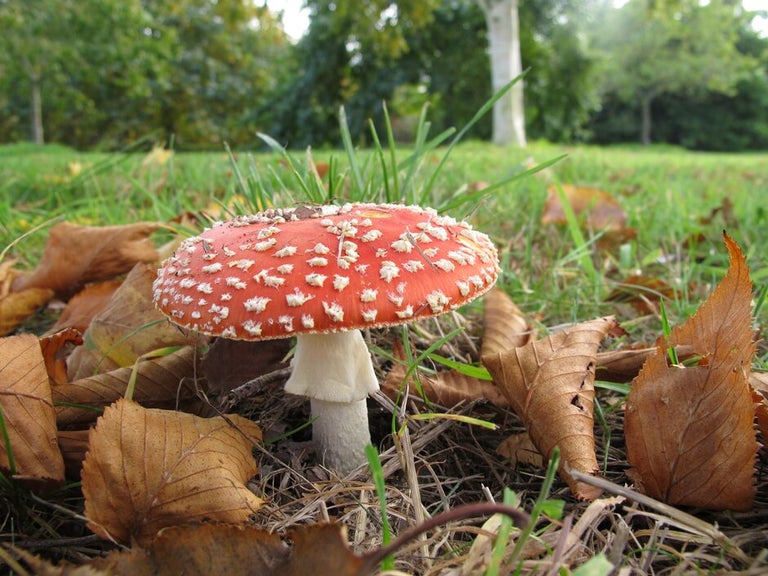
Clumps of honey-coloured mushrooms (see images 5 and 6 above) sometimes appear briefly in autumn on infected plant residues. However, the absence of mushroooms is no indication that the fungus is not active in the soil, and plants are usually heavily infected or killed before mushrooms appear.
Early indications from ongoing RHS research suggest that spores from the mushrooms of Armillaria mellea are more important in spreading the fungus than previously thought. The variability found between samples of the fungus taken from different areas of the garden at RHS Wisley indicates that many of the initial infections arose from spores (although once established in a particular area the fungus will still then spread between adjacent plants via rhizomorphs or root-to-root contact).
A. gallica produces large and easily visible rhizomorphs quite often found in heaps. As a precaution, do not use infested compost around woody plants.
Read more by visiting our page on RHS research on honey fungus and other diseases .