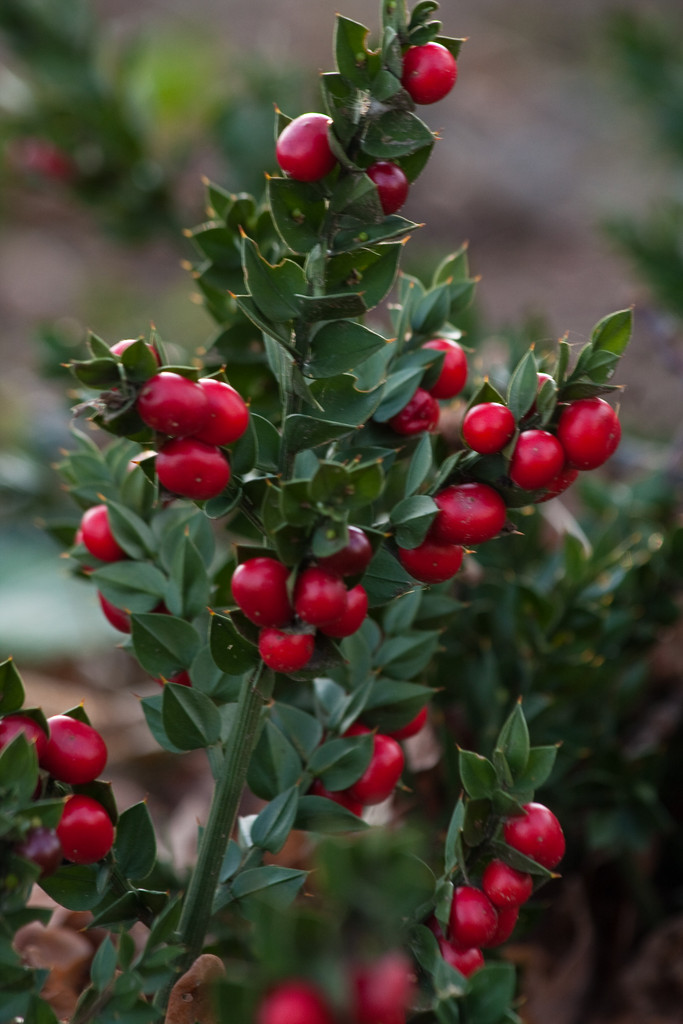
Ruscus aculeatus 'John Redmond'PBR (f/m)

RHS Plant Profile
butcher's broom 'John Redmond'
butcher's broom 'John Redmond' RHS

Synonyms

Ruscus 'John Redmond'

Award of Garden Merit
Shrubs

A compact, dwarf cultivar of this British native plant. Like the species, the "leaves" are actually flattened shoots, known as cladophylls, bearing a sharp spine. Red berries show from late summer

Position

Full shade, Full sun, Partial shade

Soil Types

Chalk, Clay, Loam, Sand

Max Height

0.1-0.5 metres

Max Spread

0.5-1 metres

Size

Time to Maturity
2–5 years
Max Spread
0.5-1 metres
Max Height
0.1-0.5 metres

Growing Conditions

Chalk Clay Loam Sand
Moisture
Moist but well–drained or Well–drained
pH
Acid or Alkaline or Neutral

Position

Full shade Full sun Partial shade
Aspect
West–facing or East–facing or North–facing
Exposure
Exposed or Sheltered
Hardiness
H5
Drought Resistance
Yes

Colour & Scent

Season Stem Flower Foliage Fruit
Spring
Summer
Autumn
Winter

Botanical Details

Family
Asparagaceae
Native to GB/Ireland
No
Foliage
Evergreen
Habit
Bushy
Potentially harmful
Fruit are ornamental - not to be eaten. Wear gloves and other protective equipment when handling Pets: Fruit are ornamental - not to be eaten - see the HTA guide to potentially harmful plants for further information and useful contact numbers
Genus
Ruscus are rhizomatous evergreen subshrubs with flattened, leaf-like cladophylls bearing small pale green flowers, followed on female or hermaphrodite plants by glossy red berries
Name Status
Accepted

How to Grow

Cultivation

Grow in any but waterlogged soils and northern exposed sites. Hardy to -15°C. Good for groundcover in shaded spots

Propagation

Propagate by division

Suggested planting locations and garden types

  • Patio and container plants
  • Wildlife gardens
  • Cottage and informal garden
  • Low Maintenance
  • Banks and slopes
  • Ground cover

Pruning

Cut out dead stems to the base in spring

Pests

Generally pest-free

Diseases

May be susceptible to honey fungus in gardens where it is present but insufficient data to determine degree of susceptibility