Ligusticum scoticum

RHS Plant Profile
Scots lovage
Scots lovage visionspictures.com

Other common names

Scotch lovage, sea lovage, sea parsley

Synonyms

Angelica sinensis 'Summer Delight'
Ligusticum 'Summer Delight'
Angelica 'Summer Delight'

Herbaceous Perennial

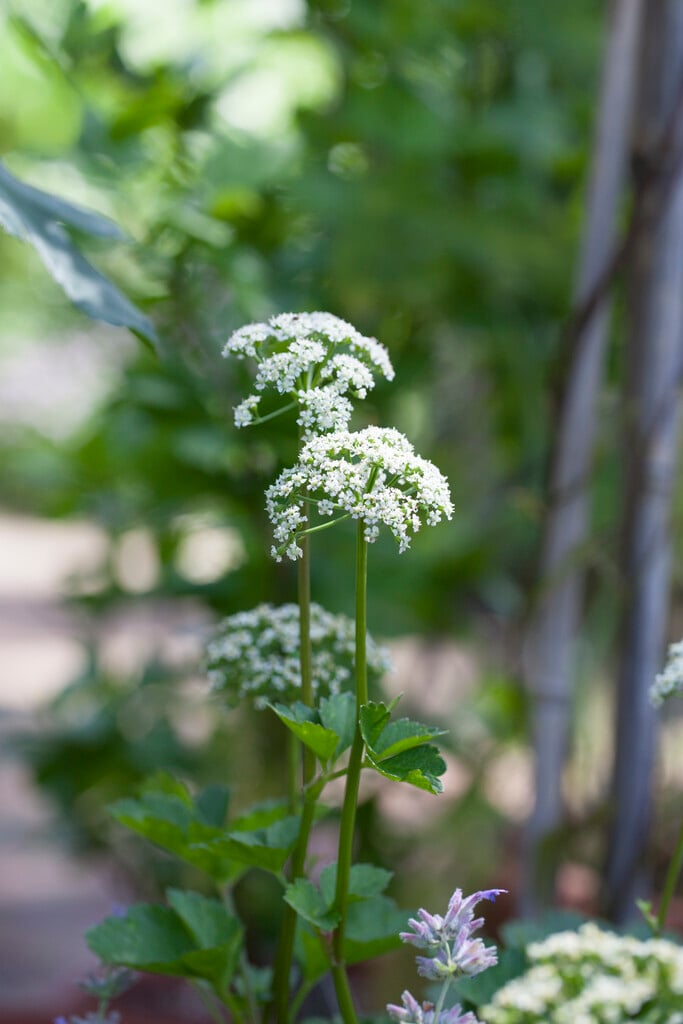
A herbaceous perennial, up to 60cm high, with glossy green leaves divided into three toothed leaflets. Domed clusters of tiny greenish-white flowers are borne on tall reddish stems in summer, followed by yellow seedheads. Used as a culinary herb; all parts of the plant are edible

Position

Full sun

Soil Types

Chalk, Loam, Sand

Max Height

0.5-1 metres

Max Spread

0.1-0.5 metres

Size

Time to Maturity
2–5 years
Max Spread
0.1-0.5 metres
Max Height
0.5-1 metres

Growing Conditions

Chalk Loam Sand
Moisture
Well–drained
pH
Acid or Alkaline or Neutral

Position

Full sun
Aspect
South–facing or West–facing
Exposure
Exposed or Sheltered
Hardiness
H7

Colour & Scent

Season Stem Flower Foliage Fruit
Spring
Summer
Autumn
Winter

Botanical Details

Family
Apiaceae
Native to GB/Ireland
Yes
Foliage
Deciduous
Habit
Clump forming
Genus
Ligusticum is a genus of around 60 species of perennials native to cool, temperate regions of the Northern Hemisphere. Forming compact clumps of glossy green, feathery foliage, they produce umbels of small, white flowers between June and August.
Name Status
Correct
Plant Range
N Eur to E N US

How to Grow

Cultivation

Thrives in well-drained soil in full sun, in areas with cooler summers; dislikes excess heat

Propagation

Propagate by seed, sown as soon as ripe in containers in a cold frame, or in spring with bottom heat at 18°C

Suggested planting locations and garden types

  • Coastal
  • Cottage and informal garden
  • Gravel garden
  • Low Maintenance
  • Banks and slopes

Pruning

No pruning required

Pests

May be susceptible to aphids, celery leaf-mining fly and cuckoo spit

Diseases

Generally disease-free