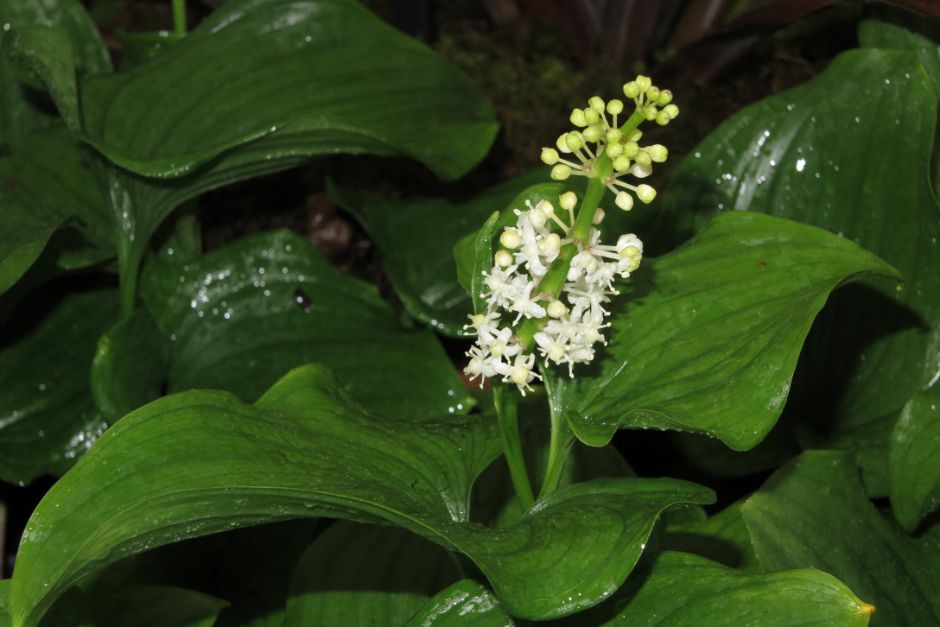
Maianthemum bifolium

RHS Plant Profile
two-leaved false lily of the valley
two-leaved false lily of the valley RHS / Janet Cubey

Other common names

May lily, mayflower, one-blade, one-leaf, two-leaved lily of the valley, wild lily of the valley

Synonyms

Smilacina biflora
Convallaria biflora misapplied

Herbaceous Perennial

A spreading herbaceous perennial, up to 15-20cm high, with glossy, dark green, heart-shaped or ovate leaves, 8cm across. Creamy-white flowers in late spring are followed by small round fruits which start pale green before turning red

Position

Full shade, Partial shade

Soil Types

Clay, Loam, Sand

Max Height

0.1-0.5 metres

Max Spread

0.5-1 metres

Size

Time to Maturity
2–5 years
Max Spread
0.5-1 metres
Max Height
0.1-0.5 metres

Growing Conditions

Clay Loam Sand
Moisture
Moist but well–drained
pH
Acid or Neutral

Position

Full shade Partial shade
Aspect
South–facing or North–facing or East–facing or West–facing
Exposure
Sheltered
Hardiness
H7

Colour & Scent

Season Stem Flower Foliage Fruit
Spring
Summer
Autumn
Winter

Botanical Details

Family
Asparagaceae
Native to GB/Ireland
Yes
Foliage
Deciduous
Habit
Suckering
Potentially harmful
Fruit are ornamental - not to be eaten. Wear gloves and other protective equipment when handling Pets: Fruit are ornamental - not to be eaten - see the HTA guide to potentially harmful plants for further information and useful contact numbers
Genus
Maianthemum are rhizomatous perennials with erect or arching stems bearing alternate leaves and small star-shaped flowers in terminal racemes or panicles, followed by red berries
Name Status
Correct
Plant Range
Temp. Eurasia

How to Grow

Cultivation

Grow in cool woodland conditions in humus-rich, leafy, moist but well-drained neutral to acid soil in light dappled or deep shade; good ground-cover plant but may start to spread

Propagation

Propagate by seed, sown in containers in a cold frame as soon as ripe, or by division of rooted runners in spring

Suggested planting locations and garden types

  • Cottage and informal garden
  • Wildlife gardens
  • Low Maintenance
  • Ground cover
  • Banks and slopes
  • Underplanting of roses and shrubs

Pruning

No pruning required

Pests

May be susceptible to slugs and snails

Diseases

Generally disease-free