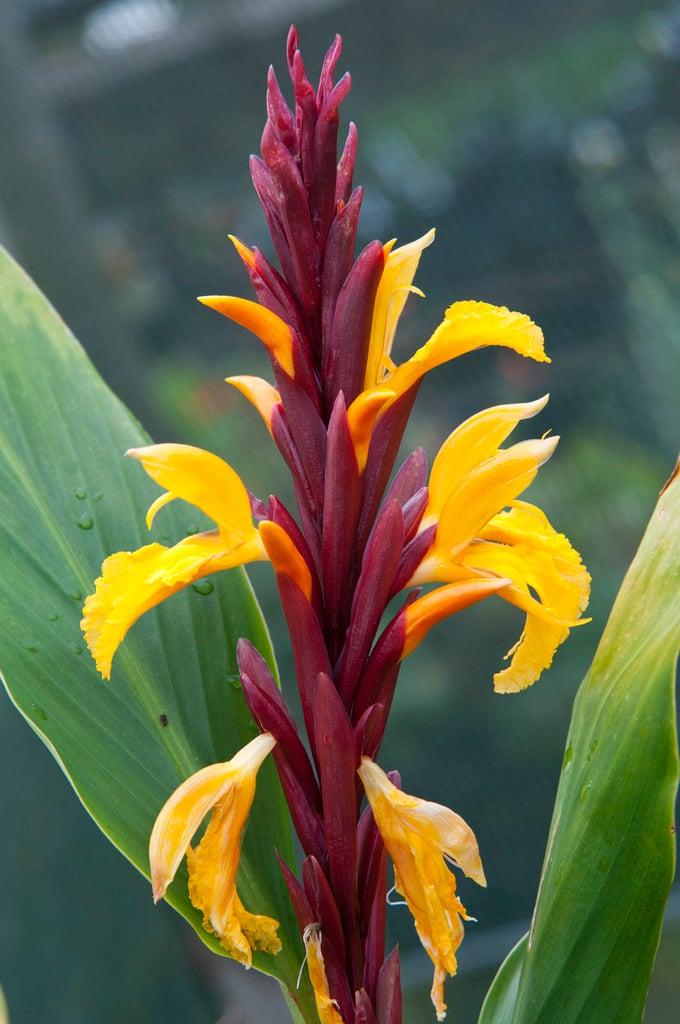
Cautleya spicata

RHS Plant Profile
Himalayan ginger
Himalayan ginger RHS
Herbaceous Perennial

A rhizomatous perennial with broadly lance-shaped, mid green leaves. In late summer it produces stiff spikes of yellow flowers with reddish green to maroon bracts

Position

Partial shade

Soil Types

Clay, Loam, Sand

Max Height

0.5-1 metres

Max Spread

0.1-0.5 metres

Size

Time to Maturity
2–5 years
Max Spread
0.1-0.5 metres
Max Height
0.5-1 metres

Growing Conditions

Clay Loam Sand
Moisture
Moist but well–drained
pH
Acid or Alkaline or Neutral

Position

Partial shade
Aspect
West–facing or East–facing
Exposure
Sheltered
Hardiness
H4

Colour & Scent

Season Stem Flower Foliage Fruit
Spring
Summer
Autumn
Winter

Botanical Details

Family
Zingiberaceae
Native to GB/Ireland
No
Foliage
Deciduous
Habit
Columnar upright
Genus
Cautleya are rhizomatous perennials with erect stems bearing lance-shaped or oblong leaves in two ranks, and funnel-shaped yellow flowers with conspicuous bracts, in slender racemes
Name Status
Correct
Plant Range
Himalaya

How to Grow

Cultivation

Preferably plant in humus rich, moist but well-drained soil in partial shade. Will tolerate sunnier spot if not allowed to dry out. Plant rhizomes 10-15cm deep. Protect with winter mulch

Propagation

Propagate by division of established clumps in late spring. Propagate by seed in early spring

Suggested planting locations and garden types

  • Sub-tropical
  • Flower borders and beds

Pruning

Cut back once the foliage was frosted

Pests

Slugs and snails may damage new growth

Diseases

Generally disease-free