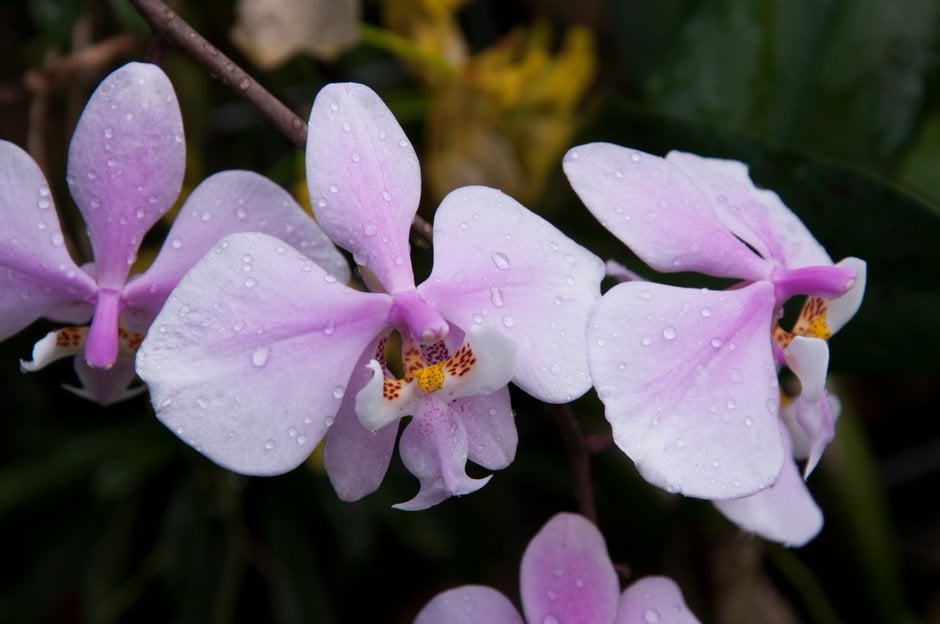
Phalaenopsis schilleriana

RHS Plant Profile
Schiller’s moth orchid
Schiller’s moth orchid RHS
Conservatory Greenhouse Houseplants

An evergreen, epiphytic orchid with semi-pendent, broadly-elliptic, fleshy leaves. The leaves are up to 45cm long and 5-7cm wide, dark green with silver-grey spotted marbling on the top and purple overlay underneath. Rose-pink flowers, 5-9cm across, with purple or yellow lip appear in branching racemes in winter and spring. Plants grown in optimal conditions are able to produce large number of flowers (up to 250) on stems 90-100cm long. Mounted plants will develop more pendulous habit

Position

Partial shade

Max Height

0.5-1 metres

Max Spread

0.1-0.5 metres

Size

Time to Maturity
2–5 years
Max Spread
0.1-0.5 metres
Max Height
0.5-1 metres

Growing Conditions

Moisture
Well–drained
pH
Neutral

Position

Partial shade
Aspect
East–facing or West–facing
Exposure
Sheltered
Hardiness
H1A

Colour & Scent

Season Stem Flower Foliage Fruit
Spring
Summer
Autumn
Winter

Botanical Details

Family
Orchidaceae
Native to GB/Ireland
No
Foliage
Evergreen
Habit
Columnar upright, Pendulous weeping
Genus
Phalaenopsis are a large genus of species and hybrid mainly epiphytic orchids. Short, upward growing, stem-like rhizomes with no pseudobulbs produce oval, fleshy mid to dark green leaves and flowers in branched racemes from the base of the leaves
Name Status
Correct
Plant Range
Philippines

How to Grow

Cultivation

Grow in an open bark-based orchid compost. Provide enough bright filtered light, but keep away from direct mid-day sunlight or heating source. Ideal temperatures are around 17°C at night and 20 - 25 °C during day. Mist aerial roots regularly and water the plant when almost dry - pale, silvery roots are a good indication when to water. Orchid fertiliser can be applied regularly throughout the season. See Phalaenopsis cultivation

Propagation

Propagation by seed is only possible in controlled laboratory environment. Mature plants may produce sideshoots (keiki) which may be removed and potted separately into sphagnum moss when the new roots are at least 2cm long

Suggested planting locations and garden types

  • Houseplants
  • Conservatory and greenhouse

Pruning

No pruning required. Cut back green flowered stem to lower node to encourage further flowering. Remove the flowered stems once yellow and dry

Pests

May be susceptible to mealybugs, aphids and scale insects

Diseases

Generally disease-free. Avoid watering centre of the leaf crown, to prevent bacterial rots