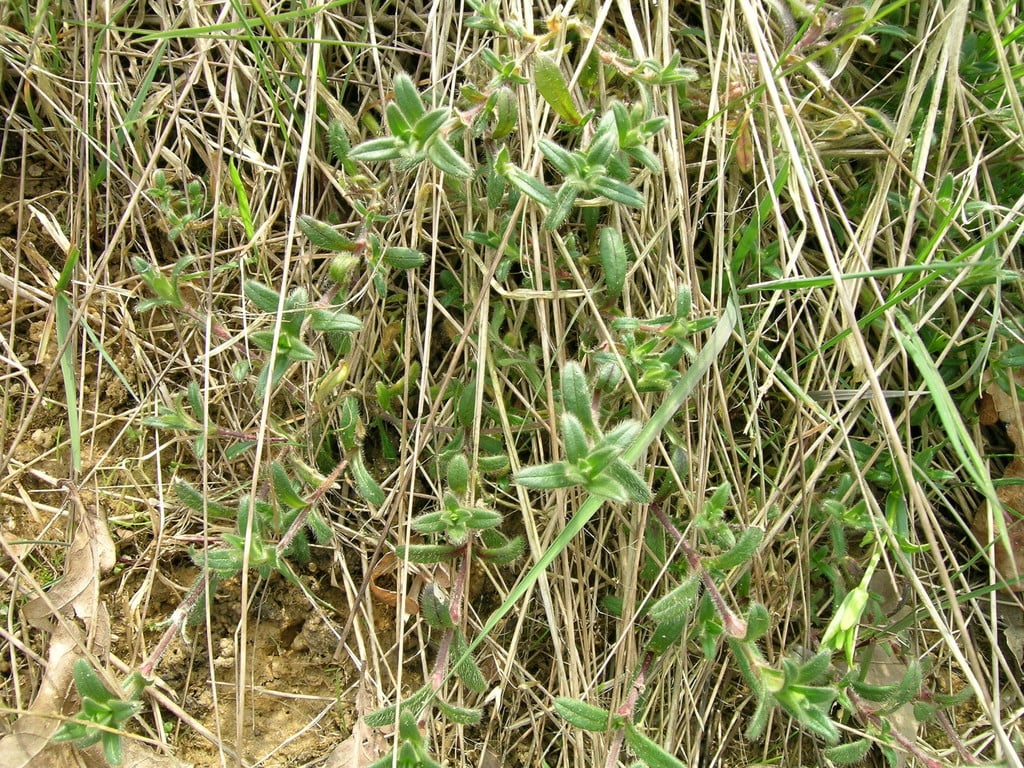
Cerastium fontanum

RHS Plant Profile
common mouse-ear
common mouse-ear RHS

Other common names

clust llygoden culddail

Herbaceous Perennial

A low-growing, mat-forming short lived perennial with curved, hairy opposite leaves. Produces clusters of small white flowers with deeply lobed petals, from April to November.

Position

Full sun, Partial shade

Soil Types

Chalk, Sand, Loam

Max Height

0.1-0.5 metres

Max Spread

0.1-0.5 metres

Size

Time to Maturity
1 year
Max Spread
0.1-0.5 metres
Max Height
0.1-0.5 metres

Growing Conditions

Chalk Sand Loam
Moisture
Moist but well–drained
pH
Acid or Alkaline or Neutral

Position

Full sun Partial shade
Aspect
East–facing or North–facing or South–facing or West–facing
Exposure
Exposed or Sheltered
Hardiness
H6

Colour & Scent

Season Stem Flower Foliage Fruit
Spring
Summer
Autumn
Winter

Botanical Details

Family
Caryophyllaceae
Native to GB/Ireland
Yes
Foliage
Deciduous
Habit
Matforming, Spreading branched
Genus
Cerastium can be annuals or mat-forming perennials, with simple leaves and star-shaped 5-petalled white flowers
Name Status
Correct

How to Grow

Cultivation

Will tolerate a range of soil conditions and does well on poor soil. Self-seeds prolifically and is often considered a weed

Propagation

Propagate by seed

Suggested planting locations and garden types

  • Wildflower meadow

Pruning

No pruning required, remove before seeds develop if seeding is not desired

Pests

Generally pest-free

Diseases

Generally disease-free