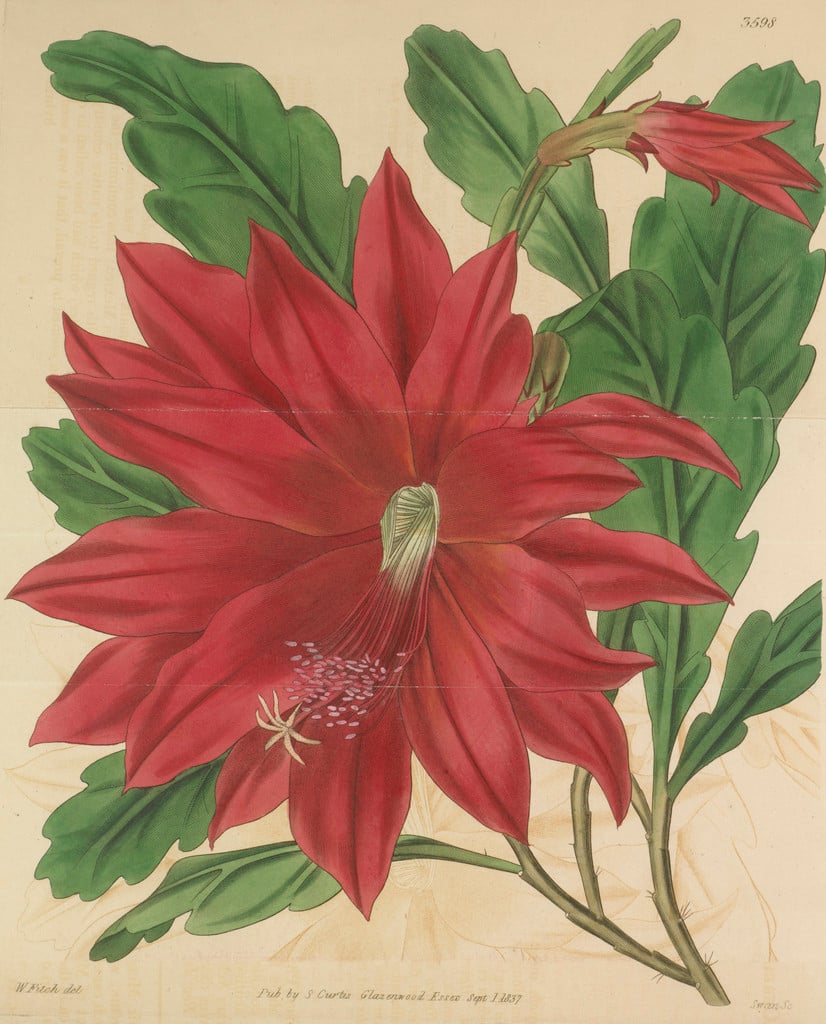
Disocactus ackermannii

RHS Plant Profile
Ackermann's disocactus
Ackermann's disocactus RHS

Synonyms

Epiphyllum ackermannii

Award of Garden Merit
Cactus Succulent Conservatory Greenhouse

An erect, perennial epiphytic cactus with flat thin slightly scalloped, fleshy stems, rarely 3-ribbed. The crimson to scarlet, red funnel-shaped flowers to 12cm have contrasting yellow pollen and white stigma lobes

Position

Partial shade

Soil Types

Loam, Sand

Max Height

0.1-0.5 metres

Max Spread

0.1-0.5 metres

Size

Time to Maturity
5–10 years
Max Spread
0.1-0.5 metres
Max Height
0.1-0.5 metres

Growing Conditions

Loam Sand
Moisture
Moist but well–drained
pH
Acid

Position

Partial shade
Aspect
South–facing or East–facing or West–facing
Exposure
Sheltered
Hardiness
H1C

Colour & Scent

Season Stem Flower Foliage Fruit
Spring
Summer
Autumn
Winter

Botanical Details

Family
Cactaceae
Native to GB/Ireland
No
Foliage
Evergreen
Habit
Bushy
Genus
Disocactus are evergreen perennials with cylindrical main stems and flattened side shoots, bearing funnel-shaped, sometimes fragrant flowers on the margins, followed by fleshy white fruits
Name Status
Correct
Plant Range
S Mexico

How to Grow

Cultivation

Under glass grow in acidic, moisture-retentive but sharply-draining compost, or a proprietary epiphytic cactus compost, in bright filtered light and moderate to low humidity. During the growing season water freely applying a balanced fertiliser for acid loving plants at half strength every two weeks from April to end September. Water only moderately and cease fertiliser applications during the winter. In frost free areas grow in hanging baskets or epiphytically in partial shade

Propagation

Propagate by seed at 27°C as soon as ripe in acidic peat-free compost. Softwood cuttings may be taken in late spring

Suggested planting locations and garden types

  • Patio and container plants
  • Sub-tropical

Pruning

No pruning required

Pests

Can be susceptible to scale insects and mealybugs under glass

Diseases

Generally disease-free, except where grown in poorly draining soils which can result in root rot