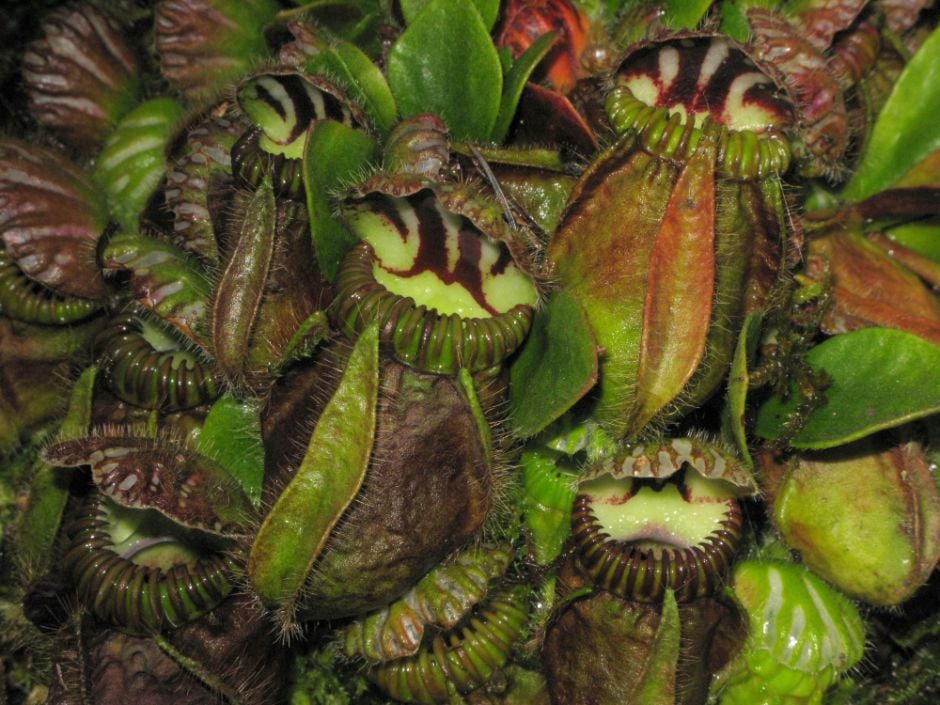
Cephalotus follicularis

RHS Plant Profile
Australian pitcher plant
Australian pitcher plant RHS
Award of Garden Merit
Conservatory Greenhouse Houseplants

Cephalotus follicularis is a small, low-growing, clump-formingcarnivorous plant. Non-carnivorous leaves produced in spring are flat, hairy and bright green whilst the pitcher-forming leaves are 2-4cm long and develop a dark red colour under bright sunlight or remain green in shadier conditions. The mouth of the pitcher is rimmed with 24 ribs or teeth. In summer a flower stem up to 60cm tall bears small white-pale green flowers

Position

Full sun, Partial shade

Soil Types

Loam, Sand

Max Height

0.5-1 metres

Max Spread

0.1-0.5 metres

Size

Time to Maturity
5–10 years
Max Spread
0.1-0.5 metres
Max Height
0.5-1 metres

Growing Conditions

Loam Sand
Moisture
Moist but well–drained
pH
Acid or Neutral

Position

Full sun Partial shade
Aspect
West–facing or East–facing or South–facing
Exposure
Exposed or Sheltered
Hardiness
H2

Colour & Scent

Season Stem Flower Foliage Fruit
Spring
Summer
Autumn
Winter

Botanical Details

Family
Cephalotaceae
Native to GB/Ireland
No
Foliage
Semi evergreen
Habit
Matforming
Genus
Cephalotus has just one species and is known as the West Australian Pitcher Plant. It produces small clumps of orange, red, maroon or black pitchers with a line of teeth on the rim of each pitcher.
Name Status
Correct
Plant Range
W Australia

How to Grow

Cultivation

Grow in a nutrient-poor, acidic substrate and maintain temperatures between 5 and 32oC. See carnivorous plant cultivation for more information

Propagation

Propagate by seed, from root cuttings or leaf cuttings or by division

Suggested planting locations and garden types

  • Patio and container plants
  • Low Maintenance

Pruning

No pruning required

Pests

Susceptible to scale insects

Diseases

Generally disease-free