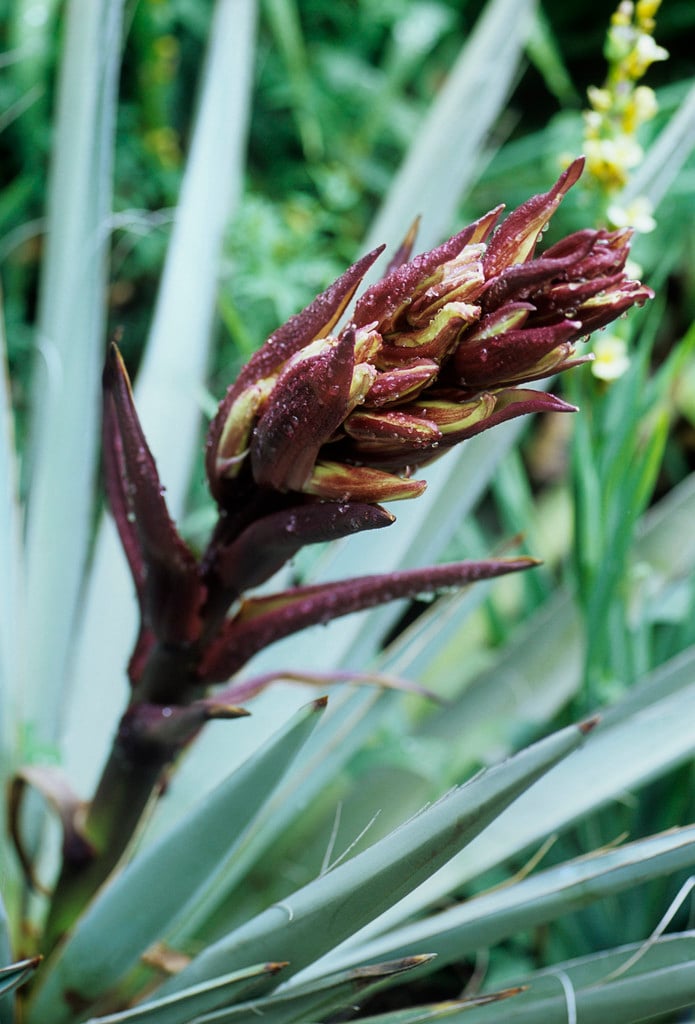
Yucca baccata

RHS Plant Profile
banana yucca
banana yucca RHS

Other common names

blue yucca, datil, Spanish bayonet

Shrubs

a slow-growing, evergreen shrub to 1.6m tall usually seen in cultivation with a single crown of leaves; a small trunk may form as the plant ages. The blue-green, sword-shaped leaves 30-100cm long are tipped with a sharp point, curve inwards and edged with small threads. Spikes of creamy-white, bell-shaped flowers sometimes shaded purple-red are borne above the foliage in summer and may be followed by edible, banana-shaped fruit

Position

Full sun

Soil Types

Chalk, Loam, Sand

Max Height

1.5-2.5 metres

Max Spread

1.5-2.5 metres

Size

Time to Maturity
10–20 years
Max Spread
1.5-2.5 metres
Max Height
1.5-2.5 metres

Growing Conditions

Chalk Loam Sand
Moisture
Well–drained
pH
Acid or Alkaline or Neutral

Position

Full sun
Aspect
South–facing or West–facing
Exposure
Sheltered
Hardiness
H3

Colour & Scent

Season Stem Flower Foliage Fruit
Spring
Summer
Autumn
Winter

Botanical Details

Family
Asparagaceae
Native to GB/Ireland
No
Foliage
Evergreen
Habit
Bushy
Potentially harmful
Skin allergen. Wear gloves and other protective equipment when handling Pets (dogs, cats): Harmful if eaten - for further information and contact numbers regarding pets, see the HTA guide to potentially harmful plants
Genus
Yucca can be evergreen perennials, shrubs or trees, with dense or loose rosettes of stiff, sword-shaped leaves and tall panicles of bell-shaped flowers
Name Status
Correct
Plant Range
SW USA, New Mex.

How to Grow

Cultivation

Grow in very well drained soil in full sun; protect from excessive winter rainfall. See yucca cultivation for further advice

Propagation

Propagate by seed or remove rooted suckers

Suggested planting locations and garden types

  • Architectural
  • Gravel garden
  • Patio and container plants
  • City and courtyard gardens
  • Low Maintenance

Pruning

No pruning required, but dead leaves and spent flower spikes can be removed to improve appearance

Pests

May be susceptible to aphids on flower spikes and snails

Diseases

May be susceptible to leaf spot