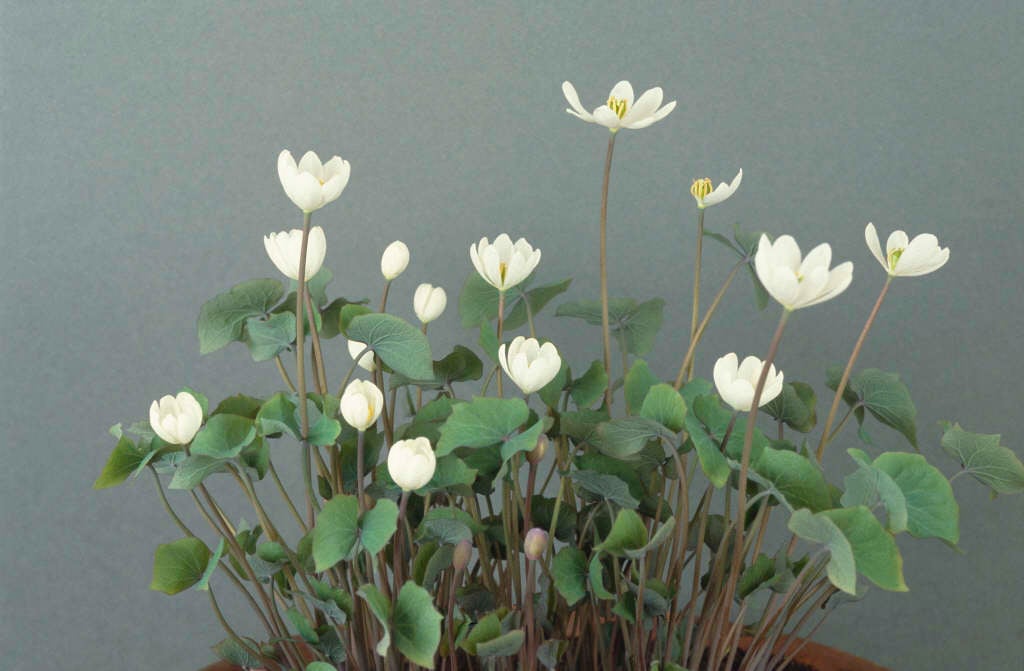
Jeffersonia diphylla

RHS Plant Profile
rheumatism root
rheumatism root www.gardenworldimages.com

Other common names

blue twinleaf, ground squirrel pea, helmet pod, North American rheumatism root

Herbaceous Perennial

A deciduous perennial forming a compact clump of long-stalked leaves divided into two lobes, and pure white flowers 2.5cm wide, with eight petals, opening in early spring with the new leaves

Position

Full shade, Partial shade

Soil Types

Clay, Loam

Max Height

0.1-0.5 metres

Max Spread

0.1-0.5 metres

Size

Time to Maturity
1–2 years
Max Spread
0.1-0.5 metres
Max Height
0.1-0.5 metres

Growing Conditions

Clay Loam
Moisture
Moist but well–drained
pH
Acid or Alkaline or Neutral

Position

Full shade Partial shade
Aspect
North–facing or East–facing
Exposure
Sheltered
Hardiness
H6

Colour & Scent

Season Stem Flower Foliage Fruit
Spring
Summer
Autumn
Winter

Botanical Details

Family
Berberidaceae
Native to GB/Ireland
No
Foliage
Deciduous
Habit
Bushy
Genus
Jeffersonia are small, clump-forming perennials with2-lobed, kidney-shaped leaves and bowl-shaped white or pale violet flowers in spring
Name Status
Correct
Plant Range
E North America

How to Grow

Cultivation

Grow in moist, humus-rich, preferably limey soil in partial or full shade; top dress with leaf mould or other humus-rich material in autumn. Dislikes disturbance and may take a year or two to settle after transplanting

Propagation

Propagate by seed in containers in an open frame as soon as ripe; divide established plants in autumn, leaving two or three new buds per clump; plants will flower in two to three years

Suggested planting locations and garden types

  • City and courtyard gardens
  • Cottage and informal garden
  • Rock garden
  • Flower borders and beds
  • Underplanting of roses and shrubs

Pruning

No pruning required

Pests

May be susceptible to slugs and snails

Diseases

Generally disease-free