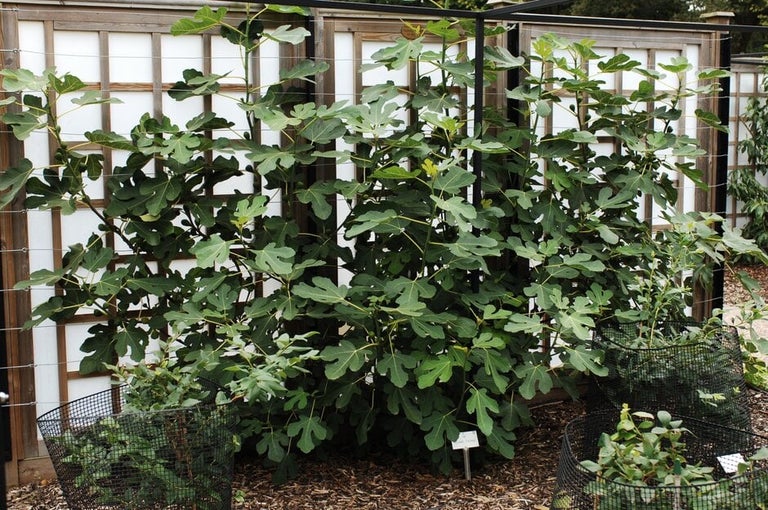


Figs: pruning and training
Pruning these vigorous plants regularly helps to keep them under control and encourage a plentiful crop of delicious, sweet figs. They are best trained against a sunny wall or grown in a container.
Common name - Fig leaf skeletoniser or fig leaf roller moth
Scientific name - Choreutis nemorana
Plants affected - Ficus carica
Main symptoms - Foliage is eaten and leaves webbed together
Most active - April-October

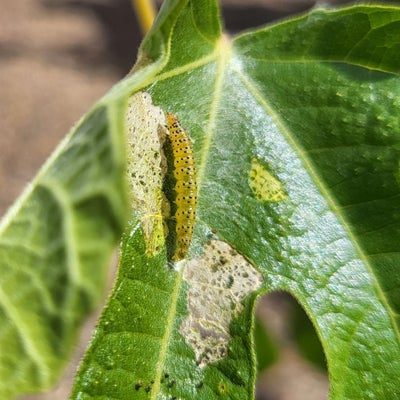
Choreutis nemorana, the fig leaf skeletoniser or fig leaf roller, is a species of moth of the family Choreutidae. It is the small pale green caterpillars, with tiny black spots, that are responsible for damaging fig leaves.
The adult moth is triangular shaped with pale head and legs and a wingspan of 16-20 mm. The upper wings are a bright brick shade of brown with pale bands and darker speckles. Photos of the adult moth can be found on the UKmoths web page. There are two generations with adults flying in July and again in the autumn. The second generation over-winter.
A Mediterranean species, it was first recorded in Britain in 2014 from the warmer London microclimate but has since established more widely in South-East England. RHS Gardening Advice has had regular reports of it in gardens since 2020.
It is the caterpillar stage of the fig leaf skeletoniser that is responsible for causing the damage to fig leaves and occassionally fruit:
The level of damage can vary depending on the number of caterpillars active in the tree. Affected leaves will stay on the tree until the first frost. The damage the caterpillars cause is often minor, although it can sometimes look alarming, it will not affect the health and vigour of an established tree.

Fig leaf skeletoniser C. nemorana under webbing on fig (Ficus carica 'Rouge de Bordeaux')
Figs can usually tolerate some feeding by the caterpillars with no ill effects, but there are some steps you can take to reduce the population:
The adult moth lays eggs in spring and the caterpillars develop throughout the season. They reach 15 mm long when fully grown and are green with black spots, they feed within webbing often curling over leaves in the process. Adults emerge in summer and there can be a second generation of caterpillars in early autumn, adults emerging from this generation overwinter in sheltered places.