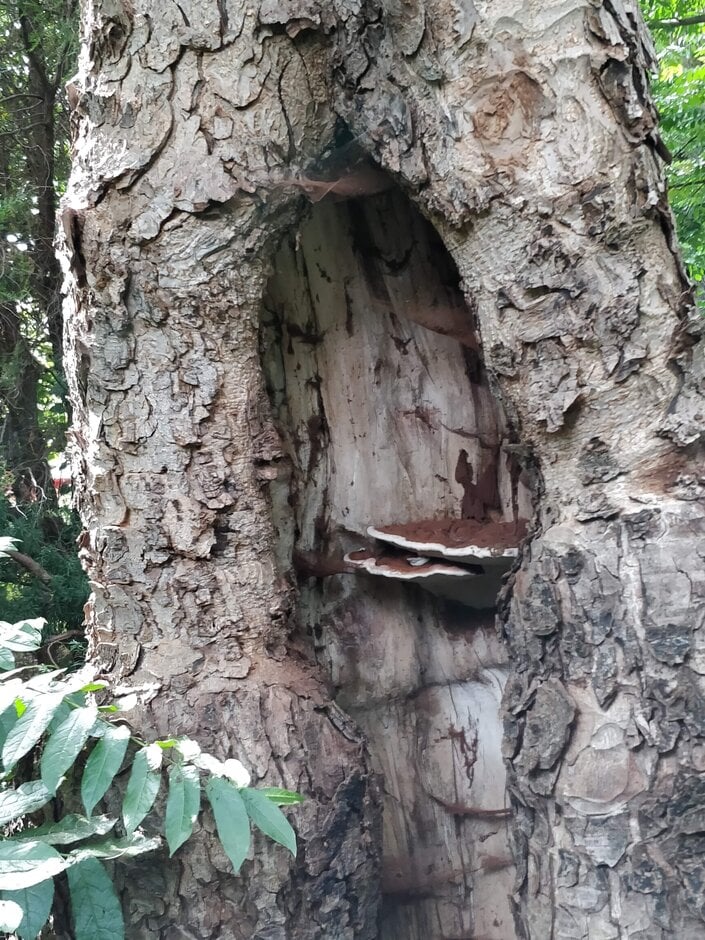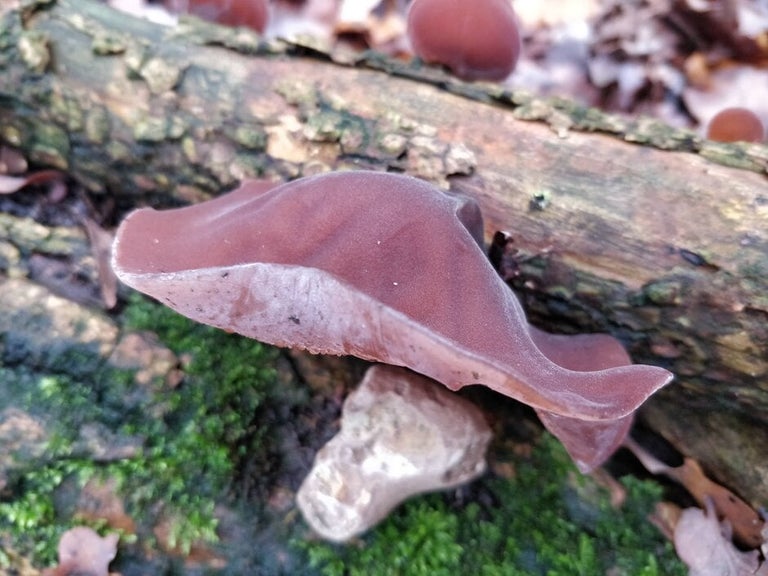


Heartwood Fungi
As trees age, fungi decay and hollow out the dead central heartwood. This is hugely beneficial for wildlife and other garden plants, but it is important to assess the strength of decaying trees that may fall or break.
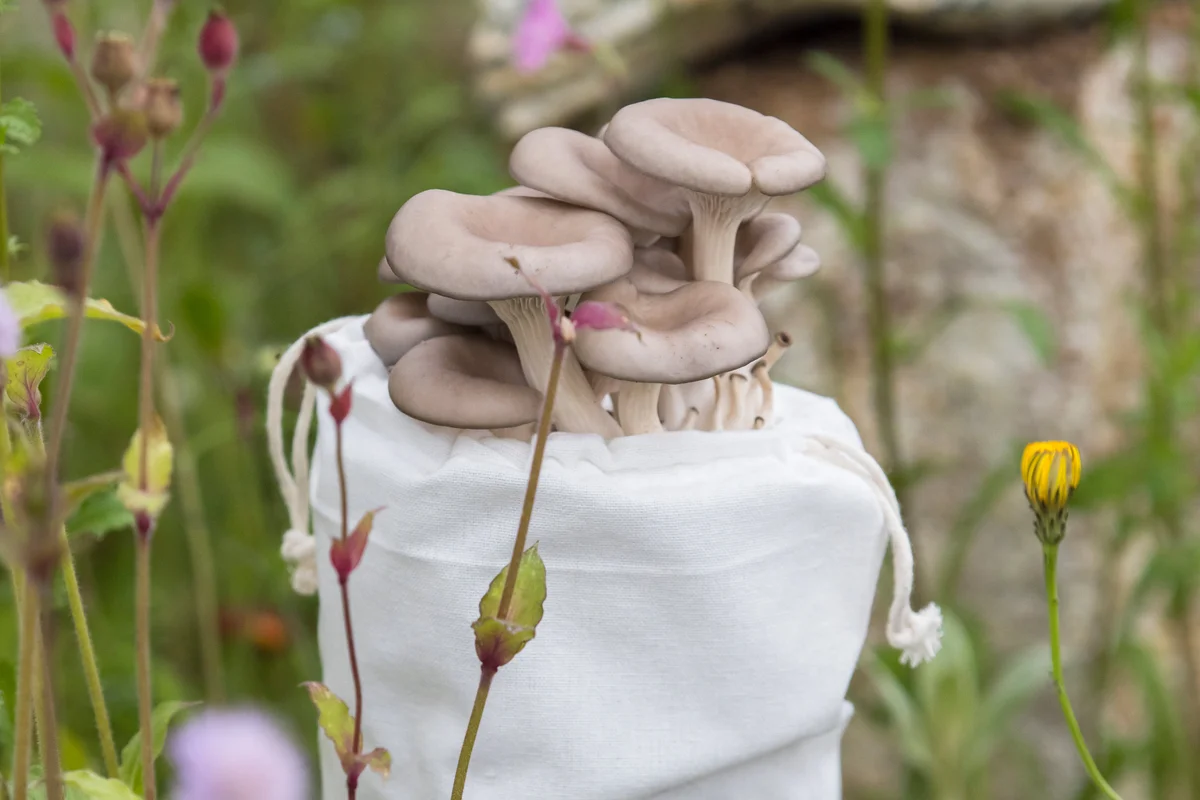
Fungi that recycle dead waste can be cultivated at home.
Add a fungal culture to a food source, like straw, woodchip or logs.
Mushrooms and fruiting bodies emerge seasonally, often during autumn.
Fungi projects can produce several flushes of mushrooms.
Only grow native fungi in gardens to protect wild fungi.

Growing fungi at home can provide you with fresh mushrooms or other fruiting bodies, such as puffballs or brackets, to consume for their nutritional value or their health benefits. Growing fungi also make gardens more supportive for wildlife as they create food and habitats for other organisms.
Fungi fit into unused areas, such as in among the plants of a vegetable bed, effectively doubling the available growing space. Plus, fungi add an extra layer of intrigue and beauty to gardens, contributing new colours, textures and shapes, particularly in the colder months when plant displays fade.
Recycler fungi that rot down and feed on dead plant material can be propagated and grown at home to produce fruiting bodies like mushrooms.
There are three steps to the process of cultivating fungi. First, you add a starter culture of a fungus to a fresh batch of dead plant material. Then the fungus needs time and the right conditions to establish within the material as it feeds and expands its culture. Lastly, once the fungus receives the right environmental cues, it will start to form its fruiting bodies, which it makes to spread spores and reproduce.
Fungal starter cultures come in many forms, such as grain or wooden dowels. If you purchase a liquid fungal culture and bag of sterilised grain you can create your own fungus starter culture by injecting the liquid fungus into the grain.
Methods for outdoor mushroom growing are being improved all the time as the popularity of home-growing is rising, so stay up to date and read around to increase your understanding. Be aware that the methods or species that works in other countries may not be suitable in the UK.
Different fungi grow best on different materials, so research your chosen species to select suitable materials. Many species grow well on straw, others need wood of certain sizes, such as logs, chippings or sawdust. Many fungi that can be grown at home prefer hardwood over softwood, and some fungi can only grow on a narrow range of wood species. Other materials like spent coffee grains, bran or cardboard can also be incorporated into growing projects, each providing different ratios of carbon and nitrogen to fulfil the preferences of different fungi.
Grow bags – The easiest way to grow mushrooms at home is using a pre-prepared bag containing a fungal culture already established on straw or sawdust. Select UK or Western European strains that are suitable for outdoor growing. Improve the look of your growbags by cloaking it in more attractive materials like a hessian cloak, woven willow cage or a macrame hanger. Make your own growbags by adding a fungal starter culture to some pasteurised materials such as a mixture of straw or sawdust and bran in a sterile growbag (a plastic bag with a filter patch). To minimise the risk of contamination by other air-borne fungi or bacteria, work quickly in a clean environment with minimal air movement.

Equipment to make your own mushroom grow bag
Fungi logs – These are fun to assemble, but sourcing the fresh logs can be difficult for most gardeners, especially in urban areas. Purchase native UK fungi dowels, holes matching the width and depth of the dowels into the log so they are well-spaced out. Hammer the dowels into the holes until level with the , melt beeswax over a camping stove and paint the molten wax over the holes to seal them against contamination.

Wax seal over a fungal dowel inserted into a log for mushroom growing
Mushroom – Either create a dedicated mushroom bed or top-dress areas that would benefit from straw or woodchip mulch with fungal cultures mixed into the mulch. The easiest method is to buy in a large volume of UK native fungal starter material, spread it out in between two layers of fresh mulch material. To bulk up the volume of your fungal starter culture before adding it to the garden, drill air holes into a clean bucket or barrel then fill it with alternating layers of fresh mulch and fungal starter culture, ending on mulch at the top. Pasteurising the mulch first will reduce the competition by other fungi and microbes.

Cold-water pasteurised woodchip drying on tarpaulin before use in mushroom growing
Integrated design ideas – combine different project types into the design of your garden to get the best benefits for your plants and wildlife. For example, use fungi logs to build a raised bed to grow plants in and incorporate fungal culture material into a mulch covering over the soil. For expert help, consult a sustainable fungi gardening advisor.
Choose a space that suits your growing project and install them during cooler months of the year. Give them plenty of time to develop and meanwhile make sure they don’t dry out to keep the fungi alive. For any pre-prepared kits, follow the manufacturer's instructions.
Fungi need moisture and indirect light to grow well. Grow your mushrooms in sheltered and shaded places to protect them from drying out. However, fungi-infused materials retain moisture better than plain materials do, so larger designs can work even in exposed positions and will help preserve moisture there.
During dry weather, water projects with fresh water from a water butt or the mains supply. Stack logs into piles to preserve moisture. Tightly stacked piles lack room for mushrooms to grow, so either stack them in an open arrangement like a crib stack or rearrange them as they start to fruit. You can also move fungi logs into a garage or unheated greenhouse during winter to protect against hard frosts.
Projects containing fungi of different species, strains and sizes will grow and produce mushrooms at different rates. Grow bags are the fastest growing, and a pre-prepared bag may flush with mushrooms within a few days once you initiate fruiting by cutting it open and moving it outdoors. Fungi growing from logs or will produce mushrooms according to the seasonality of the fungus used, often the following spring or autumn after they are installed. To encourage faster growth, consider keeping logs inside black plastic bags to raise their .
As mushrooms start to , mist them with water each morning and evening until they are large enough to harvest, then pick them by twisting them off at the base. Once a flush of mushrooms has finished, the fungus should fruit again, possibly several more times depending on its size and condition. If growing mushrooms to eat, check that the produce matches the species you were trying to grow, as wild fungi may appear instead that may not be edible.
After the fungus stops producing mushrooms, keep the residues in the garden to feed wildlife and slowly rot away into the soil. Spent growbag cultures can be added to heaps or mulch so long as you have used a fungus.
Only fungi which are to the UK or Western Europe should be grown outdoors in the UK as the fungal cultures and spores can spread into natural landscapes.
A variety of edible native oyster mushroom species suitable for home-growing, such as the blue-grey (Pleurotus ostreatus), tarragon (P. euosmus), branched (P. cornucopiae) and summer oysters (P. pulmonarius). Further native edible species include dryad’s saddle (Cerioporus squamosus), shaggy inkcap (Coprinus comatus), poplar fieldcap (Cyclocybe aegerita) and chicken of the woods (Laetiporus sulphureus). Turkey tail (Trametes versicolor) is excellent for supporting garden wildlife.

Dryads saddle underside (Cerioporus squamosus)
The following suppliers stock native fungi and display the provenance of their strains on their website:
Most fungal culture suppliers sell fungal strains that are sourced from outside the UK and bred to be high-yielding for commercial mushroom production. Such fungi are very competitive in nature and are prone to becoming . Gardens are not suitable environments to grow such strains, instead look for reliable local strains of fungi.

Never grow the golden oyster (Pleurotus citrinopileatus) anywhere in UK, Europe or the USA as it is highly invasive. It dominates the fungi in the natural landscape it has escaped into, causing severe damage to the communities of wild, native fungi.

There is no ethical way to grow lion’s mane aka bearded tooth (Hericium erinaceus) outdoors in the UK as it is legally protected from being picked or sold. This means any strains available to grow at home are non-native or illegally collected. Non-native lion’s mane puts native lion’s mane populations at risk of being displaced or going extinct by hybridisation.
Some common non-native mushrooms like shiitake (Lentinula edodes) and wine caps (Stropharia rugosoannulata) have been grown outdoors in the UK for some time and have also escaped cultivation but appear to be spreading less aggressively than the golden oyster. It is still not worth the risk to native fungi to propagate these species any further. To grow non-native mushrooms, grow them indoors, filter exiting air for spores or use sporeless strains, and kill the fungal culture by baking it before adding it to the garden or heap.