Levisticum officinale

RHS Plant Profile
lovage
lovage RHS 2002

Other common names

bladderseed

Herbs - Culinary Herbaceous Perennial

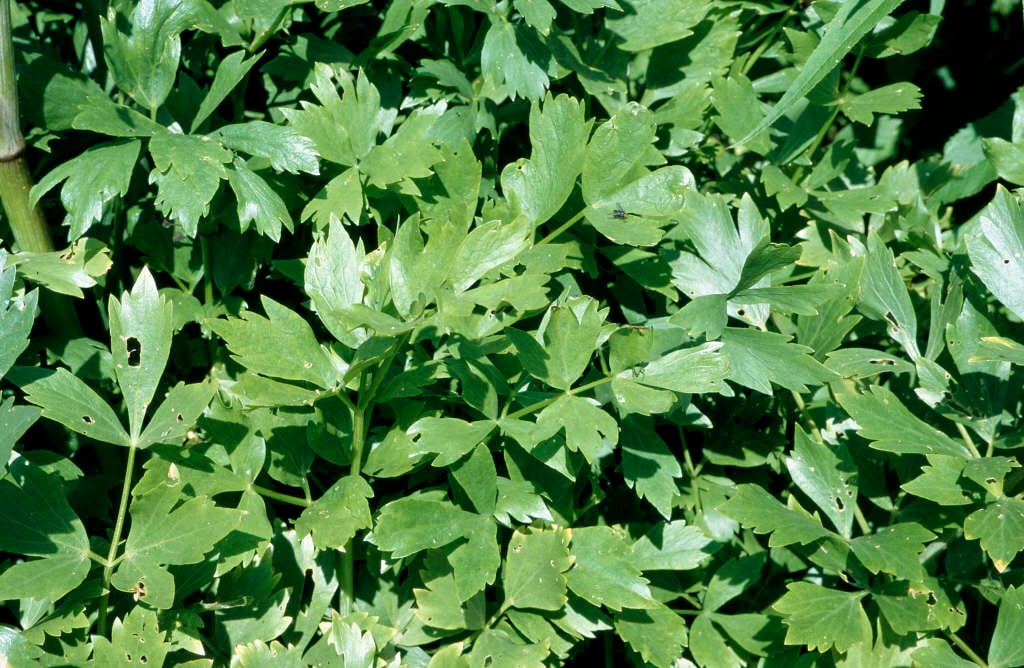
A hairless perennial to 2m in height and 1m width; with mid- to dark-green, 2- to 3-pinnate leaves and yellow-green flowers in summer, which are followed by aromatic seeds. The plant is celery-scented and often used as a culinary herb

Position

Full sun

Soil Types

Loam, Chalk, Clay, Sand

Max Height

1.5-2.5 metres

Max Spread

0.5-1 metres

Size

Time to Maturity
2–5 years
Max Spread
0.5-1 metres
Max Height
1.5-2.5 metres

Growing Conditions

Loam Chalk Clay Sand
Moisture
Moist but well–drained
pH
Acid or Alkaline or Neutral

Position

Full sun
Aspect
South–facing or West–facing
Exposure
Exposed or Sheltered
Hardiness
H6

Colour & Scent

Fragrance Foliage Fruit
Season Stem Flower Foliage Fruit
Spring
Summer
Autumn
Winter

Botanical Details

Family
Apiaceae
Native to GB/Ireland
No
Foliage
Deciduous
Habit
Columnar upright
Genus
Levisticum are upright perennials with pinnately divided, strongly aromatic, leaves and small greenish-yellow flowers in large umbels in summer
Name Status
Correct
Plant Range
E Mediterranean

How to Grow

Cultivation

Will tolerate most soils but prefers, deep, fertile, moist but well-drained soil in full sun. See lovage cultivation for more advice

Propagation

Propagate by seed or division in spring

Suggested planting locations and garden types

  • Cottage and informal garden
  • Wildlife gardens
  • Flower borders and beds

Pruning

Cut back old foliage in autumn

Pests

May be susceptible to slugs and snails and and celery leaf miner

Diseases

May be susceptible to celery leaf spot