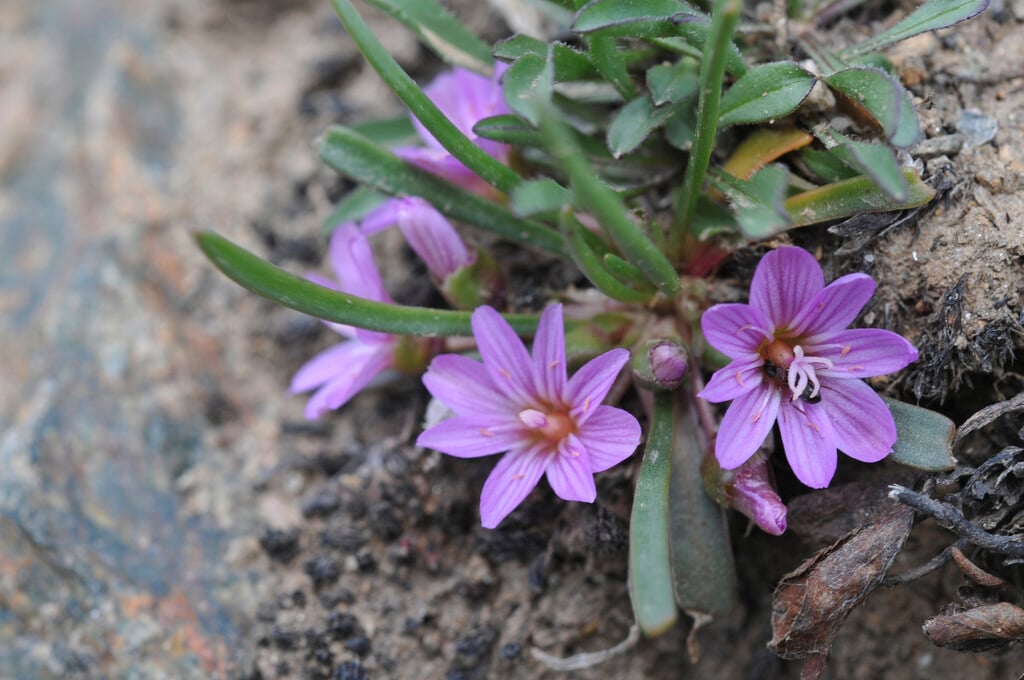
Lewisia pygmaea

RHS Plant Profile
alpine lewisia
alpine lewisia visionspictures.com

Other common names

pygmy bitterroot

Alpine Rockery

A compact, deciduous perennial with tufted, dark green and fleshy, linear to lance-shaped leaves up to 8cm long. Semi-erect to prostrate stems bear white, pink or red flowers up to 1.5cm in diameter from late spring into early summer, the petals of which may be deeply veined

Position

Full sun, Partial shade

Soil Types

Loam, Sand

Max Height

Up to 10 cm

Max Spread

0-0.1 metre

Size

Time to Maturity
2–5 years
Max Spread
0-0.1 metre
Max Height
Up to 10 cm

Growing Conditions

Loam Sand
Moisture
Well–drained
pH
Acid or Neutral

Position

Full sun Partial shade
Aspect
West–facing or South–facing or North–facing or East–facing
Exposure
Exposed or Sheltered
Hardiness
H4

Colour & Scent

Season Stem Flower Foliage Fruit
Spring
Summer
Autumn
Winter

Botanical Details

Family
Montiaceae
Native to GB/Ireland
No
Foliage
Deciduous
Habit
Tufted
Genus
Lewisia can be herbaceous or evergreen perennials forming rosettes of fleshy leaves, with panicles of open funnel-shaped flowers in a wide range of colours in spring and summer
Name Status
Correct
Plant Range
Western N America

How to Grow

Cultivation

Grow in moderately fertile, neutral to acid, well-drained soil in full sun or light shade. Suitable for the alpine house, rock garden, or in the crevices of a retaining wall. Protect from winter wet

Propagation

Propagate by seed or offsets

Suggested planting locations and garden types

  • Gravel garden
  • Patio and container plants
  • Rock garden

Pruning

No pruning required

Pests

May be susceptible to aphids, slugs and snails

Diseases

May be susceptible to neck rots in wet conditions