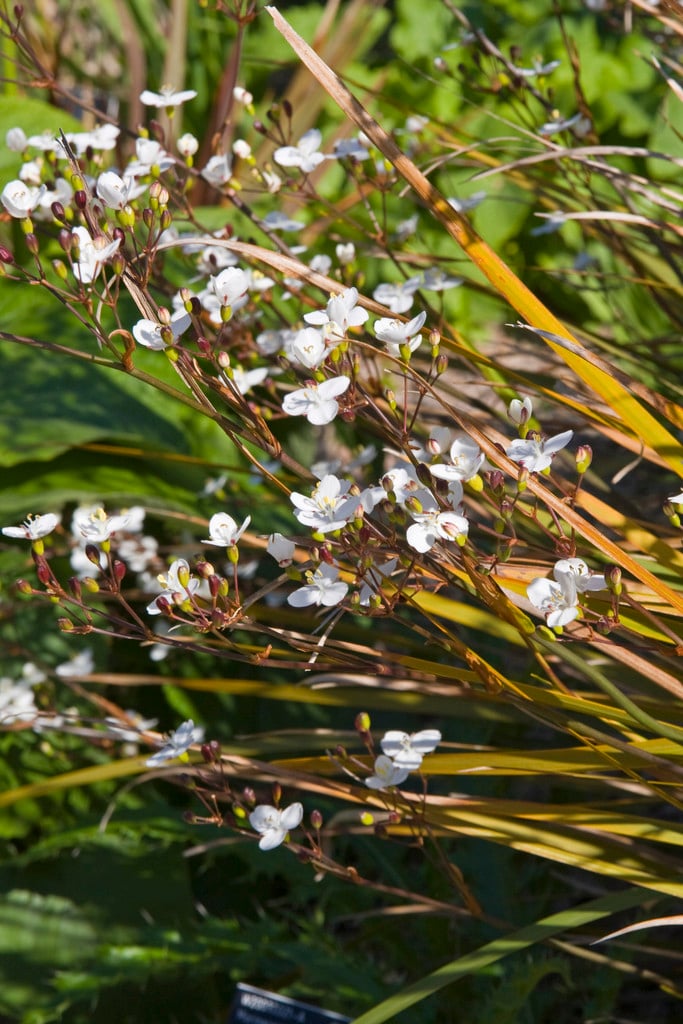
Libertia ixioides

RHS Plant Profile
New Zealand iris
New Zealand iris RHS

Synonyms

Moraea ixioides
Liriope ixioides

Herbaceous Perennial

An evergreen perennial to about 60cm, forming a dense, grassy clump of narrow leaves which may turn orange-brown in winter. In late spring and early summer produces open sprays of small, white flowers each with three large and three small petals

Position

Full sun

Soil Types

Chalk, Loam, Sand

Max Height

0.5-1 metres

Max Spread

0.5-1 metres

Size

Time to Maturity
2–5 years
Max Spread
0.5-1 metres
Max Height
0.5-1 metres

Growing Conditions

Chalk Loam Sand
Moisture
Moist but well–drained
pH
Acid or Alkaline or Neutral

Position

Full sun
Aspect
South–facing
Exposure
Sheltered
Hardiness
H3
Drought Resistance
Yes

Colour & Scent

Season Stem Flower Foliage Fruit
Spring
Summer
Autumn
Winter

Botanical Details

Family
Iridaceae
Native to GB/Ireland
No
Foliage
Evergreen
Habit
Tufted
Genus
Libertia are clump-forming perennials with grass-like, evergreen leaves and panicles of saucer-shaped white or blue flowers, followed by orange seed capsules
Name Status
Correct
Plant Range
New Zealand

How to Grow

Cultivation

Grow in moderately fertile, humus-rich soil that is moist but well-drained. Needs a warm sunny position and a dry mulch for protection in winter

Propagation

Propagate by seed in pots outdoors as soon as ripe or by division in spring

Suggested planting locations and garden types

  • Prairie planting
  • Gravel garden
  • Cut flowers
  • Flower borders and beds

Pruning

Remove flower stalks after flowering, tidy up in late winter

Pests

Generally pest-free

Diseases

Generally disease-free