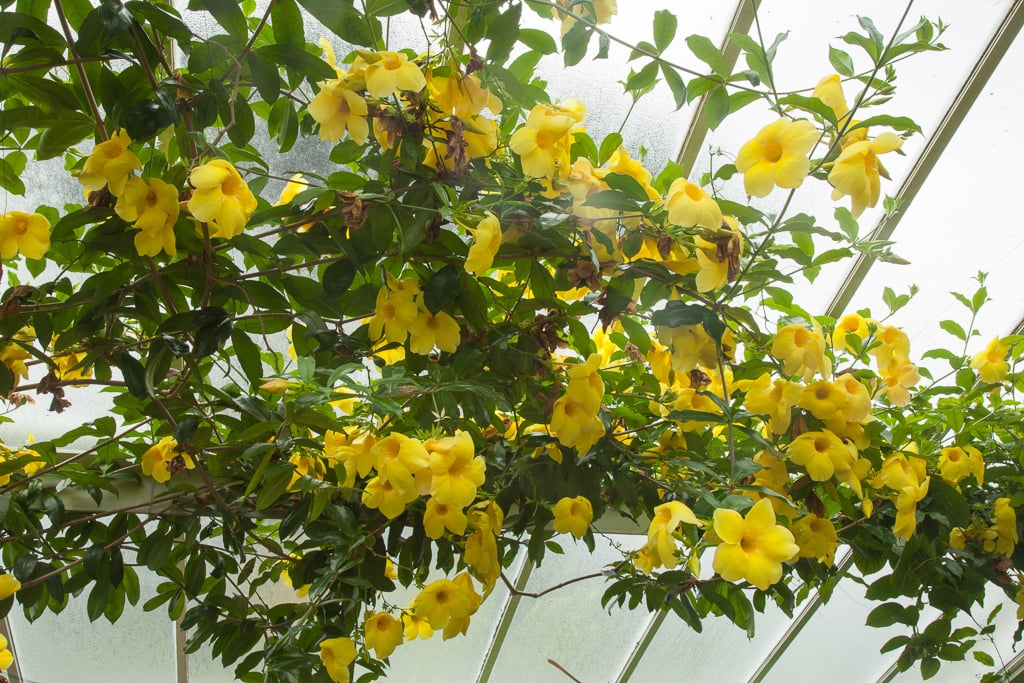
Allamanda cathartica 'Hendersonii'

RHS Plant Profile
golden trumpet 'Hendersonii'
golden trumpet 'Hendersonii' John Fielding
Conservatory Greenhouse Climber Wall Shrub

A strong-growing, tropical, evergreen climber with whorls of 3-4 glossy lance-shaped leaves. In summer and autumn it bears golden yellow flowers to 13cm across that open from bronze-tinted buds. Grow in a large pot in a conservatory

Position

Full sun

Soil Types

Loam

Max Height

4-8 metres

Max Spread

4-8 metres

Size

Time to Maturity
5–10 years
Max Spread
4-8 metres
Max Height
4-8 metres

Growing Conditions

Loam
Moisture
Moist but well–drained
pH
Acid or Alkaline or Neutral

Position

Full sun
Aspect
East–facing or South–facing or West–facing
Exposure
Sheltered
Hardiness
H1B

Colour & Scent

Season Stem Flower Foliage Fruit
Spring
Summer
Autumn
Winter

Botanical Details

Family
Apocynaceae
Native to GB/Ireland
No
Foliage
Evergreen
Habit
Climbing
Potentially harmful
Harmful if eatenskin and eye irritant. Wear gloves and other protective equipment when handling Pets (dogs, cats): Harmful if eatenskin and eye irritant - see the HTA guide to potentially harmful plants for further information and useful contact numbers
Genus
Allamanda are evergreen shrubs, sometimes scrambling, with simple, often whorled leaves and terminal clusters of large trumpet-shaped flowers
Name Status
Accepted

How to Grow

Cultivation

Under glass, grow in peat-free, loam-based compost in full light. Water freely in growth, applying a balanced liquid fertiliser every 2-3 weeks. Water sparingly in winter. Provide support for the climbing stems

Propagation

Propagate by seed sown at 18°C in spring, or by softwood cuttings

Suggested planting locations and garden types

  • Sub-tropical
  • Climber and wall shrubs
  • Conservatory and greenhouse

Pruning

Pruning group 11 or 12 in late winter or early spring

Pests

May be susceptible to glasshouse red spider mite and glasshouse whitefly

Diseases

Generally disease-free