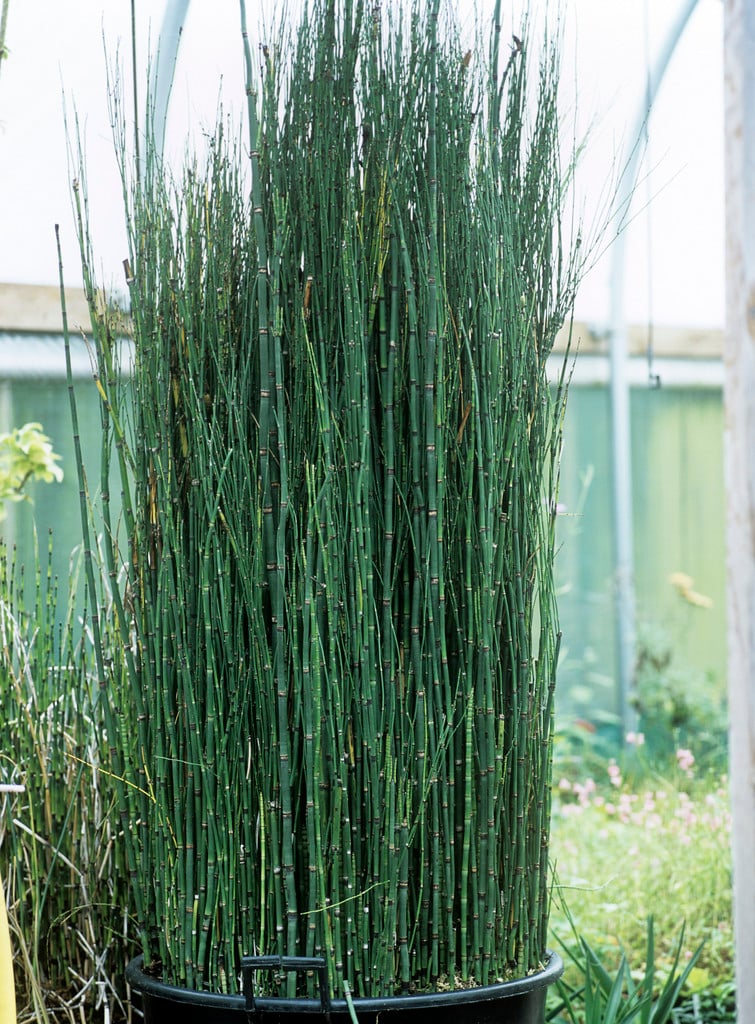
Equisetum camtschatcense

RHS Plant Profile
Kamchatka horsetail
Kamchatka horsetail RHS
Aquatic Bogs

A dense, clump-forming, evergreen perennial, with hollow, jointed, upright, green stems to 1m, banded in black

Position

Full sun, Partial shade

Soil Types

Clay, Loam, Sand

Max Height

0.5-1 metres

Max Spread

0.5-1 metres

Size

Time to Maturity
2–5 years
Max Spread
0.5-1 metres
Max Height
0.5-1 metres

Growing Conditions

Clay Loam Sand
Moisture
Poorly–drained
pH
Acid or Alkaline or Neutral

Position

Full sun Partial shade
Aspect
West–facing or South–facing or North–facing or East–facing
Exposure
Exposed or Sheltered
Hardiness
H7

Colour & Scent

Season Stem Flower Foliage Fruit
Spring
Summer
Autumn
Winter

Botanical Details

Family
Equisetaceae
Native to GB/Ireland
No
Foliage
Evergreen
Habit
Columnar upright
Genus
Equisetum are also known as horsetails or living fossils as they are the only living genus in Equisetaceae, a family of vascular plants which reproduce by spores rather than seeds. Plants have a rush-like appearance.
Name Status
Unresolved

How to Grow

Cultivation

Grow in fertile, permanently moist soil, or in water up to 10cm deep. Good in containers, which can help to contain spread. See pond plants and bog gardens for further advice

Propagation

Propagate by division in spring

Suggested planting locations and garden types

  • Architectural
  • Patio and container plants
  • City and courtyard gardens

Pruning

Remove any dead stems to improve appearance

Pests

Generally pest-free

Diseases

Generally disease-free