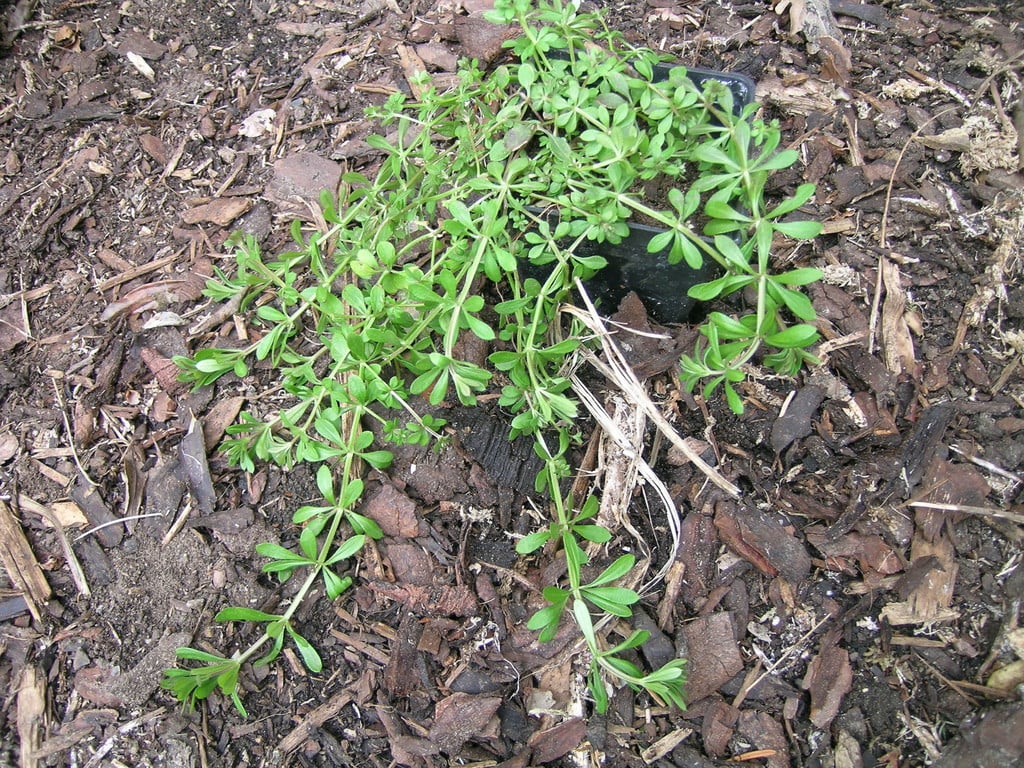
Galium aparine

RHS Plant Profile
cleavers
cleavers RHS

Other common names

bird lime, bur weed, catch weed, claver grass, cleaver grass, cleaverwort, cling rascal, clivers, cross clever, geckdor, goose bill, goose tongue, grip grass, gull grass, hair eve, harif, haritch, herif, love man, mutton chops, pig tail, scratch weed, spring cleavers, stick-a-back, sticky bobs, sticky willy, sweethearts, turkey grass, air flower, beggar's lice, goose grass, gosling weed, kiss-me-quick, llau'r offeiriad

Annual Biennial

An annual producing weak, sprawling stems to 1m or more with whorls of small, narrow leaves. Tiny, white flowers are followed by small, spherical, green fruit sometimes flushed purple. Leaves, stems and seeds are covered in stiff, hooked hairs

Position

Full sun, Partial shade

Soil Types

Chalk, Clay, Loam, Sand

Max Height

0.1-0.5 metres

Max Spread

1-1.5 metres

Size

Time to Maturity
1 year
Max Spread
1-1.5 metres
Max Height
0.1-0.5 metres

Growing Conditions

Chalk Clay Loam Sand
Moisture
Moist but well–drained or Well–drained
pH
Acid or Alkaline or Neutral

Position

Full sun Partial shade
Aspect
South–facing or West–facing or North–facing or East–facing
Exposure
Exposed or Sheltered
Hardiness
H7

Colour & Scent

Season Stem Flower Foliage Fruit
Spring
Summer
Autumn
Winter

Botanical Details

Family
Rubiaceae
Native to GB/Ireland
Yes
Foliage
Deciduous
Habit
Trailing
Genus
Galium can be annuals or perennials, with weak, sometimes scrambling stems bearing whorls of narrow leaves and usually terminal panicles of small, white or yellow flowers
Name Status
Correct

How to Grow

Cultivation

Grows naturally in open and cultivated ground, hedgerows and scrub. Can become a nuisance by scrambling and sprawlng over other plants but is easily removed. Tolerate this native annual in less tidy areas as its sticky stems are fun for children and it is a valuable food plant for many moth and butterfly caterpillars. See cleavers for more information

Propagation

Propagate by seed which spreads readily

Suggested planting locations and garden types

  • Wildlife gardens

Pruning

No pruning required

Pests

Generally pest-free

Diseases

Generally disease-free