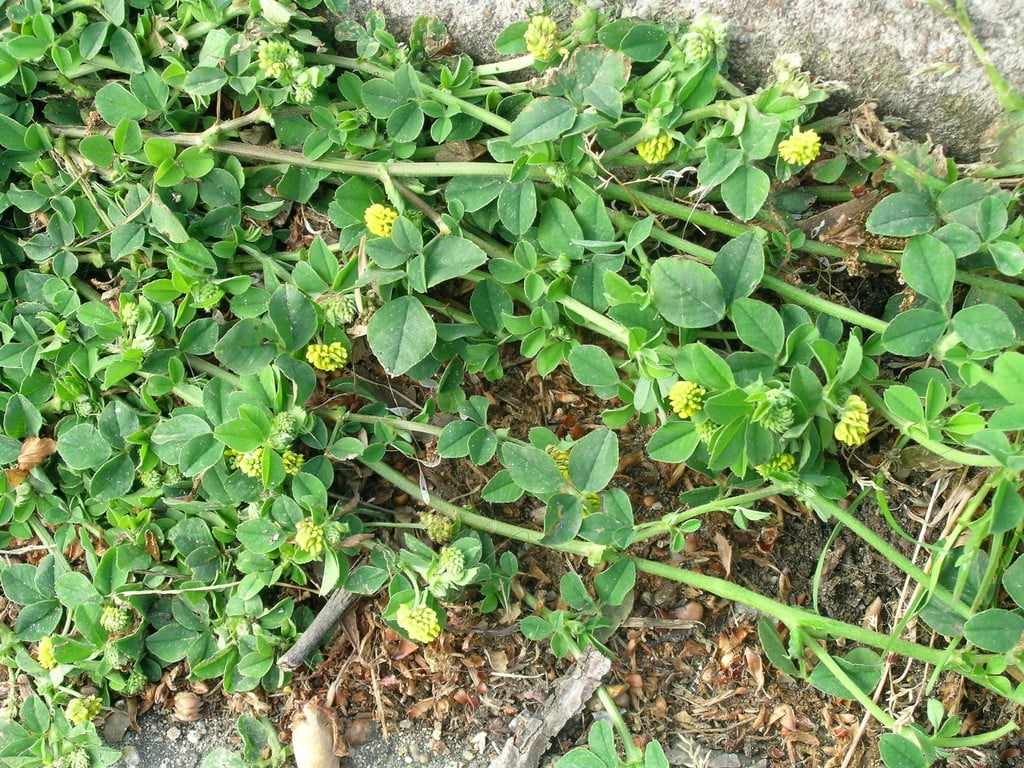
Medicago lupulina

RHS Plant Profile
black medick
black medick RHS

Other common names

black none-such, blackseed, melilot trefoil, nonsuch, yellow clover, yellow trefoil, black grass, hop clover, maglys

Herbaceous Perennial Annual Biennial

An annual or short-lived perennial with a deep tap root, sprawling stems that become mat-like in mown grass, and small, hairy, clover-like leaves. Small, yellow, clover-like flowers, from mid-spring to early autumn, are followed by black seed pods

Position

Full sun, Partial shade

Soil Types

Chalk, Clay, Loam, Sand

Max Height

0.1-0.5 metres

Max Spread

0.1-0.5 metres

Size

Time to Maturity
1–2 years
Max Spread
0.1-0.5 metres
Max Height
0.1-0.5 metres

Growing Conditions

Chalk Clay Loam Sand
Moisture
Moist but well–drained or Well–drained
pH
Acid or Alkaline or Neutral

Position

Full sun Partial shade
Aspect
West–facing or East–facing or South–facing or North–facing
Exposure
Exposed or Sheltered
Hardiness
H7

Colour & Scent

Season Stem Flower Foliage Fruit
Spring
Summer
Autumn
Winter

Botanical Details

Family
Fabaceae
Native to GB/Ireland
Yes
Foliage
Deciduous
Habit
Trailing
Genus
Medicago are annuals, perennials or small shrubs. Leaves have three leaflets and may be light, yellow-, mid- or blue-green. Their short sprays of pea-like flowers are attractive to bees and butterflies
Name Status
Correct
Plant Range
Europe (except extreme N), naturalised N America

How to Grow

Cultivation

Will grow in most situations including poor, dry soil. Often appears in lawns; see clover in lawns for more information. May be grown as green manure; see our video How to grow and sow green manure for advice

Propagation

Propagate from seed sown in autumn

Suggested planting locations and garden types

  • Wildlife gardens
  • Wildflower meadow

Pruning

No pruning required

Pests

Generally pest-free

Diseases

Generally disease-free