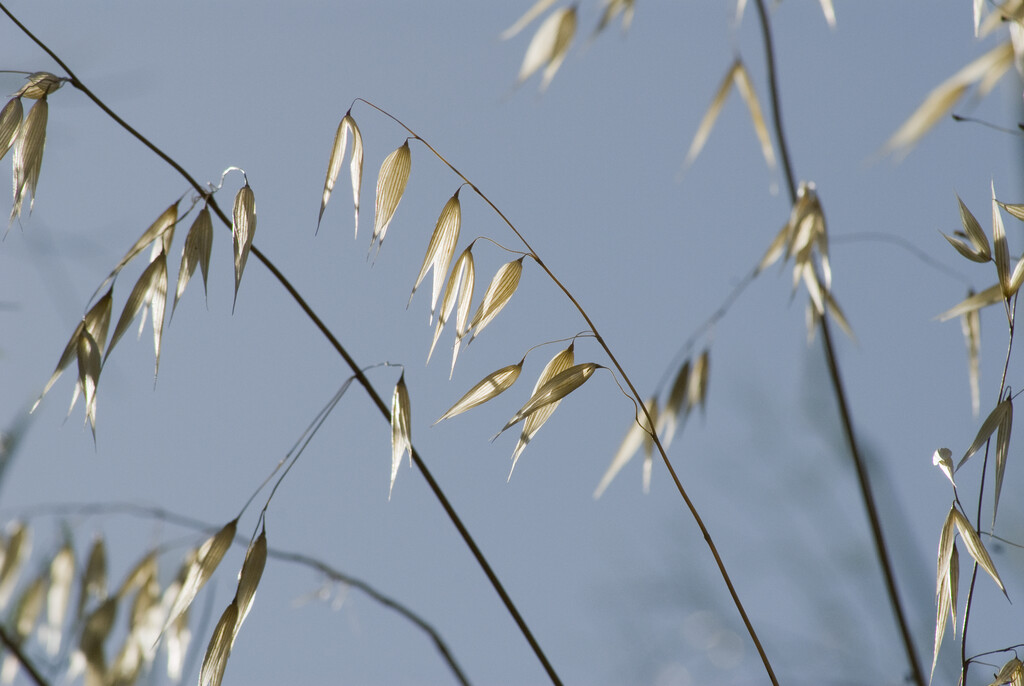
Avena fatua

RHS Plant Profile
wild oat
wild oat visionspictures.com

Other common names

flaver, potato oat, drake, ceirchwellt gwllt y gwanwyn

Grass Like

An annual, clump forming grass that typically grows upright with an erect, tufted habit. It’s slender, arching stems can reach heights of up to 1.5m with a spread to around 50cm. The leaves are linear, flat, and rough-textured, typically blue-green to grey-green in colour, reaching lengths of up to 30cm. The leaf blades have a characteristic rough feel due to fine hairs on their surface. It produces distinctive, loose, and nodding flower panicles from late spring to early summer. The flowers are greenish with purplish tinges, and the spikelets have long, twisted bristle-like structures (known as 'awns'), giving the plant a feathery, graceful appearance

Position

Full sun

Soil Types

Chalk, Clay, Loam, Sand

Max Height

1-1.5 metres

Max Spread

0.1-0.5 metres

Size

Time to Maturity
1 year
Max Spread
0.1-0.5 metres
Max Height
1-1.5 metres

Growing Conditions

Chalk Clay Loam Sand
Moisture
Moist but well–drained
pH
Acid or Alkaline or Neutral

Position

Full sun
Aspect
South–facing or West–facing
Exposure
Exposed or Sheltered
Hardiness
H5

Colour & Scent

Season Stem Flower Foliage Fruit
Spring
Summer
Autumn
Winter

Botanical Details

Family
Poaceae
Native to GB/Ireland
Yes
Foliage
Deciduous
Habit
Tufted
Genus
Name Status
Correct

How to Grow

Cultivation

Grows well in a wide range of soil, but thrives in moist, but well-drained soil in full sun. See Creating wildflower meadows for further advice

Propagation

Propagate by sowing seeds outdoors

Suggested planting locations and garden types

  • Wildflower meadow
  • Wildlife gardens

Pruning

For more information see our page on how to cut back deciduous grasses

Pests

Generally pest-free

Diseases

Generally disease-free