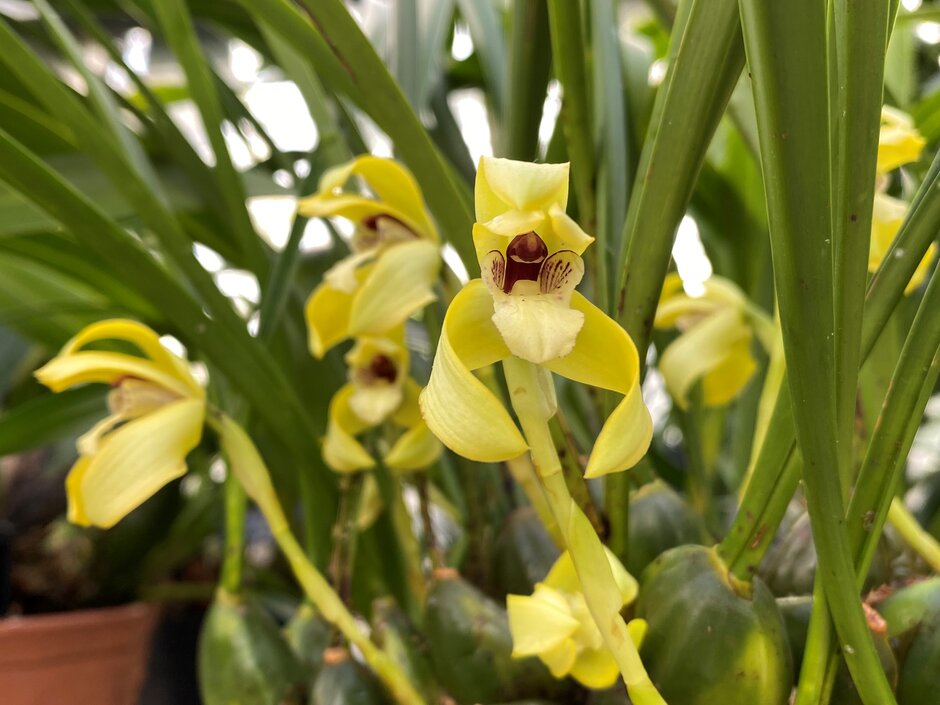
Maxillaria porphyrostele

<em>Maxillaria</em> <em>porphyrostele</em> Valeria Valkova
Conservatory Greenhouse Houseplants

An epiphytic, evergreen orchid producing a clump of small, round or egg-shaped pseudobulbs. Each pseudobulb carries two narrow, leathery, linear leaves up to 40cm long and 0.5cm wide. In late autumn and winter, flowering stems emerge from the base of the pseudobulbs. Each stem up to 15cm long carries single, fragrant flowers. Long-lasting flowers are approximately 4cm across, yellow with white lip and purple or maroon-striped throat. Mature plants grown in optimal conditions often produce large numbers of flowering stems, flowering simultaneuosly amidst the leaves

Position

Partial shade

Max Height

0.1-0.5 metres

Max Spread

0.1-0.5 metres

Size

Time to Maturity
5–10 years
Max Spread
0.1-0.5 metres
Max Height
0.1-0.5 metres

Growing Conditions

Moisture
Well–drained or Moist but well–drained
pH
Neutral

Position

Partial shade
Aspect
East–facing or North–facing or West–facing
Exposure
Sheltered
Hardiness
H1B

Colour & Scent

Fragrance Flower
Season Stem Flower Foliage Fruit
Spring
Summer
Autumn
Winter

Botanical Details

Family
Orchidaceae
Native to GB/Ireland
No
Foliage
Evergreen
Habit
Clump forming, Tufted
Genus
A large, diverse genus of mainly epiphytic, tropical orchids, producing a clump of small, elliptic or egg-shaped pseudobulbs. Pseudobulbs are thickened basal parts of stem, serving as a storage of water and nutrients
Name Status
Correct
Plant Range
Brazil

How to Grow

Cultivation

Grow in an open, free-draining, medium-grade, bark-based orchid mix with addition of perlite, sphagnum moss or coir from sustainable sources. Provide day temperatures around 18-20°C and 14-16°C at night. Provide good light levels, but avoid direct sunlight. Water plants thoroughly when compost is almost dry, allow to drain and use orchid fertiliser regularly during growing season. See also indoor orchid cultivation

Propagation

Propagation by seed is only possible in a controlled laboratory environment. Mature plants may be divided in early or mid spring, when the plant overgrows its container. Each division should have at least 3-4 healthy, older pseudobulbs with a sufficient amount of stored energy and water, to support new growth and reduce stress after repotting

Suggested planting locations and garden types

  • Houseplants
  • Conservatory and greenhouse

Pruning

No pruning required

Pests

May be susceptible to aphids, glasshouse red spider mite, scale insects and mealybugs

Diseases

May be susceptible to bacterial infections casued by poor air movement and soggy potting mix but generally disease-free