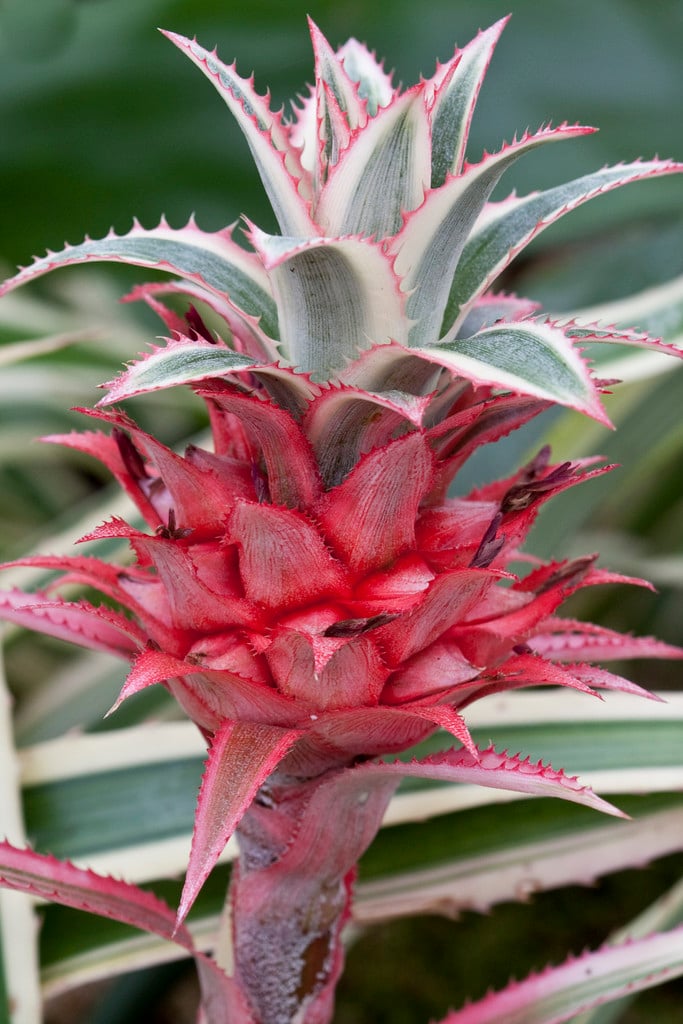
Ananas bracteatus

RHS Plant Profile
red pineapple
red pineapple RHS

Other common names

wild pineapple

Synonyms

Ananas sativus var. bracteatus

Conservatory Greenhouse

A terrestrial bromeliad with a rosette of brownish-green, lance-shaped, evergreen leaves up to 50cm long, with upward-pointing spines. In summer produces a tight cluster of yellowish-red flowers, with red bracts, on a stout, upright stem followed by green-brown pineapples up to 15cm long which are edible but not very fleshy. Image shows Ananas bracteatus 'Tricolor'

Position

Full sun

Soil Types

Loam

Max Height

0.5-1 metres

Max Spread

0.1-0.5 metres

Size

Time to Maturity
2–5 years
Max Spread
0.1-0.5 metres
Max Height
0.5-1 metres

Growing Conditions

Loam
Moisture
Well–drained
pH
Acid

Position

Full sun
Aspect
South–facing or West–facing
Exposure
Sheltered
Hardiness
H1A

Colour & Scent

Season Stem Flower Foliage Fruit
Spring
Summer
Autumn
Winter

Botanical Details

Family
Bromeliaceae
Native to GB/Ireland
No
Foliage
Evergreen
Habit
Bushy
Genus
Ananas are evergreen, terrestrial bromeliads with basal rosettes of spiny-margined, lance-shaped leaves. In summer, they produce showy flowers in dense, terminal, cone-like clusters followed by fleshy, edible fruit
Name Status
Correct
Plant Range
Brazil to Argentina

How to Grow

Cultivation

Grow in terrestrial bromeliad compost in full light, low to moderately humidity and no draughts. Water freely when growing and flowering, reduce slightly and add a balanced liquid feed weekly when in fruit, keep barely moist at other times.

Propagation

Root basal offsets in early summer, or sever the leafy rosette at the top of the fruit, allow it a day or two to callus then root it in a barely moist mix of peat substitute and sand in indirect light at 21C

Suggested planting locations and garden types

  • Patio and container plants

Pruning

No pruning required

Pests

May be susceptible to scale insects

Diseases

Generally disease-free