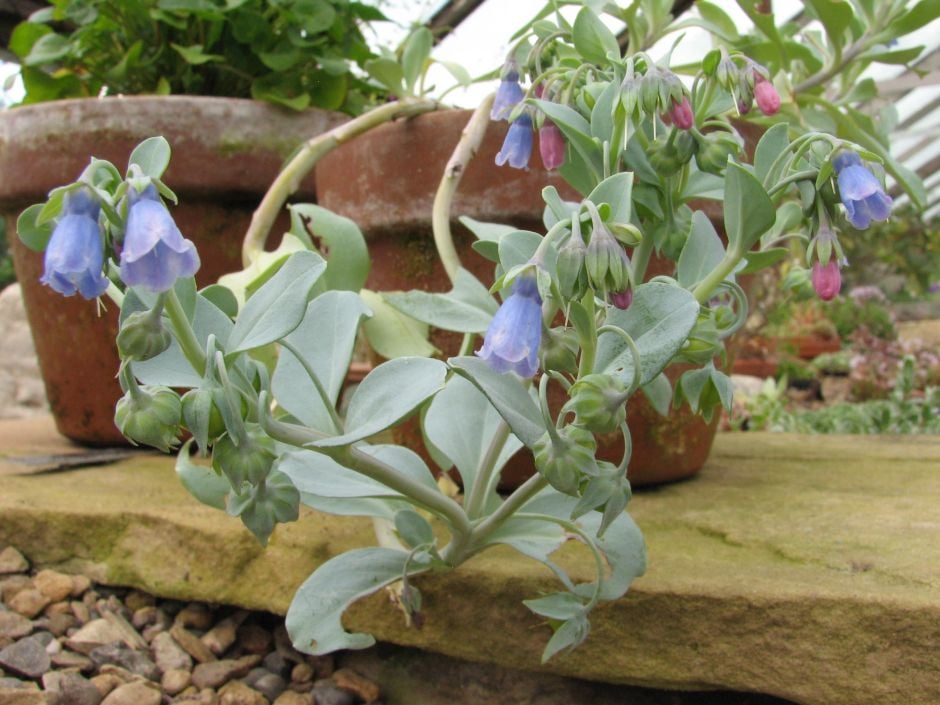
Mertensia maritima

RHS Plant Profile
oysterplant
oysterplant RHS

Other common names

gromwell, oysterleaf, sea bugloss, sea lungwort, llysiau'r llymarch

Synonyms

Mertensia maritima subsp. asiatica
Mertensia asiatica
Stenhammaria maritima
Mertensia simplicissima

Herbaceous Perennial

A spreading, prostrate perennial with fleshy, blue-grey-green leaves, up to 10cm long, and branched clusters of bright blue, bell-shaped flowers opening from pink buds in early summer

Position

Full sun, Partial shade

Soil Types

Sand

Max Height

Up to 10 cm

Max Spread

0.1-0.5 metres

Size

Time to Maturity
2–5 years
Max Spread
0.1-0.5 metres
Max Height
Up to 10 cm

Growing Conditions

Sand
Moisture
Well–drained
pH
Acid or Alkaline or Neutral

Position

Full sun Partial shade
Aspect
West–facing or East–facing
Exposure
Sheltered
Hardiness
H5
Drought Resistance
Yes

Colour & Scent

Season Stem Flower Foliage Fruit
Spring
Summer
Autumn
Winter

Botanical Details

Family
Boraginaceae
Native to GB/Ireland
Yes
Foliage
Deciduous
Habit
Trailing
Genus
Mertensia are herbaceous perennials with usually grey-green or blue-green leaves and nodding, blue, tubular or narrowly bell-shaped flowers
Name Status
Correct
Plant Range
Northern Hemisphere

How to Grow

Cultivation

Grow in sharply-drained, gritty soil with low fertility in full sun with some midday shade

Propagation

Propagate by seed sown in containers in a cold frame in autumn; keep young plants shaded and do not allow the soil to dry out. Divide plants carefully as new growth begins in spring

Suggested planting locations and garden types

  • Coastal
  • Cottage and informal garden
  • Gravel garden
  • Patio and container plants

Pruning

Cut back after flowering

Pests

May be susceptible to slugs and snails

Diseases

Generally disease-free