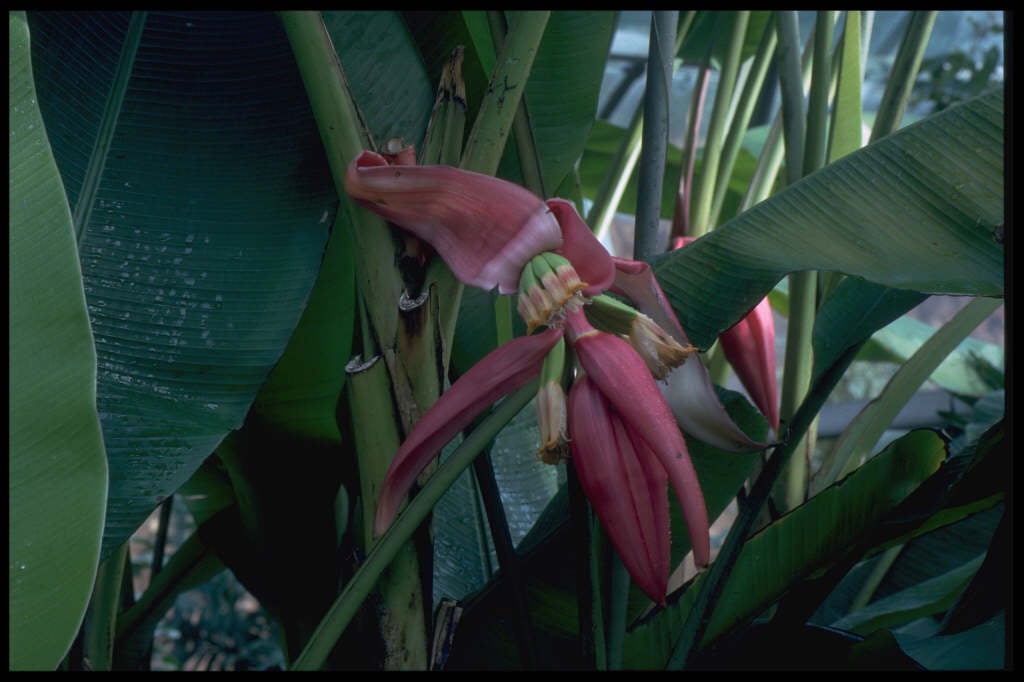
Musa ornata

RHS Plant Profile
flowering banana
flowering banana Janet Cubey & Wolfgang Bopp 2000
Award of Garden Merit
Herbaceous Perennial Conservatory Greenhouse

A robust evergreen perennial to 4m in height, with oblong leaves to 2m in length, and erect spikes of orange-yellow flowers with pink bracts, followed by greenish-yellow fruits

Position

Full sun

Soil Types

Chalk, Clay, Loam, Sand

Max Height

2.5-4 metres

Max Spread

1-1.5 metres

Size

Time to Maturity
10–20 years
Max Spread
1-1.5 metres
Max Height
2.5-4 metres

Growing Conditions

Chalk Clay Loam Sand
Moisture
Moist but well–drained or Well–drained
pH
Acid or Alkaline or Neutral

Position

Full sun
Aspect
South–facing or West–facing
Exposure
Sheltered
Hardiness
H1B

Colour & Scent

Season Stem Flower Foliage Fruit
Spring
Summer
Autumn
Winter

Botanical Details

Family
Musaceae
Native to GB/Ireland
No
Foliage
Evergreen
Habit
Suckering
Genus
Musa are suckering evergreen perennials with very large, paddle-shaped leaves whose stalk-bases form a false stem, and clusters of tubular flowers with colourful bracts, followed by cylindrical fruits
Name Status
Correct
Plant Range
Burma & India

How to Grow

Cultivation

Grow outdoors in humus-rich soil in full sun. Will need protection over winter. Place in sheltered area as the wind tends to shred leaves. Grow under glass in peat-free, loam-based compost in full light. See banana cultivation for further advice

Propagation

Propagate by seed, separate suckers or by division

Suggested planting locations and garden types

  • Coastal
  • Architectural
  • Wall side borders

Pruning

No pruning required, but remove spent foliage and cutting back in autumn may be needed

Pests

May be susceptible to glasshouse red spider mite, mealybugs and aphids under glass

Diseases

Generally disease-free