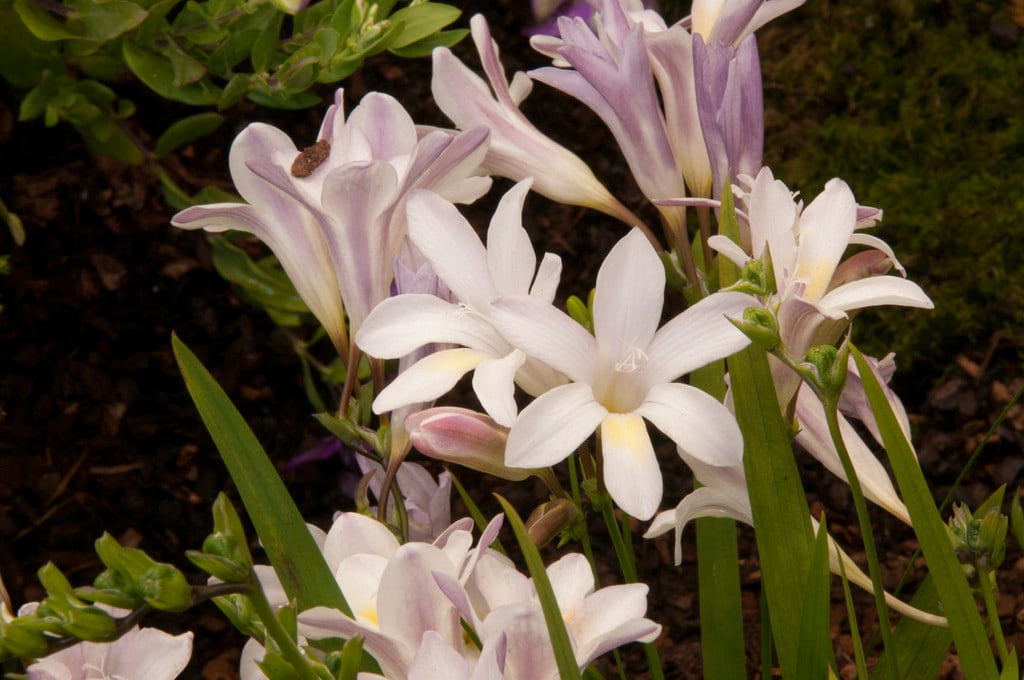
Freesia lactea

RHS Plant Profile
milky-white freesia
milky-white freesia RHS

Synonyms

Freesia alba Foster

Conservatory Greenhouse Bulbs

A cormous perennial with narrow, upright foliage and strongly scented, white, funnel-shapedflowers up to 6cm long

Position

Full sun

Soil Types

Chalk, Loam, Sand

Max Height

0.1-0.5 metres

Max Spread

0-0.1 metre

Size

Time to Maturity
1 year
Max Spread
0-0.1 metre
Max Height
0.1-0.5 metres

Growing Conditions

Chalk Loam Sand
Moisture
Well–drained
pH
Alkaline or Neutral

Position

Full sun
Aspect
South–facing
Exposure
Sheltered
Hardiness
H3

Colour & Scent

Fragrance Flower
Season Stem Flower Foliage Fruit
Spring
Summer
Autumn
Winter

Botanical Details

Family
Iridaceae
Native to GB/Ireland
No
Foliage
Deciduous
Habit
Columnar upright
Genus
Freesia are cormous deciduous perennials with erect, linear to narrowly lance-shaped leaves and upright stems bearing terminal racemes of slender-tubed, salver-shaped or trumpet-shaped flowers that are usually scented
Name Status
Correct

How to Grow

Cultivation

Freesias are naturally winter-growers starting into growth in autumn through to late spring so are usually grown in a frost-free greenhouse. Plant in pots of peat-free, loam-based compost with added gritty sand. Place in full light with good ventilation, water well and feed monthly until flower buds form. After flowering, dry off pots and store dry over the summer. Corms can also be stored dry over the winter and planted in well-drained soil in spring for later flowering. Lift in autumn and store dry

Propagation

Remove offsets in autumn

Suggested planting locations and garden types

  • City and courtyard gardens
  • Gravel garden
  • Patio and container plants
  • Coastal
  • Cottage and informal garden
  • Flower borders and beds
  • Wall side borders

Pruning

Foliage can be removed after it dies down after flowering

Pests

Susceptible to glasshouse red spider mite and aphids

Diseases

Susceptible to fusarium wilt and a virus