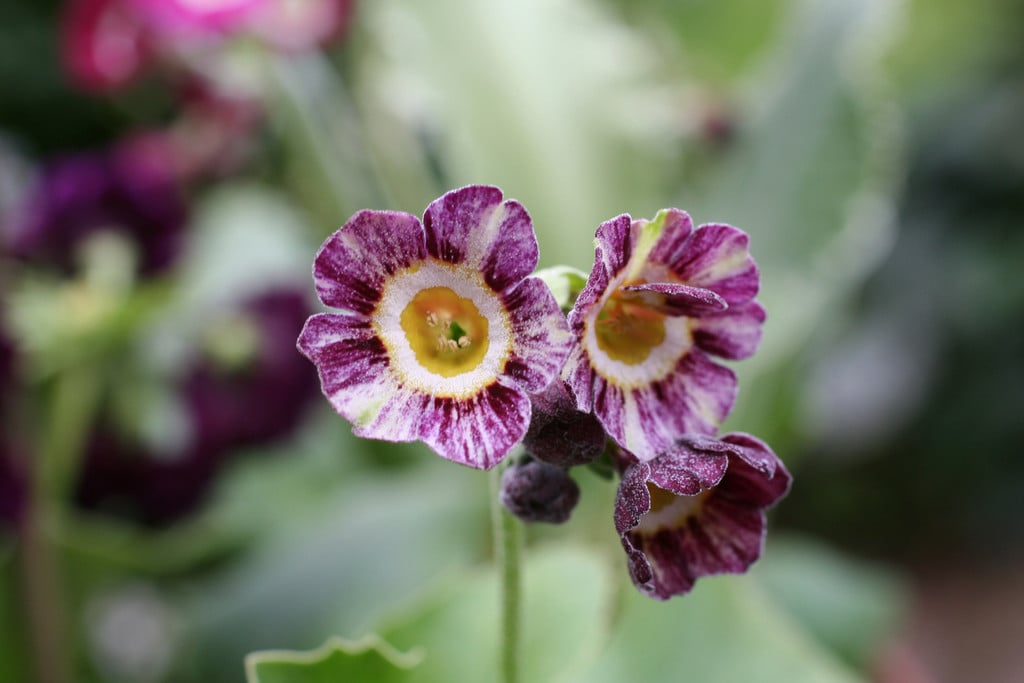
Primula auricula 'Arundell' (Au/S/St)

RHS Plant Profile
auricula 'Arundell'
auricula 'Arundell' RHS

Synonyms

Primula auricula 'Arundel Stripe'
Primula auricula 'Arundel Star'

Conservatory Greenhouse Alpine Rockery

An evergreen, perennial, striped, show auricula up to 20cm tall, with rosettes of mealy, pale green leaves. Clusters of scented, mid-purple flowers, with white stripes, whitecentres and greenish-yellow eyes, are produced on short stems in spring

Position

Full sun, Partial shade

Soil Types

Loam

Max Height

0.1-0.5 metres

Max Spread

0.1-0.5 metres

Size

Time to Maturity
2–5 years
Max Spread
0.1-0.5 metres
Max Height
0.1-0.5 metres

Growing Conditions

Loam
Moisture
Moist but well–drained
pH
Acid or Alkaline or Neutral

Position

Full sun Partial shade
Aspect
East–facing or South–facing or West–facing
Exposure
Sheltered
Hardiness
H5

Colour & Scent

Fragrance Flower
Season Stem Flower Foliage Fruit
Spring
Summer
Autumn
Winter

Botanical Details

Family
Primulaceae
Native to GB/Ireland
No
Foliage
Evergreen
Habit
Clump forming
Potentially harmful
Skin allergen. Wear gloves and other protective equipment when handling
Genus
Primula are herbaceous or semi-evergreen perennials, forming a basal rosette of simple leaves, with salver-shaped or bell-shaped flowers which may be solitary or carried in an umbel or in whorls on an erect stem
Name Status
Accepted
Horticultural Group
Show Striped Auricula group primulas have the white centres of Show group auriculas, as well as stripes of colour that reach the edges of the petals.

How to Grow

Cultivation

Grow show auriculas in pots in an alpine house or cold frame, in a mix of equal parts peat-free, loam-based potting compost, leaf mould, peat-substitute and grit. Avoid wetting mealy flowers or leaves

Propagation

Propagate by division or by separating and rooting offsets, after flowering

Suggested planting locations and garden types

  • Patio and container plants

Pruning

No pruning required but deadhead after flowering, and remove dead or damaged leaves as necessary

Pests

May be susceptible to aphids, glasshouse red spider mite, slugs, leafhoppers and vine weevils

Diseases

May be susceptible to a virus, primula brown core and grey moulds