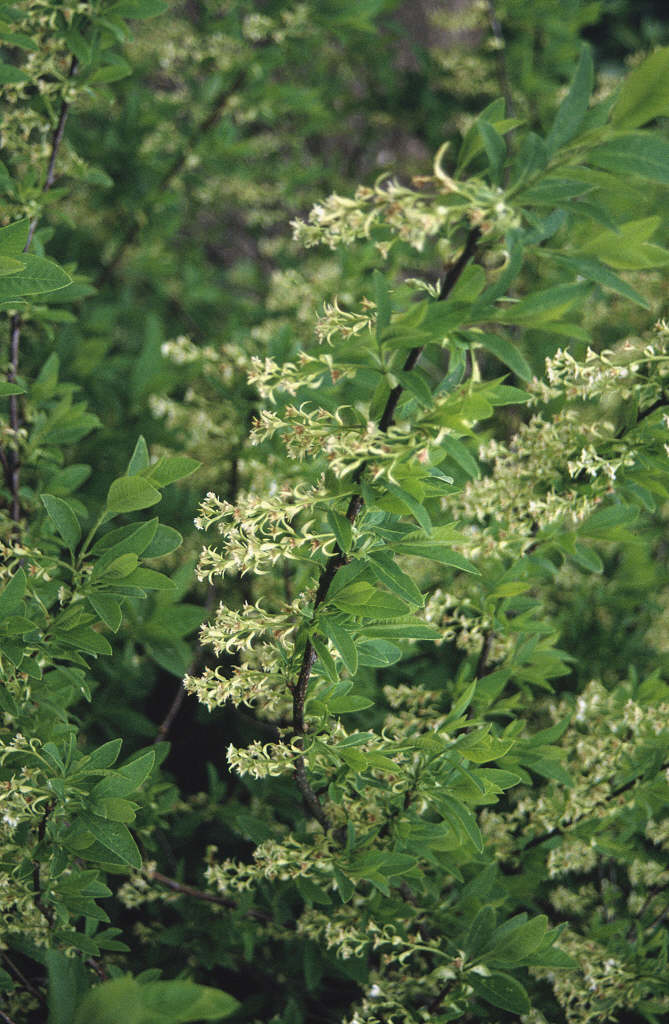
Oemleria cerasiformis

RHS Plant Profile
oso berry
oso berry RHS 1999

Other common names

Indian plum, Oregon plum

Synonyms

Osmaronia cerasiformis
Nuttallia cerasiformis

Shrubs

Forms a dense thicket of erect stems to 2.5m tall, with pale green leaves and small white flowers, male and female on separate plants

Position

Full sun, Partial shade

Soil Types

Clay, Loam

Max Height

1.5-2.5 metres

Max Spread

1.5-2.5 metres

Size

Time to Maturity
5–10 years
Max Spread
1.5-2.5 metres
Max Height
1.5-2.5 metres

Growing Conditions

Clay Loam
Moisture
Moist but well–drained
pH
Acid or Alkaline or Neutral

Position

Full sun Partial shade
Aspect
South–facing or North–facing or West–facing or East–facing
Exposure
Exposed or Sheltered
Hardiness
H7

Colour & Scent

Fragrance Flower
Season Stem Flower Foliage Fruit
Spring
Summer
Autumn
Winter

Botanical Details

Family
Rosaceae
Native to GB/Ireland
No
Foliage
Deciduous
Habit
Suckering
Genus
Oemleria are suckering deciduous shrubs with lance-shaped leaves and drooping racemes of small flowers opening before the leaves in early spring, followed on female plants by plum-like purple fruits
Name Status
Correct
Plant Range
W North America

How to Grow

Cultivation

Grow in fertile, moist but well-drained soil in sun or partial shade. In moist soil, plants may sucker extensively; remove excess suckers to restrict growth

Propagation

Propagate by seed as soon as ripe, take greenwood or softwood cuttings in early summer. Transplant suckers in early autumn

Suggested planting locations and garden types

  • City and courtyard gardens
  • Coastal
  • Cottage and informal garden
  • Hedging and screens
  • Flower borders and beds

Pests

Generally pest-free

Diseases

May become chlorotic in shallow, chalky soil