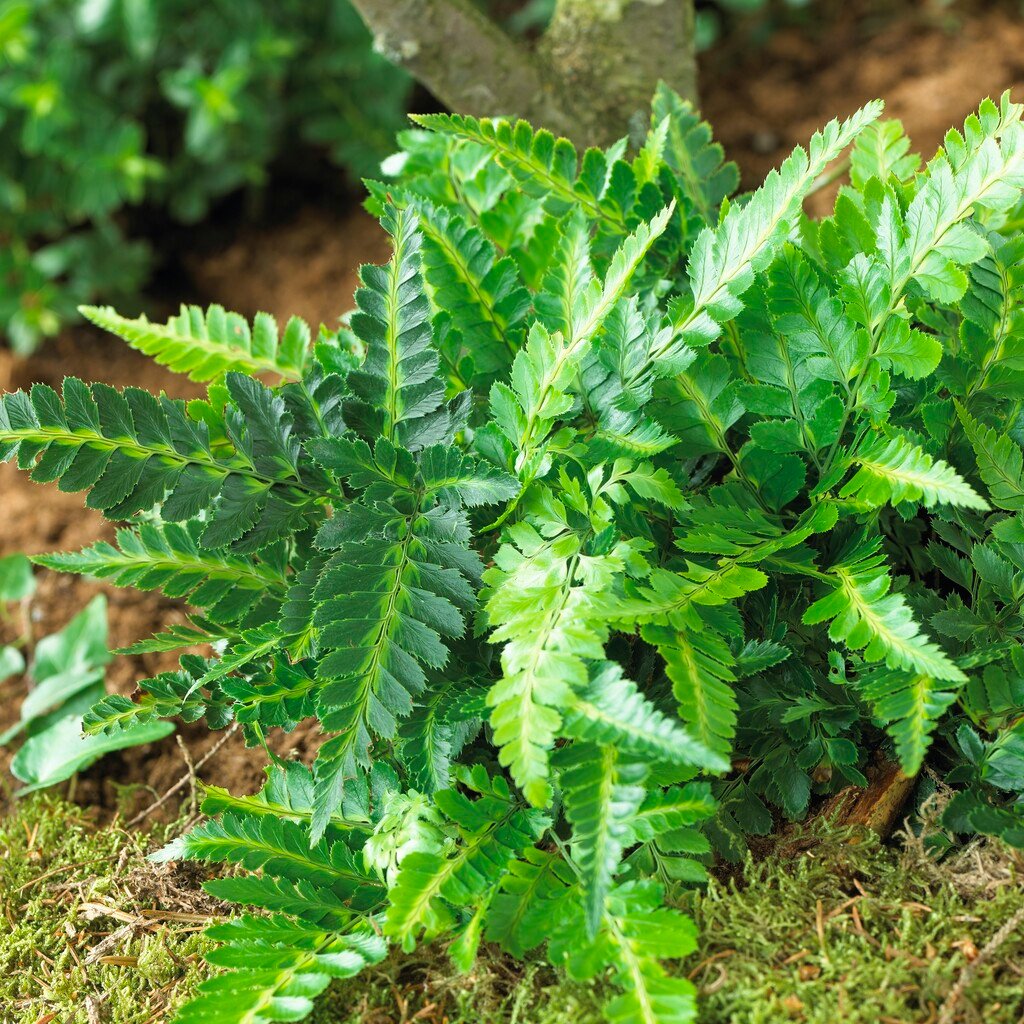
Arachniodes simplicior

<em>Arachniodes</em> <em>simplicior</em> visionspictures.com

Synonyms

Arachniodes 'Variegata'
Arachniodes simplicior 'Variegata'
Rumohra aristata 'Variegata'
Arachniodes aristata 'Variegata'
Aspidium aristatum var. simplicius
Aspidium amabile

Ferns

A slow-growing, evergreen fern bearing thick, glossy, broadly-triangular, dark green fronds divided into three or four segments and a prominent light green or yellow stripe down the centre of each segment.

Position

Full shade, Partial shade

Soil Types

Clay, Loam, Chalk

Max Height

0.5-1 metres

Max Spread

0.5-1 metres

Size

Time to Maturity
5–10 years
Max Spread
0.5-1 metres
Max Height
0.5-1 metres

Growing Conditions

Clay Loam Chalk
Moisture
Moist but well–drained
pH
Neutral or Acid or Alkaline

Position

Full shade Partial shade
Aspect
West–facing or East–facing or North–facing
Exposure
Sheltered
Hardiness
H3

Colour & Scent

Season Stem Flower Foliage Fruit
Spring
Summer
Autumn
Winter

Botanical Details

Family
Dryopteridaceae
Native to GB/Ireland
No
Foliage
Evergreen
Habit
Clump forming
Genus
A genus of around 60 species of slow-growing, shade-loving wood ferns with thick, yellow-streaked glossy dark green fronds
Name Status
Correct
Plant Range
Japan, China

How to Grow

Cultivation

Grow in moist but well-drained soil in full or partial shade. Borderline hardiness in exposed or cold locations may cause the plant to be deciduous in cold winters. Protect with a thick, dry mulch in autumn.

Propagation

Propagate by division in mid spring or autumn

Suggested planting locations and garden types

  • Cottage and informal garden
  • Low Maintenance
  • Underplanting of roses and shrubs
  • Ground cover
  • Flower borders and beds

Pruning

Remove any old or frost damaged fronds in spring

Pests

Generally pest-free

Diseases

Generally disease-free