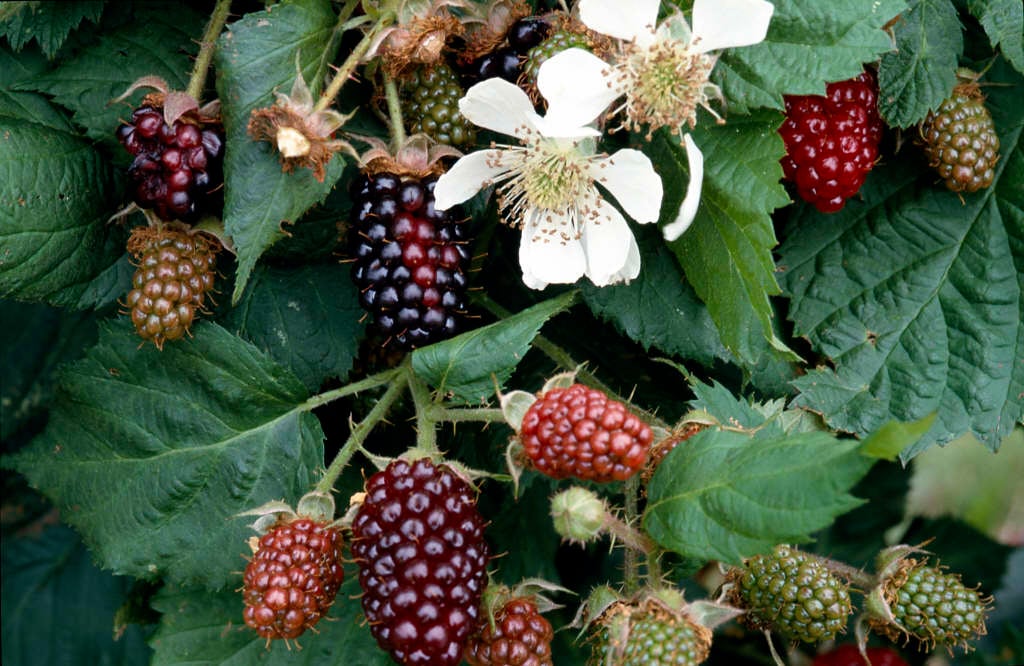
Rubus 'Silvan' (F)

RHS Plant Profile
silvanberry
silvanberry RHS

Other common names

American bramble

Synonyms

Rubus 'Silvanberry'
Rubus 'Scoresby Selection'

Fruit Edible

Blackberry 'Silvan' is suitable for culinary or dessert use and has attractive large, well-flavoured fruit. An early-ripening cultivar, it is very vigorous and thorny

Position

Full sun

Soil Types

Clay, Loam, Sand

Max Height

1.5-2.5 metres

Max Spread

4-8 metres

Size

Time to Maturity
2–5 years
Max Spread
4-8 metres
Max Height
1.5-2.5 metres

Growing Conditions

Clay Loam Sand
Moisture
Moist but well–drained or Well–drained
pH
Neutral

Position

Full sun
Aspect
South–facing or West–facing or East–facing
Exposure
Sheltered
Hardiness
H6

Colour & Scent

Season Stem Flower Foliage Fruit
Spring
Summer
Autumn
Winter

Botanical Details

Family
Rosaceae
Native to GB/Ireland
No
Foliage
Deciduous
Habit
Trailing
Genus
Rubus can be deciduous or evergreen shrubs, often scrambling with bristly or prickly stems bearing simple, lobed, palmate or pinnate leaves and 5-petalled flowers followed by juicy, sometimes edible fruits
Name Status
Accepted
Horticultural Group
This genus produces fruit, but not necessarily edible fruit

How to Grow

Cultivation

Grow in well-drained, deep soil that has been enriched with organic matter such as well-rotted manure or compost

Propagation

Propagate by tip layering or from cuttings

Suggested planting locations and garden types

  • Cottage and informal garden
  • Wall side borders

Pruning

Usually fan trained, but blackberries can be trained in many creative ways. The principle is cut out fruited canes, leaving new growth to train in for fruiting the following year. Further advice on pruning blackberries

Pests

May be susceptible to aphids, leafhoppers, raspberry beetle and gall mites

Diseases

May be susceptible to grey moulds and honey fungus (rarely)