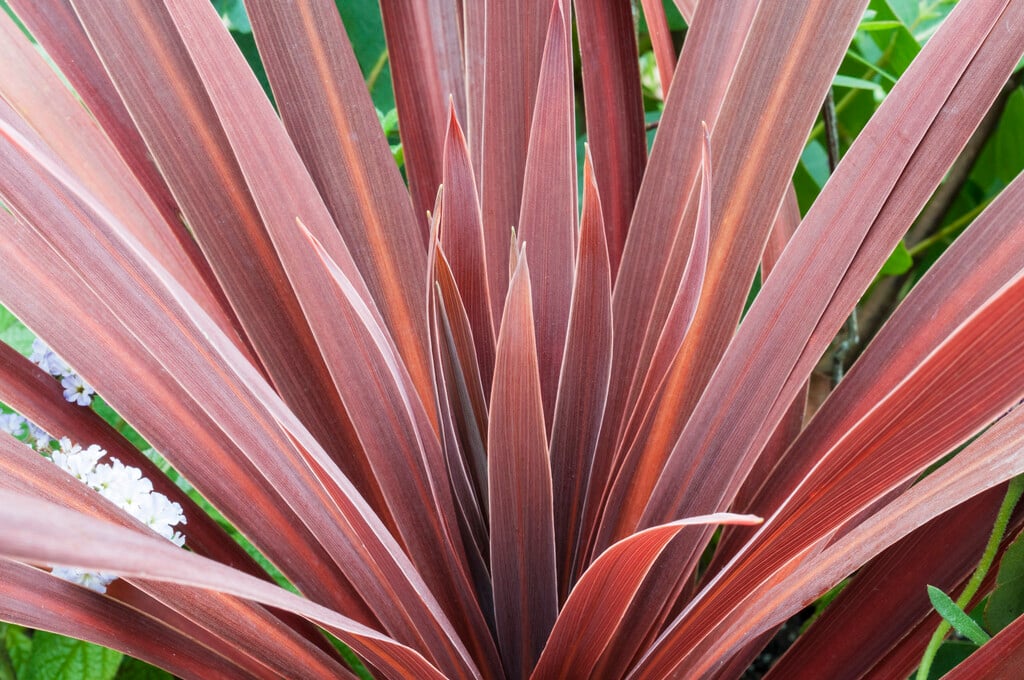
Cordyline 'Red Star'

RHS Plant Profile
cabbage palm 'Red Star'

Synonyms

Cordyline australis 'Red Star'

Award of Garden Merit
Palms Trees Shrubs

A compact, evergreen perennial palm, shrub or tree used for its striking dark bronze-red and cream striped variegated leaves. Creamy-white fragrant flowers are produced in the summer followed by berries in the autumn. An excellent addition to patio pots and containers or a tropical border

Position

Full sun, Partial shade

Soil Types

Chalk, Clay, Loam, Sand

Max Height

2.5-4 metres

Max Spread

1.5-2.5 metres

Size

Time to Maturity
10–20 years
Max Spread
1.5-2.5 metres
Max Height
2.5-4 metres

Growing Conditions

Chalk Clay Loam Sand
Moisture
Moist but well–drained or Well–drained
pH
Acid or Alkaline or Neutral

Position

Full sun Partial shade
Aspect
South–facing or West–facing or East–facing
Exposure
Sheltered
Hardiness
H3
Drought Resistance
Yes

Colour & Scent

Fragrance Flower
Season Stem Flower Foliage Fruit
Spring
Summer
Autumn
Winter

Botanical Details

Family
Asparagaceae
Native to GB/Ireland
No
Foliage
Evergreen
Habit
Bushy
Genus
Cordyline are palm-like evergreen shrubs or tree-like perennials, with rosettes or tufts of linear or anrrowly lance-shaped, leathery leaves, and terminal panicles of fragrant, cup-shaped flowers followed by small. spherical berries
Name Status
Accepted

How to Grow

Cultivation

Grow in well-drained soil in a sheltered position in full sun or partial shade. See cordyline cultivation

Propagation

Propagate by removing well-rooted suckers in spring

Suggested planting locations and garden types

  • Architectural
  • City and courtyard gardens
  • Coastal
  • Gravel garden
  • Patio and container plants
  • Mediterranean climate plants
  • Low Maintenance
  • Flower borders and beds
  • Wall side borders

Pruning

No pruning required. Old, dead leaves can be pulled away from the base

Pests

May be susceptible to glasshouse red spider mite and scale insects

Diseases

May be susceptible to cordyline slime flux and honey fungus (rarely)