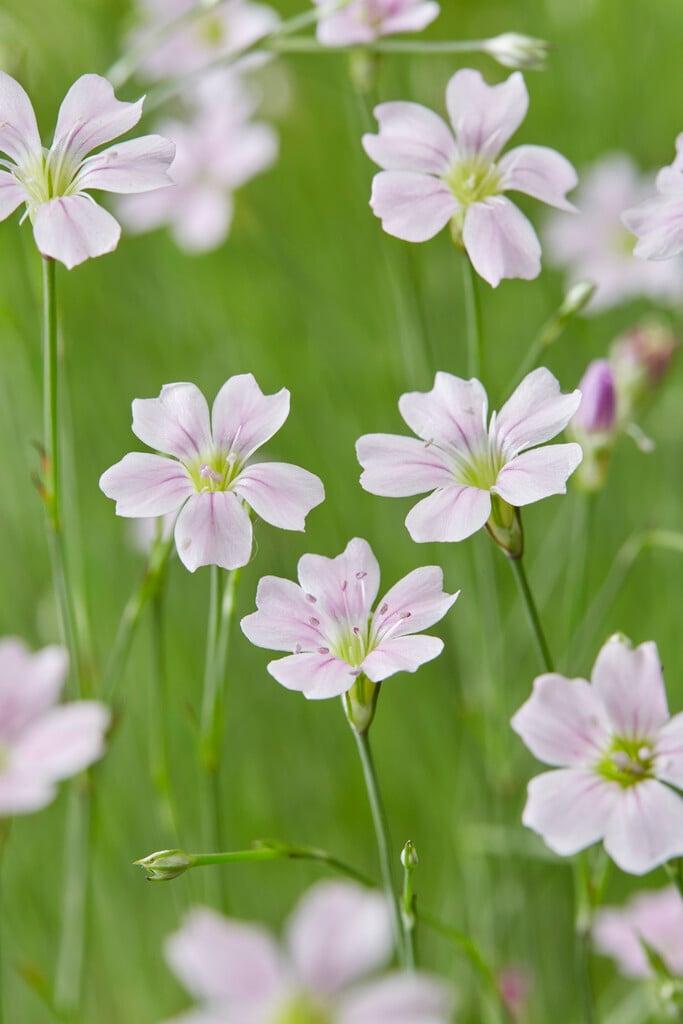
Petrorhagia saxifraga

RHS Plant Profile
tunic flower
tunic flower visionspictures.com

Other common names

coat flower

Synonyms

Gypsophila saxifraga
Tunica saxifraga

Award of Garden Merit
Herbaceous Perennial Alpine Rockery

A low-growing, mat-forming, spreading hardy perennial alpine with small, thin green leaves which remain evergreen in milder areas. Small white or pale pink flowers appear in late spring to early summer, lasting through until late . A great alpine for cascading over walls and steps, edging paths or green roofs

Position

Full sun

Soil Types

Loam, Sand

Max Height

Up to 10 cm

Max Spread

0.1-0.5 metres

Size

Time to Maturity
2–5 years
Max Spread
0.1-0.5 metres
Max Height
Up to 10 cm

Growing Conditions

Loam Sand
Moisture
Well–drained
pH
Acid or Alkaline or Neutral

Position

Full sun
Aspect
South–facing or West–facing
Exposure
Exposed or Sheltered
Hardiness
H4
Drought Resistance
Yes

Colour & Scent

Season Stem Flower Foliage Fruit
Spring
Summer
Autumn
Winter

Botanical Details

Family
Caryophyllaceae
Native to GB/Ireland
No
Foliage
Evergreen
Habit
Matforming
Genus
Petrorhagia is a small genus of flowering annuals and perennials, native to Europe and Asia, with low-growing, narrow grass-like foliage and small clusters of pink, lilac or white flowers which are similar to Dianthus
Name Status
Correct
Plant Range
S & C Europe

How to Grow

Cultivation

Grows best in poor to moderately fertile well-drained soil in full sun. Drought resistant once established

Propagation

Sow from seed in spring or autumn in pots with free-draining seed compost. Harden off in a coldframe or greenhouse and plant out when risk of frost has passed.

Suggested planting locations and garden types

  • City and courtyard gardens
  • Cottage and informal garden
  • Gravel garden
  • Rock garden
  • Ground cover
  • Garden edging

Pruning

Cut back after flowering to encourage a second flush of flowers

Pests

May be susceptible to slugs and snails

Diseases

Generally disease-free