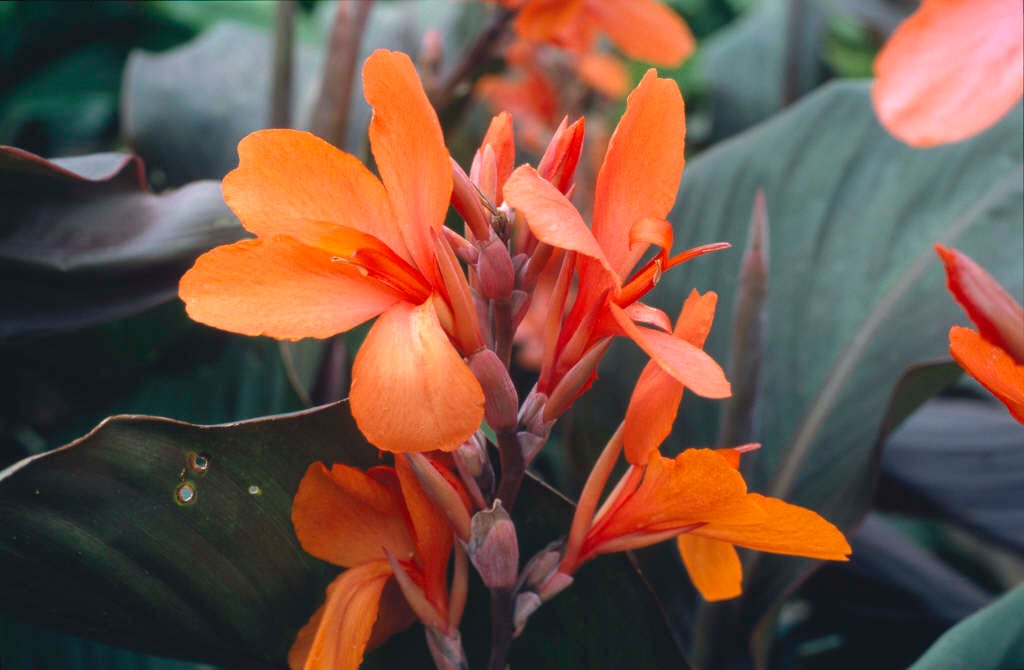
Canna 'Ingeborg'

RHS Plant Profile
canna 'Ingeborg'
canna 'Ingeborg' RHS 1999
Herbaceous Perennial Conservatory Greenhouse

Clump-forming perennial to about 1.5m tall, with large, wavy dark green leaves flushed bronze on the margin and midrib, and iris-like apricot-orange flowers from mid summer to early autumn

Position

Full sun

Soil Types

Chalk, Clay, Loam, Sand

Max Height

1-1.5 metres

Max Spread

0.1-0.5 metres

Size

Time to Maturity
2–5 years
Max Spread
0.1-0.5 metres
Max Height
1-1.5 metres

Growing Conditions

Chalk Clay Loam Sand
Moisture
Moist but well–drained
pH
Acid or Alkaline or Neutral

Position

Full sun
Aspect
South–facing or West–facing
Exposure
Sheltered
Hardiness
H3

Colour & Scent

Season Stem Flower Foliage Fruit
Spring
Summer
Autumn
Winter

Botanical Details

Family
Cannaceae
Native to GB/Ireland
No
Foliage
Deciduous
Habit
Bushy
Genus
Canna are rhizomatous herbaceous perennials with erect stems bearing ovate leaves, with showy flowers with showy petal-like staminodes and small, coloured petals and sepals, borne in racemes or panicles in summer and autumn
Name Status
Accepted

How to Grow

Cultivation

Needs a sheltered, warm site and plenty of watering. In autumn, rhizomes can be lifted and stored in a frost-free place or, in mild gardens leave them in the ground but cover with dry mulch.

Propagation

Propagate by division

Suggested planting locations and garden types

  • Coastal
  • Cottage and informal garden
  • Patio and container plants
  • Architectural
  • City and courtyard gardens
  • Flower borders and beds

Pruning

Leave to die back in autumn

Pests

Caterpillars, glasshouse red spider mite and aphids may be a problem

Diseases

May be susceptible to a virus