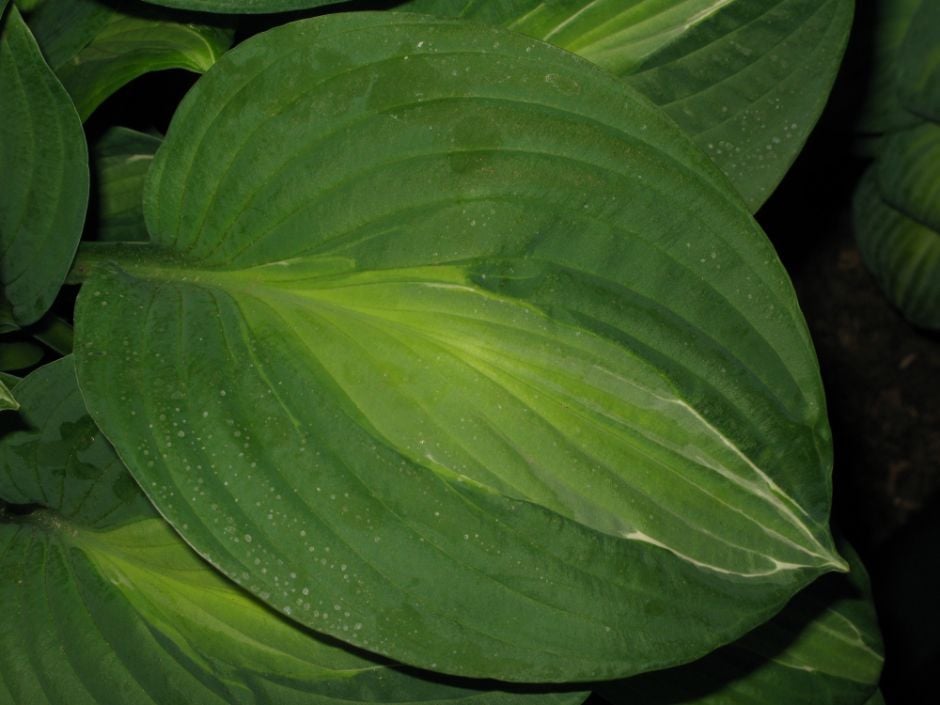
Hosta 'Striptease' (_fortunei_) (v)

RHS Plant Profile
plantain lily 'Striptease'
plantain lily 'Striptease' RHS

Synonyms

Hosta 'Striptease'

Herbaceous Perennial

A herbaceous perennial forming a mound of foliage to 50cm high and 115cm wide. The oval leaves have a chartreuse centre, turning yellow to ivory, which is separated by a thin white line from a wide dark green margin. Pale purple flowers are held on stems aove the mounded foliage in summer

Position

Full sun, Partial shade

Soil Types

Clay, Loam

Max Height

0.5-1 metres

Max Spread

1-1.5 metres

Size

Time to Maturity
2–5 years
Max Spread
1-1.5 metres
Max Height
0.5-1 metres

Growing Conditions

Clay Loam
Moisture
Moist but well–drained
pH
Acid or Alkaline or Neutral

Position

Full sun Partial shade
Aspect
North–facing or West–facing or East–facing
Exposure
Sheltered
Hardiness
H7

Colour & Scent

Season Stem Flower Foliage Fruit
Spring
Summer
Autumn
Winter

Botanical Details

Family
Asparagaceae
Native to GB/Ireland
No
Foliage
Deciduous
Habit
Clump forming
Genus
Hosta are clump-forming herbaceous perennials with simple, ovate or lance-shaped leaves, often attractively coloured or variegated, and erect racemes of nodding, funnel or bell-shaped flowers in early summer
Name Status
Accepted

How to Grow

Cultivation

Grow in fertile, moist but well-drained soil with shelter from cold, dry winds. Best in slightly acid or neutral soils; it will grow in alkaline soils if enriched but shallow, chalky soils can cause leaves to yellow. Partial shade is best but it can tolerate some sun if the soil is kept moist. Mulch in spring. See hosta cultivation

Propagation

Propagate by division in late summer or early spring

Suggested planting locations and garden types

  • City and courtyard gardens
  • Cottage and informal garden
  • Flower borders and beds
  • Underplanting of roses and shrubs
  • Garden edging

Pruning

Remove spent foliage as required and clear up dead foliage when it dies back at the end of the growing season

Pests

May be susceptible to slugs, snails and vine weevil

Diseases

May be susceptible to a virus