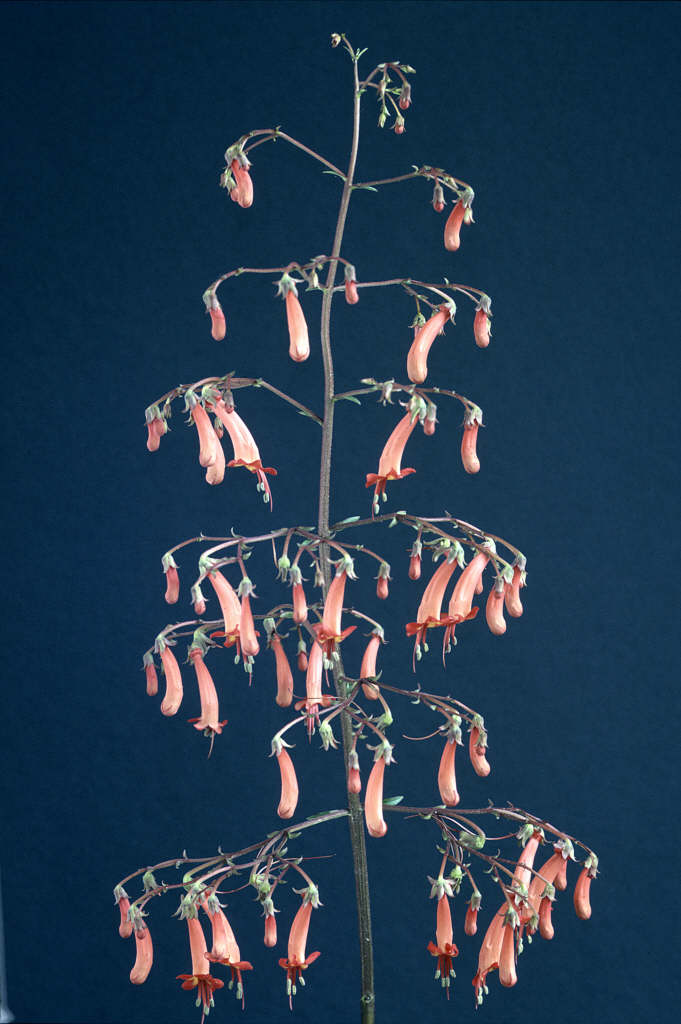
Phygelius capensis

RHS Plant Profile
Cape figwort
Cape figwort RHS 1988

Other common names

Cape fuchsia

Shrubs

A vigorous semi-evergreen small shrub with triangular-ovate leaves to 8cm in length. Nodding, tubular, bright orange-red flowers 3cm in length in large open terminal panicles

Position

Full sun

Soil Types

Chalk, Clay, Loam, Sand

Max Height

1-1.5 metres

Max Spread

1-1.5 metres

Size

Time to Maturity
5–10 years
Max Spread
1-1.5 metres
Max Height
1-1.5 metres

Growing Conditions

Chalk Clay Loam Sand
Moisture
Moist but well–drained or Well–drained
pH
Acid or Alkaline or Neutral

Position

Full sun
Aspect
West–facing or East–facing
Exposure
Sheltered
Hardiness
H4

Colour & Scent

Season Stem Flower Foliage Fruit
Spring
Summer
Autumn
Winter

Botanical Details

Family
Scrophulariaceae
Native to GB/Ireland
No
Foliage
Semi evergreen
Habit
Bushy
Genus
Phygelius are evergreen shrubs, usually grown as herbaceous perennials in cooler areas, with simple, ovate leaves and large panicles of tubular flowers in summer and autumn
Name Status
Unresolved
Plant Range
Temp S Africa

How to Grow

Cultivation

Grows well in most fertile soils but may require some winter protection in colder areas. Can be grown as a shrub or as a herbaceous perennial

Propagation

Propagate by seed sown in containers in a cold frame in spring or take softwood cuttings in late spring. Suckers may be detached and rooted in spring

Suggested planting locations and garden types

  • Cottage and informal garden
  • City and courtyard gardens
  • Coastal
  • Flower borders and beds
  • Wall side borders

Pruning

Cut back to base in late spring or pruning group 9

Pests

May be susceptible to figwort weevil and capsid bug

Diseases

May be susceptible to honey fungus (rarely)