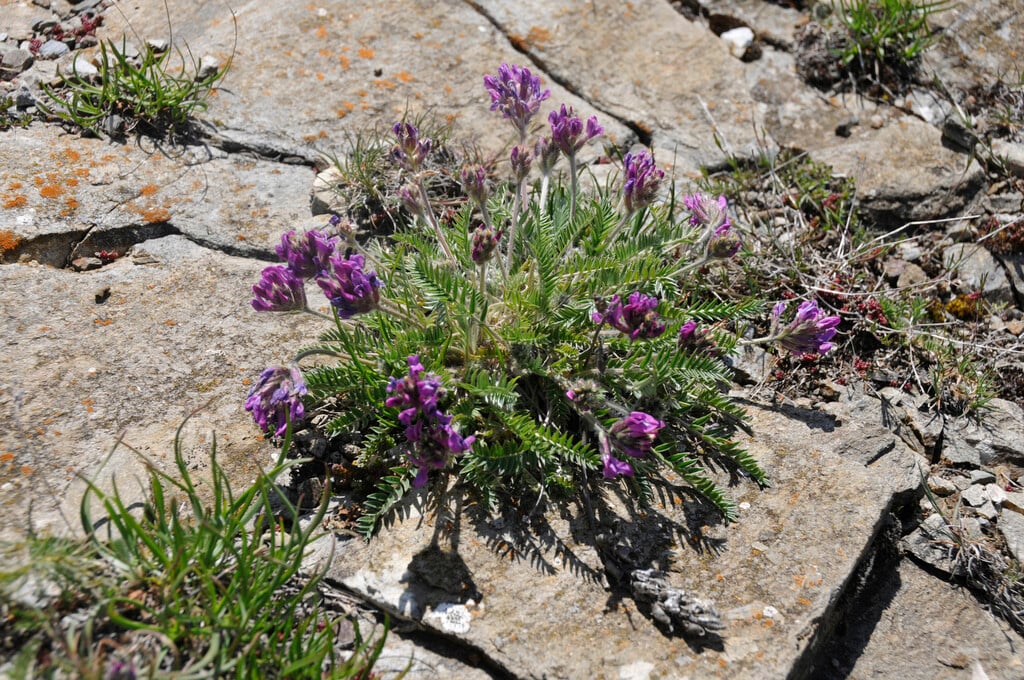
Astragalus alpinus

RHS Plant Profile
alpine milk vetch
alpine milk vetch visionspictures.com

Other common names

mountain milk vetch

Synonyms

Phaca astragalina

Herbaceous Perennial

An herbaceous perennial, with a low-growing, spreading and mat-forming habit, growing to a height of 10-30cm with a spread to 50cm. The green leaves are pinnate, with multiple small, oval-shaped leaflets. The foliage is fine-textured giving the plant a feathery appearance. It produces clusters of delicate, tubular shaped violet to pale blue flowers in June to August

Position

Full sun

Soil Types

Chalk, Loam, Sand

Max Height

Up to 10 cm

Max Spread

0.1-0.5 metres

Size

Time to Maturity
1–2 years
Max Spread
0.1-0.5 metres
Max Height
Up to 10 cm

Growing Conditions

Chalk Loam Sand
Moisture
Moist but well–drained or Well–drained
pH
Alkaline or Neutral

Position

Full sun
Aspect
South–facing or West–facing
Exposure
Exposed or Sheltered
Hardiness
H7
Drought Resistance
Yes

Colour & Scent

Season Stem Flower Foliage Fruit
Spring
Summer
Autumn
Winter

Botanical Details

Family
Fabaceae
Native to GB/Ireland
Yes
Foliage
Deciduous
Habit
Matforming, Trailing
Genus
Astragalus can be annuals or perennials, with usually pinnate leaves and pink, purple, yellow or white pea-flowers in terminal or axillary racemes or spikes
Name Status
Correct

How to Grow

Cultivation

Grow in moderately fertile, moist but well-drained soil in full sun. See Creating wildflower meadows for further advice

Propagation

Sow seeds in containers in an open frame in autumn or after stratification in spring. Pot up seedlings separately as soon as the first true leaf appears; they resent root distrubance later and may die. For more information see sowing seeds outdoors

Suggested planting locations and garden types

  • Rock garden
  • Wildflower meadow
  • Wildlife gardens
  • Banks and slopes

Pruning

For more information see cutting back herbaceous perennials

Pests

Maybe susceptible to pea and bean weevil

Diseases

Generally disease-free