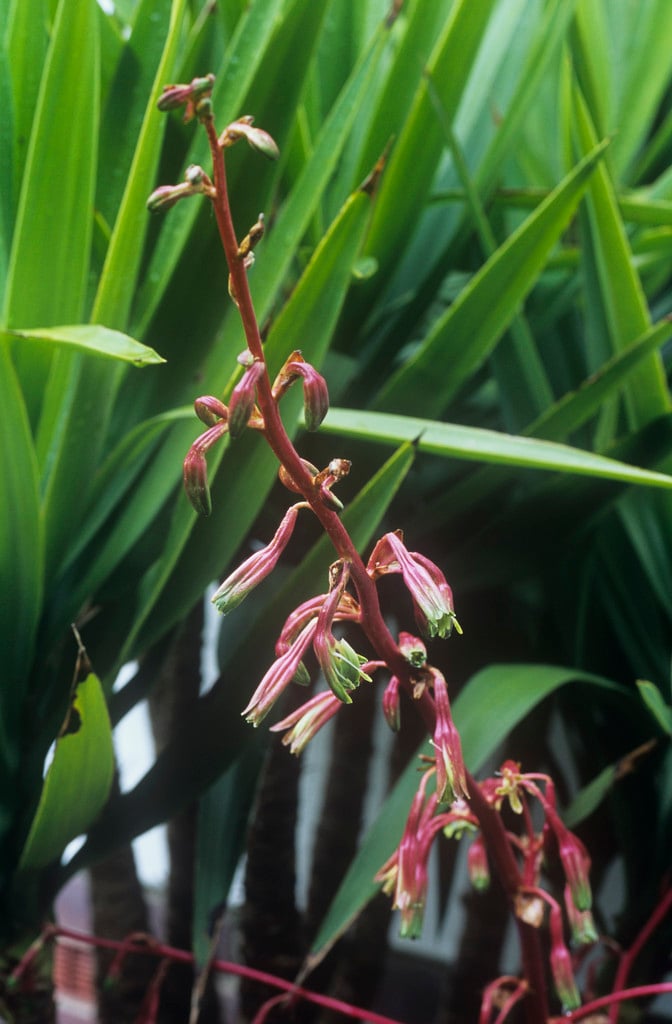
Beschorneria septentrionalis

RHS Plant Profile
northern beschorneria
northern beschorneria RHS
Award of Garden Merit
Herbaceous Perennial

An evergreen perennial forming a large clump of arching, strap-shaped leaves, each to 20cm in length. The candelabra-like inflorescence, up to 1.5m tall, has a vivid red stem and green-tipped, fuchsia-pink, tubular flowers, produced from late spring to mid-summer

Position

Full sun

Soil Types

Loam, Sand

Max Height

1-1.5 metres

Max Spread

1-1.5 metres

Size

Time to Maturity
5–10 years
Max Spread
1-1.5 metres
Max Height
1-1.5 metres

Growing Conditions

Loam Sand
Moisture
Well–drained
pH
Acid or Alkaline or Neutral

Position

Full sun
Aspect
West–facing or South–facing
Exposure
Sheltered
Hardiness
H3
Drought Resistance
Yes

Colour & Scent

Season Stem Flower Foliage Fruit
Spring
Summer
Autumn
Winter

Botanical Details

Family
Asparagaceae
Native to GB/Ireland
No
Foliage
Evergreen
Habit
Clump forming
Genus
Beschorneria are large, clump-forming evergreen perennials with strap-shaped, somewhat succulent leaves and nodding tubularflowers in arching racemes with conspicuous red bracts in late spring or early summer
Name Status
Correct
Plant Range
Mexico

How to Grow

Cultivation

Can be grown outdoors in milder areas, in very well-drained, humus-rich loam, but will require protection from hard frost. Under glass grow in cactus compost, in good light, and keep almost dry in winter

Propagation

Propagate by seed sown in spring at 21°C. Offsets can be carefully removed and potted up in spring

Suggested planting locations and garden types

  • Architectural
  • City and courtyard gardens
  • Gravel garden
  • Patio and container plants
  • Sub-tropical
  • Flower borders and beds
  • Wall side borders

Pruning

No pruning required

Pests

May be susceptible to scale insects

Diseases

Generally disease-free