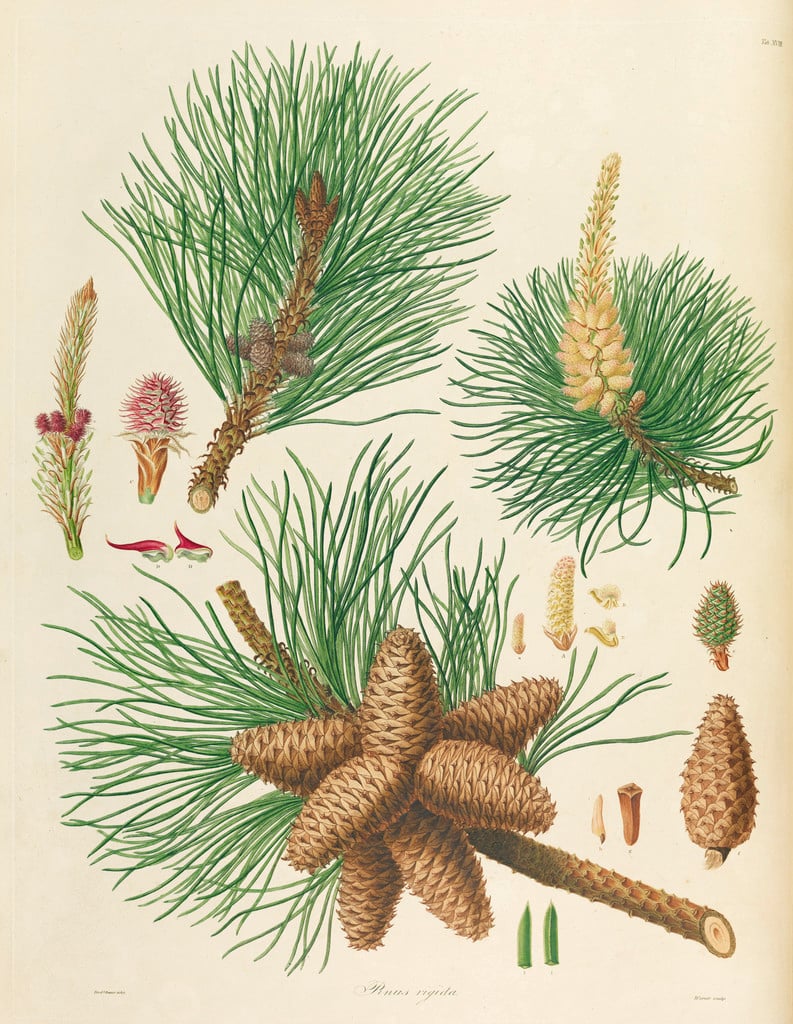
Pinus rigida

RHS Plant Profile
pitch pine
pitch pine RHS

Other common names

northern pitch pine, sap pine

Conifers Trees

A large tree with a conical or oval outline, becoming irregular with age, and fissured, dark grey bark. The dark, grey-green needles are thick and stiff, around 10cm long and borne in threes. Yellow-brown cones, 3-9cm long, often persist for several years

Position

Full sun

Soil Types

Chalk, Clay, Loam, Sand

Max Height

Higher than 12 metres

Max Spread

4-8 metres

Size

Time to Maturity
20–50 years
Max Spread
4-8 metres
Max Height
Higher than 12 metres

Growing Conditions

Chalk Clay Loam Sand
Moisture
Well–drained
pH
Acid or Alkaline or Neutral

Position

Full sun
Aspect
North–facing or West–facing or South–facing or East–facing
Exposure
Exposed or Sheltered
Hardiness
H7
Drought Resistance
Yes

Colour & Scent

Season Stem Flower Foliage Fruit
Spring
Summer
Autumn
Winter

Botanical Details

Family
Pinaceae
Native to GB/Ireland
No
Foliage
Evergreen
Habit
Columnar upright
Genus
Pinus can be shrubs or large, evergreen trees, some species with attractive bark, developing an irregular outline with age and bearing long needle-like leaves in bundles of 2, 3 or 5; conspicuous cones may fall or remain on the tree for years
Name Status
Correct
Plant Range
Eastern N America

How to Grow

Cultivation

Grow in any well-drained soil. See Trees: buying and planting specimens

Propagation

Propagate by seed

Suggested planting locations and garden types

  • Architectural
  • Low Maintenance

Pruning

No pruning required

Pests

May be susceptible to adelgids, conifer aphid, sawfly larvae, and pine shoot moth

Diseases

May be susceptible to honey fungus and needle cast diseases