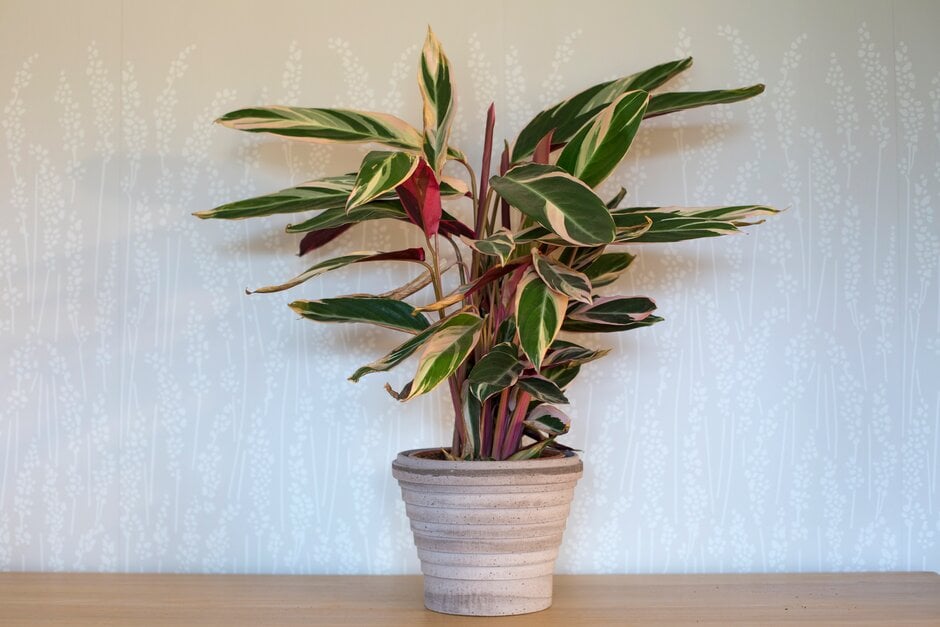
Stromanthe sanguinea 'Triostar' (v)

RHS Plant Profile
calathea 'Triostar'
calathea 'Triostar' RHS

Other common names

variegated bloody stromanthe 'Triostar'

Synonyms

Calathea 'Triostar', Stromanthe sanguinea 'Tricolour'

Houseplants Conservatory Greenhouse

An upright, evergreen perennial, grown as a houseplant, to around 60 to 90cm in height, with tropical-looking, lance-shaped variegated olive-green to creamy-pink foliage, vibrant pink on the undersides. The leaves close up at night, hence why these are often called 'Prayer Plants'. White flowers with orange sepals and red bracts, appear in winter and spring

Position

Partial shade

Soil Types

Loam

Max Height

0.5-1 metres

Max Spread

0.5-1 metres

Size

Time to Maturity
2–5 years
Max Spread
0.5-1 metres
Max Height
0.5-1 metres

Growing Conditions

Loam
Moisture
Moist but well–drained
pH
Acid or Neutral

Position

Partial shade
Aspect
East–facing or North–facing
Exposure
Sheltered
Hardiness
H1B

Colour & Scent

Season Stem Flower Foliage Fruit
Spring
Summer
Autumn
Winter

Botanical Details

Family
Marantaceae
Native to GB/Ireland
No
Foliage
Evergreen
Habit
Bushy
Genus
Stromanthe are evergreen rhizomatous herbaceous perennials with simple, lance-shaped to ovate leaves and racemes or panicles of cup-shaped white, yellow or red flowers with showy bracts, in winter, spring or summer
Name Status
Accepted

How to Grow

Cultivation

Grow under glass in peat-free potting compost in bright, filtered light. Water freely when in growth, maintain high humidity and apply a low nitrogen liquid fertiliser every 2 or 3 weeks. Water moderately in winter. See houseplant cultivation for further advice

Propagation

Propagate by division in spring

Suggested planting locations and garden types

  • Houseplants
  • Patio and container plants
  • Conservatory and greenhouse

Pruning

No pruning required

Pests

May be susceptible to glasshouse red spider mite

Diseases

Generally disease-free