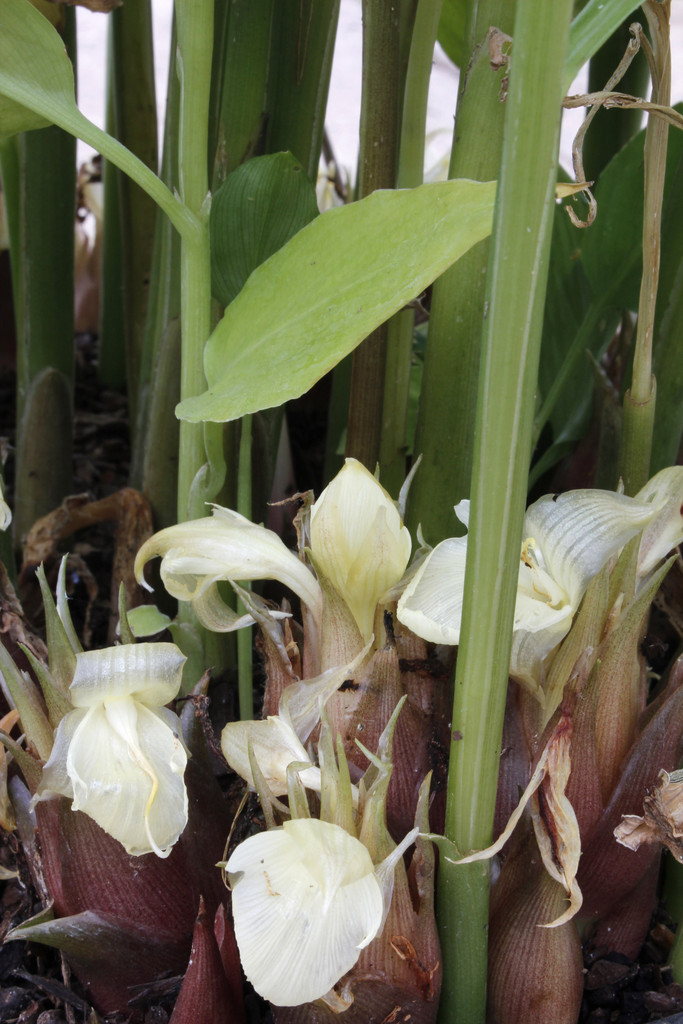
Zingiber mioga

RHS Plant Profile
Japanese ginger
Japanese ginger RHS

Other common names

mioga ginger

Award of Garden Merit
Herbaceous Perennial

a spreading, rhizomatous perennial with upright stems to about 1m clothed in lance-shaped leaves. Orchid-like, white, cream or yellow flowers appear from large, dark-pink buds at ground level in mid-summer. Dull green fruit follow, splitting open to reveal bright red interiors with black seeds

Position

Full sun, Partial shade

Soil Types

Clay, Loam, Sand

Max Height

0.5-1 metres

Max Spread

0.5-1 metres

Size

Time to Maturity
2–5 years
Max Spread
0.5-1 metres
Max Height
0.5-1 metres

Growing Conditions

Clay Loam Sand
Moisture
Moist but well–drained
pH
Acid or Neutral

Position

Full sun Partial shade
Aspect
West–facing or East–facing or South–facing
Exposure
Sheltered
Hardiness
H5

Colour & Scent

Season Stem Flower Foliage Fruit
Spring
Summer
Autumn
Winter

Botanical Details

Family
Zingiberaceae
Native to GB/Ireland
No
Foliage
Deciduous
Habit
Columnar upright
Genus
Zingiber are aromatic rhizomatous perennials with alternate, oblong leaves in two ranks, and cone-like inflorescences with overlapping, sometimes brightly coloured bracts, and 3-petalled flowers
Name Status
Correct
Plant Range
Japan

How to Grow

Cultivation

Grow in rich, organic, well-drained, acid or neutral soil in sun or partial shade

Propagation

Propagate by division of well-established plants in early spring, or by separating and replanting sections of rhizome 15-20cm long in spring or early summer

Suggested planting locations and garden types

  • City and courtyard gardens
  • Patio and container plants
  • Sub-tropical
  • Flower borders and beds

Pruning

No pruning required

Pests

May be susceptible to slugs and snails, scale insects and glasshouse red spider mite

Diseases

May be susceptible to fungal root rots, and a virus