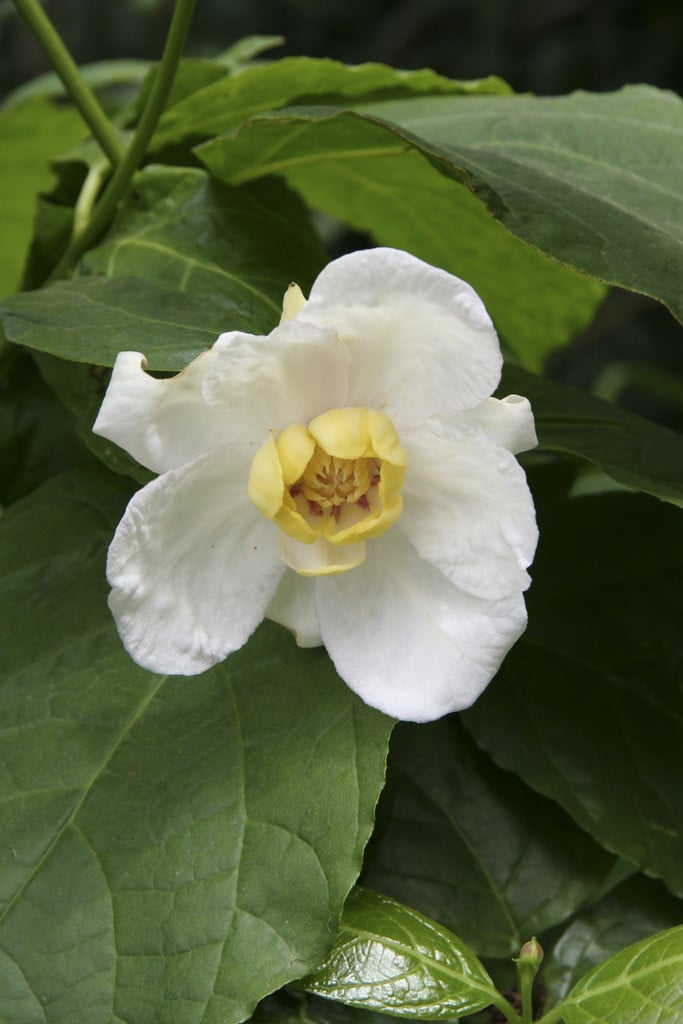
Calycanthus chinensis

RHS Plant Profile
Chinese sweetshrub
Chinese sweetshrub RHS

Other common names

Chinese sinocalycanthus

Synonyms

Sinocalycanthus chinensis

Shrubs

A medium-sized, densely branching, deciduous shrub, to 3m high and 4m wide, with large opposite leaves, broadly elliptical to obovate, to 15cm long, glossy green turning bright yellow in autumn. Nodding flowers, to 7cm across, are borne on the ends of shoots, in summer. They have white, overlapping petals in a shallow cup shape round a second ring of smaller, narrower, pale yellow petals, maroon at the base, which protrude to form a tight crown round yellow anthers

Position

Full sun, Partial shade

Soil Types

Chalk, Clay, Loam, Sand

Max Height

2.5-4 metres

Max Spread

2.5-4 metres

Size

Time to Maturity
5–10 years
Max Spread
2.5-4 metres
Max Height
2.5-4 metres

Growing Conditions

Chalk Clay Loam Sand
Moisture
Moist but well–drained or Well–drained
pH
Acid or Alkaline or Neutral

Position

Full sun Partial shade
Aspect
North–facing or West–facing or East–facing
Exposure
Sheltered
Hardiness
H6

Colour & Scent

Season Stem Flower Foliage Fruit
Spring
Summer
Autumn
Winter

Botanical Details

Family
Calycanthaceae
Native to GB/Ireland
No
Foliage
Deciduous
Habit
Bushy
Potentially harmful
Humans/Pets: Harmful if eaten. Wear gloves and other protective equipment when handling For further information and contact numbers regarding pets, see the HTA guide to potentially harmful plants
Genus
Calycanthus are deciduous shrubs with simple, aromatic leaves and solitary, fragrant flowers in summer
Name Status
Correct
Plant Range
China

How to Grow

Cultivation

Grow in moderately fertile, humus-rich, moist but well-drained soil in full sun or with some midday shade and shelter from cold, drying winds

Propagation

Propagate by seed in containers in a cold frame in autumn or root softwood cuttings in late spring or early summer with bottom heat

Suggested planting locations and garden types

  • City and courtyard gardens
  • Patio and container plants
  • Cottage and informal garden
  • Wall side borders

Pruning

Pruning group 1

Pests

Generally pest-free

Diseases

May be susceptible to honey fungus (rarely)