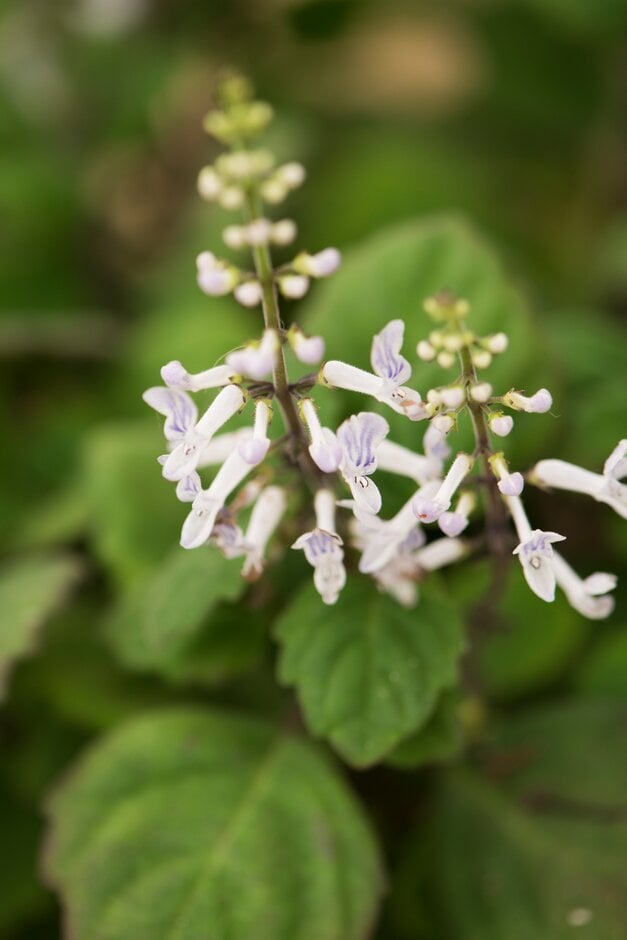
Plectranthus ernstii

RHS Plant Profile
bonsai spurflower
bonsai spurflower RHS / Joanna Kossak

Synonyms

Plectranthus 'Jan Jaas Veldia'
Plectranthus 'Van Jaas Veldia'

Houseplants Conservatory Greenhouse

A compact, frost-tender, semi-succulent to 25cm tall with swollen, jointed stems up to 5cm in diameter at the base. Aromatic, semi-succulent leaves are ovate to triangular with rounded teeth and are slightly hairy. Flower spikes up to 12cm long bear small, two-lipped, pale lilac to whitish flowers with darker markings in summer

Position

Full sun, Partial shade

Soil Types

Loam, Sand

Max Height

0.1-0.5 metres

Max Spread

0.1-0.5 metres

Size

Time to Maturity
2–5 years
Max Spread
0.1-0.5 metres
Max Height
0.1-0.5 metres

Growing Conditions

Loam Sand
Moisture
Well–drained
pH
Acid or Alkaline or Neutral

Position

Full sun Partial shade
Aspect
South–facing or East–facing or West–facing
Exposure
Sheltered
Hardiness
H2
Drought Resistance
Yes

Colour & Scent

Fragrance Foliage
Season Stem Flower Foliage Fruit
Spring
Summer
Autumn
Winter

Botanical Details

Family
Lamiaceae
Native to GB/Ireland
No
Foliage
Evergreen
Habit
Bushy
Genus
Plectranthus can be annuals, evergreen perennials or shrubs, with opposite, ovate or heart-shaped, sometimes fleshy leaves, and 2-lipped, tubular flowers borne in whorls forming spikes or panicles
Name Status
Correct
Plant Range
E South Africa

How to Grow

Cultivation

Grow in a well-drained soil in full sun or partial shade; may be moved outside after risk of frost has passed

Propagation

Propagate by seed or from stem cuttings

Suggested planting locations and garden types

  • Gravel garden
  • Patio and container plants
  • Rock garden

Pruning

No pruning required

Pests

Generally pest-free

Diseases

May be susceptible to root rots if over-watered