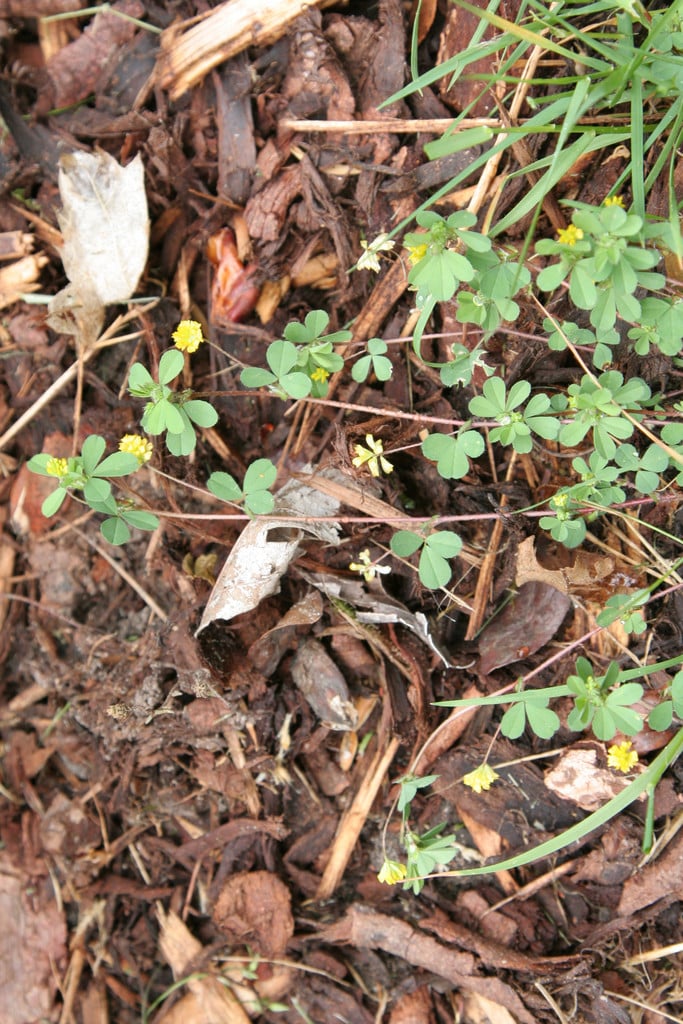
Trifolium dubium

RHS Plant Profile
lesser trefoil
lesser trefoil RHS

Other common names

lesser clover, lesser yellow trefoil, low hop clover, suckling clover, yellow clover, shamrock

Synonyms

Trifolium filiforme misapplied
Trifolium minus

Annual Biennial

An annual with semi-erect stems to 25cm, small, bright green, trefoil leaves and small, pale yellow, clover-like flowers in summer. It can spread into lawns where it forms a mat of interlaced thin, wiry stems

Position

Full sun

Soil Types

Chalk, Clay, Loam, Sand

Max Height

0.1-0.5 metres

Max Spread

0.1-0.5 metres

Size

Time to Maturity
1 year
Max Spread
0.1-0.5 metres
Max Height
0.1-0.5 metres

Growing Conditions

Chalk Clay Loam Sand
Moisture
Moist but well–drained or Poorly–drained or Well–drained
pH
Acid or Alkaline or Neutral

Position

Full sun
Aspect
West–facing or South–facing
Exposure
Exposed or Sheltered
Hardiness
H7

Colour & Scent

Season Stem Flower Foliage Fruit
Spring
Summer
Autumn
Winter

Botanical Details

Family
Fabaceae
Native to GB/Ireland
Yes
Foliage
Deciduous
Habit
Matforming
Genus
Trifolium are erect or creeping annuals, biennials and herbaceous perennials with trefoil leaves and small, pea-like flowers usually in clusters or short spikes
Name Status
Correct

How to Grow

Cultivation

An annual wildflower that grows in virtually any soil, but does best in a sunny position. See clover in lawns for more information

Propagation

Propagate by seed

Suggested planting locations and garden types

  • Gravel garden
  • Wildflower meadow
  • Wildlife gardens

Pruning

No pruning required

Pests

Generally pest-free

Diseases

Generally disease-free