Aralia cachemirica

RHS Plant Profile
Kashmir spikenard
Kashmir spikenard RHS

Synonyms

Aralia macrophylla

Herbaceous Perennial

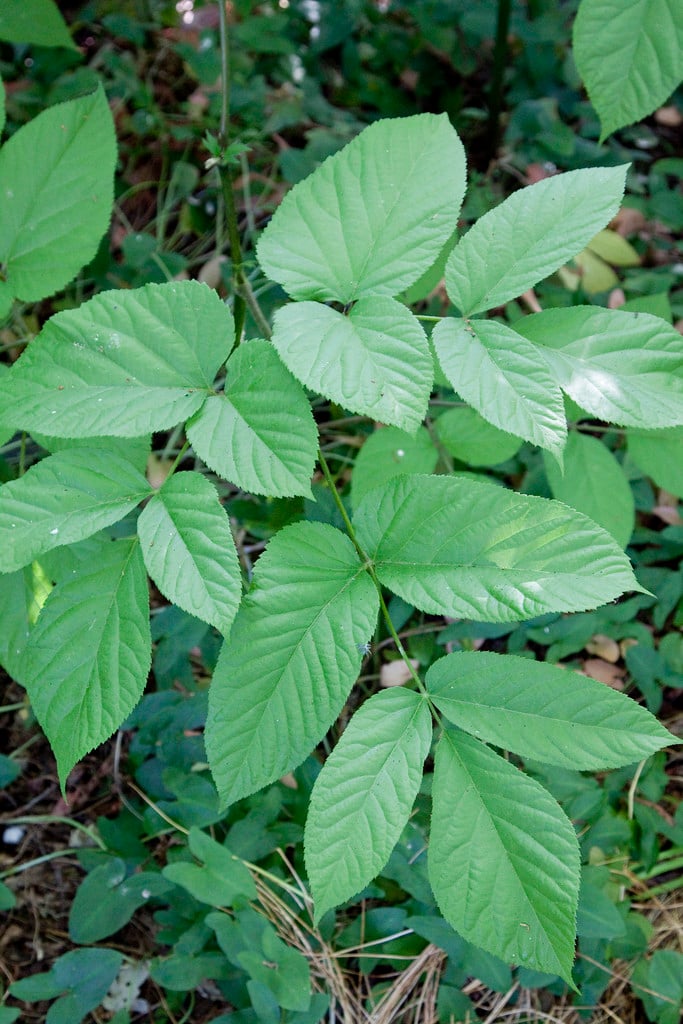
A statuesque, arching deciduous perennial, growing 1.5-3m tall. Leaves are large, pinnately divided, rich green turning crimson and purple in autumn. The open panicles of tiny creamy-white flowers can be up to 30cm long, and are followed by maroon-black berries

Position

Full sun, Partial shade

Soil Types

Clay, Loam

Max Height

2.5-4 metres

Max Spread

1.5-2.5 metres

Size

Time to Maturity
5–10 years
Max Spread
1.5-2.5 metres
Max Height
2.5-4 metres

Growing Conditions

Clay Loam
Moisture
Moist but well–drained
pH
Acid or Alkaline or Neutral

Position

Full sun Partial shade
Aspect
West–facing or East–facing or North–facing
Exposure
Sheltered
Hardiness
H5

Colour & Scent

Season Stem Flower Foliage Fruit
Spring
Summer
Autumn
Winter

Botanical Details

Family
Araliaceae
Native to GB/Ireland
No
Foliage
Deciduous
Habit
Bushy
Genus
Aralia can be deciduous trees, shrubs or perennials, with large, simple or pinnately compound leaves and tiny greenish-white flowers in large terminal clusters, followed by small black fruits
Name Status
Correct
Plant Range
Afghanistan to Himalaya, Tibet

How to Grow

Cultivation

Ideally plant in full to light shade in humus-rich, evenly-moist soil. When grown on drier soils the lower leaves are often lost. Mature plants do not transplant well as they have an extensive fleshy root system. They can take several years to settle in the new position

Propagation

Propagate by seed; sow seeds as soon as ripe and keep in cold frame, or sow indoors after four weeks of cold stratification. Take root cuttings in spring or autumn

Suggested planting locations and garden types

  • Architectural
  • Low Maintenance

Pruning

Cut down after frost

Pests

May be susceptible to aphids

Diseases

May be susceptible to honey fungus in gardens where it is present but insufficient data to determine degree of susceptibility