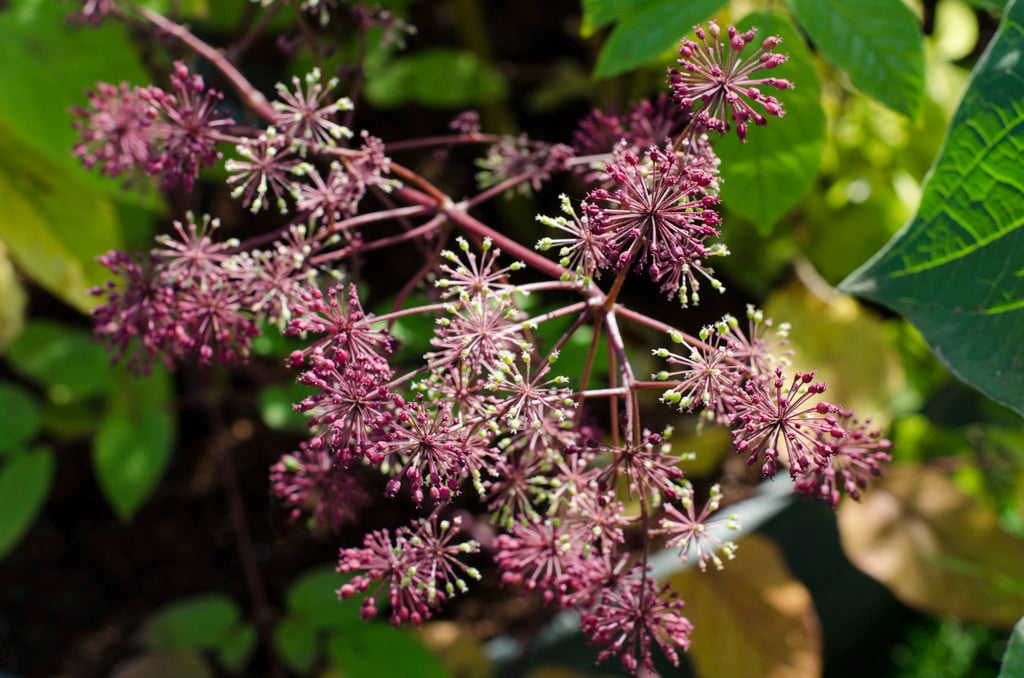
Aralia cordata Thunb.

RHS Plant Profile
Japanese spikenard
Japanese spikenard RHS

Other common names

udo

Synonyms

Aralia edulis
Aralia nudicaulis Blume
Aralia taiwaniana

Herbaceous Perennial

A spreading, suckering perennial, up to 2.5m tall and wide, with large, pinnate leaves that emerge golden-green in spring, maturing to bright green in summer. Small white flowers are borne in large umbels, up to 45cm across, in late summer and are followed by inedible purple fruits

Position

Full shade, Full sun, Partial shade

Soil Types

Clay, Loam, Sand

Max Height

1.5-2.5 metres

Max Spread

1.5-2.5 metres

Size

Time to Maturity
2–5 years
Max Spread
1.5-2.5 metres
Max Height
1.5-2.5 metres

Growing Conditions

Clay Loam Sand
Moisture
Moist but well–drained
pH
Acid or Neutral

Position

Full shade Full sun Partial shade
Aspect
North–facing or West–facing or East–facing or South–facing
Exposure
Sheltered
Hardiness
H7

Colour & Scent

Season Stem Flower Foliage Fruit
Spring
Summer
Autumn
Winter

Botanical Details

Family
Araliaceae
Native to GB/Ireland
No
Foliage
Deciduous
Habit
Suckering
Genus
Aralia can be deciduous trees, shrubs or perennials, with large, simple or pinnately compound leaves and tiny greenish-white flowers in large terminal clusters, followed by small black fruits
Name Status
Correct
Plant Range
China Japan

How to Grow

Cultivation

Grows best in a moist, neutral to acidic soil in partial shade but will tolerate full shade, or full sun if kept watered

Propagation

Propagates readily from suckers or propagate by seed

Suggested planting locations and garden types

  • Low Maintenance
  • Flower borders and beds

Pruning

No pruning required

Pests

May be susceptible to aphids

Diseases

May be susceptible to honey fungus in gardens where it is present but insufficient data to determine degree of susceptibility