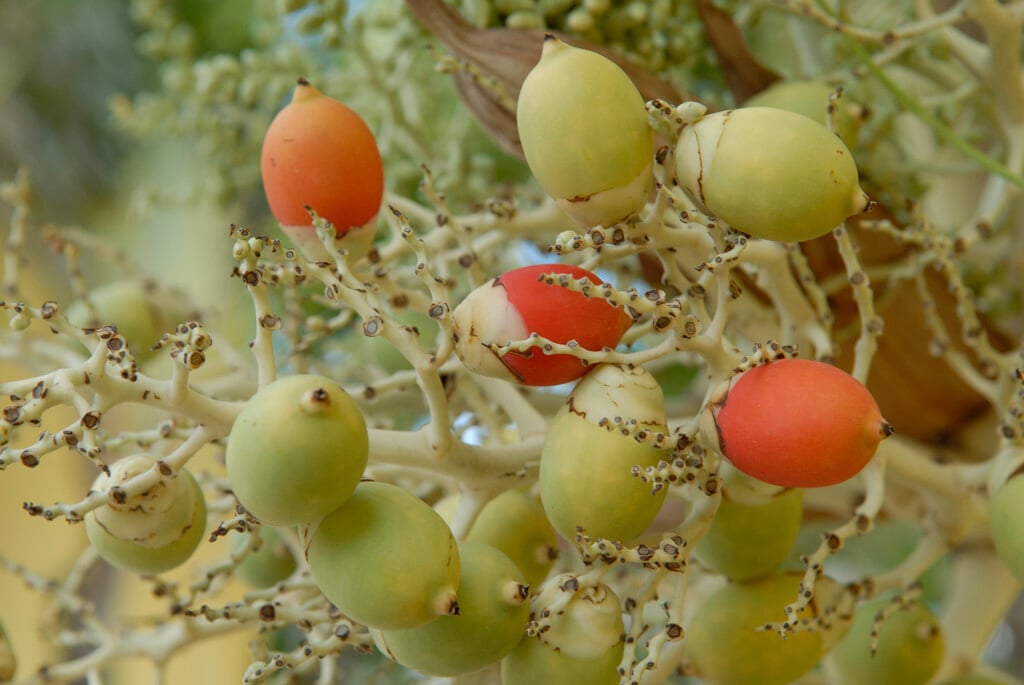
Adonidia merrillii

RHS Plant Profile
Manila palm
Manila palm visionspictures.com

Other common names

Merrill palm, Christmas palm

Synonyms

Veitchia merrillii

Palms

A tropical, ornamental palm with a neat habit, which can reach a height of up to 3.5m in its natural environment, much less if grown as a houseplant. The smooth grey trunk is slightly swollen at the base when mature, with cascading, pinnate, recurved foliage branching out from the top. Bunches of glossy, bright red fruits are produced around Christmas time. Ideal as a houseplant for small pots and containers to provide a lush, tropical feel

Position

Partial shade

Soil Types

Loam, Sand

Max Height

2.5-4 metres

Max Spread

1-1.5 metres

Size

Max Spread
1-1.5 metres
Max Height
2.5-4 metres

Growing Conditions

Loam Sand
Moisture
Moist but well–drained
pH
Acid or Alkaline or Neutral

Position

Partial shade
Aspect
East–facing or South–facing or West–facing
Exposure
Sheltered
Hardiness
H1A

Colour & Scent

Season Stem Flower Foliage Fruit
Spring
Summer
Autumn
Winter

Botanical Details

Family
Arecaceae
Native to GB/Ireland
No
Foliage
Evergreen
Habit
Columnar upright
Genus
Name Status
Correct
Plant Range
Borneo to Philippines

How to Grow

Cultivation

Grow in peat-free houseplant compost in bright, filtered light or partial shade and keep at an optimal temperature of 18-28°C or minimum of 15°C. Water regularly, allowing the top inch or so of soil to dry out between waterings. Dislikes being waterlogged. Mist regularly to provide humidity and provide a houseplant feed in spring and summer. See palm cultivation indoors for further advice

Propagation

Grow from seed only, soaking prior to planting. See sowing seed indoors for further advice

Suggested planting locations and garden types

  • Houseplants
  • Patio and container plants
  • Low Maintenance
  • Conservatory and greenhouse

Pruning

No pruning required - removed dead or dying leaves as required

Pests

Generally pest-free but may be susceptible to aphids, glasshouse red spidermite and mealybugs

Diseases

Generally disease-free