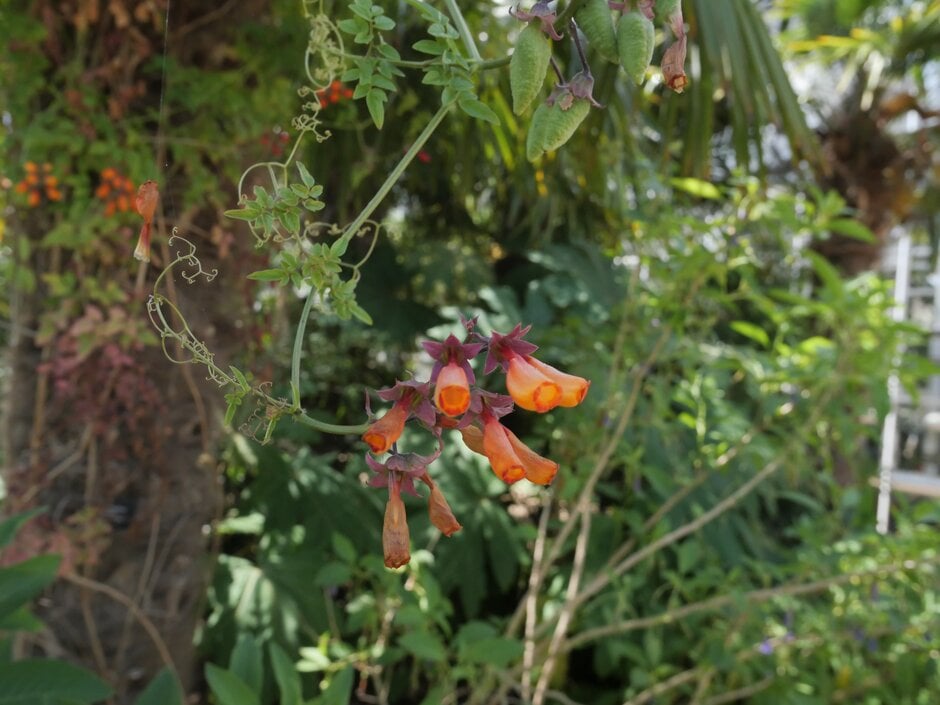
Eccremocarpus scaber orange-flowered
A slender, fast-growing, evergreen climber, often grown as an annual. Clinging by tendrils, it has pinnate leaves and clusters of tubular orangey-red flowers, 2.5cm long, from late spring to autumn

Size
Ultimate height
1.5–2.5 metresTime to ultimate height
1–2 yearsUltimate spread
1.5–2.5 metresGrowing conditions
Moisture
Well–drainedpH
Acid, Alkaline, NeutralColour & scent
| Stem | Flower | Foliage | Fruit | |
| Spring | Orange Red | Green | ||
|---|---|---|---|---|
| Summer | Orange Red | Green | ||
| Autumn | Orange Red | Green | ||
| Winter | Green |
Position
- Full sun
Aspect
South–facing or West–facing
Exposure
ShelteredDrought resistance
Yes Hardiness
H3Botanical details
- Family
- Bignoniaceae
- Native to GB / Ireland
- No
- Foliage
- Evergreen
- Habit
- Climbing
- Genus
Eccremocarpus are climbing perennials, evergreen or deciduous, with pinnately divided leaves and terminal racemes of tubular flowers
- Name status
Correct
- Plant range
- Chile
How to grow
Cultivation
Outdoors, grow in fertile, well-drained soil in full sun; provide support and shelter from frost. May overwinter in mild locations if given a deep, dry mulch. Under glass, grow in peat-free, loam-based potting compost with added grit, position in full light. When in growth, water freely and apply a balanced liquid feed monthly; water sparingly in winter
Propagation
Propagate by seed or or cuttings
Suggested planting locations and garden types
- City and courtyard gardens
- Cottage and informal garden
- Bedding
- Climber and wall shrubs
Pruning
See pruning group 11
Pests
May be susceptible to glasshouse red spider mite and glasshouse whitefly
Diseases
Generally disease-free
Get involved
The Royal Horticultural Society is the UK’s leading gardening charity. We aim to enrich everyone’s life through plants, and make the UK a greener and more beautiful place.