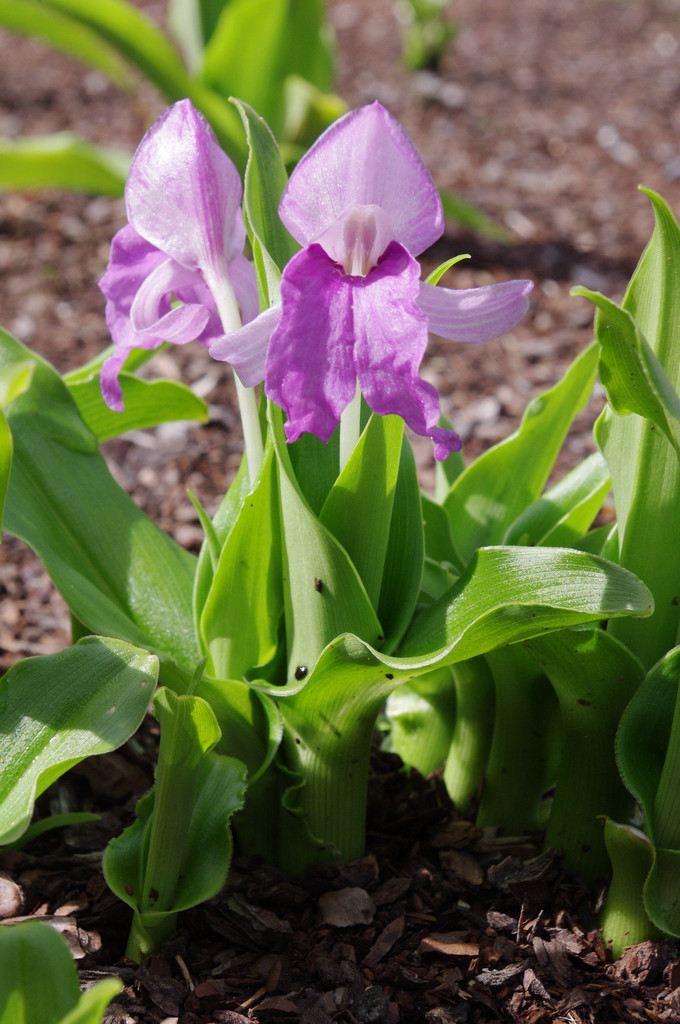
Roscoea alpina

RHS Plant Profile
alpine roscoea
alpine roscoea RHS

Synonyms

Roscoea longifolia

Herbaceous Perennial

A perennial growing to about 30cm tall, with broad, pointed, mid-green leaves clasping the stem. The flowers are lilac, or purple, or a mixture of the two, and appear in summer

Position

Partial shade

Soil Types

Clay, Loam

Max Height

0.1-0.5 metres

Max Spread

0.1-0.5 metres

Size

Time to Maturity
2–5 years
Max Spread
0.1-0.5 metres
Max Height
0.1-0.5 metres

Growing Conditions

Clay Loam
Moisture
Moist but well–drained
pH
Acid or Alkaline or Neutral

Position

Partial shade
Aspect
West–facing or North–facing or East–facing
Exposure
Sheltered
Hardiness
H5

Colour & Scent

Season Stem Flower Foliage Fruit
Spring
Summer
Autumn
Winter

Botanical Details

Family
Zingiberaceae
Native to GB/Ireland
No
Foliage
Deciduous
Habit
Columnar upright
Genus
Roscoea are tuberous perennials with arching, linear or lance-shaped leaves and showy orchid-like flowers in summer or autumn
Name Status
Correct
Plant Range
Kashmir, Nepal

How to Grow

Cultivation

Grow in humus-rich, moderately fertile, moist but well-drained soil. A cool, sheltered site in partial shade is ideal; in very cold areas apply a deep winter mulch. If growing from a tuber, plant 15cm deep

Propagation

Propagate by seed in pots in a cold frame as soon as seed is ripe. Propagate by division of tubers in spring when growth is starting

Suggested planting locations and garden types

  • Cottage and informal garden
  • Patio and container plants
  • Rock garden
  • Underplanting of roses and shrubs
  • Flower borders and beds

Pruning

Remove faded flowers, the rest of the plant will die down naturally

Pests

May be susceptible to vine weevils and slugs

Diseases

Generally disease-free but a virus may be a problem