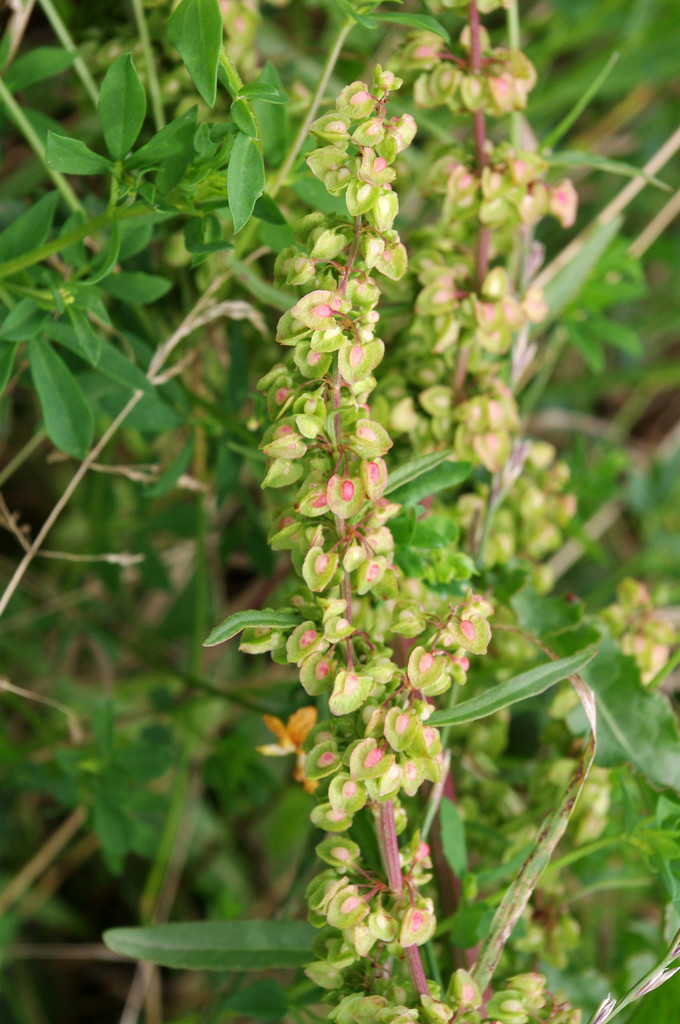
Rumex crispus

RHS Plant Profile
curled dock
curled dock RHS

Other common names

yellow dock

Herbaceous Perennial

A vigorous, tap-rooted perennial with pointed, wavy-edged leaves and tall, stiff flowering stems supporting a narrow column of very small, reddish green flowers, the stem and seeds turning rich brown in autumn and persisting into winter

Position

Full sun, Partial shade

Soil Types

Chalk, Clay, Loam, Sand

Max Height

0.5-1 metres

Max Spread

0.5-1 metres

Size

Time to Maturity
2–5 years
Max Spread
0.5-1 metres
Max Height
0.5-1 metres

Growing Conditions

Chalk Clay Loam Sand
Moisture
Moist but well–drained or Well–drained
pH
Acid or Alkaline or Neutral

Position

Full sun Partial shade
Aspect
East–facing or South–facing or North–facing or West–facing
Exposure
Exposed or Sheltered
Hardiness
H7

Colour & Scent

Season Stem Flower Foliage Fruit
Spring
Summer
Autumn
Winter

Botanical Details

Family
Polygonaceae
Native to GB/Ireland
Yes
Foliage
Deciduous
Habit
Columnar upright
Potentially harmful
Harmful if eaten in large amounts. Wear gloves and other protective equipment when handling Pets: Harmful if eaten in large amounts - for further information and contact numbers regarding pets, see the HTA guide to potentially harmful plants
Genus
Rumex can be annuals, biennials or perennials with mostly basal, simple leaves and erect panicles or racemes of small greenish or reddish flowers followed by reddish-brown, triangular fruits
Name Status
Correct

How to Grow

Cultivation

Grows naturally in most soils and found particularly in grassland, road verges, waste areas and cultivated ground. Can be a persistent agricultural weed, but is an important wildlife food source so can be tolerated in less-cultivated parts of the garden. Act promptly in areas where docks are not wanted as young plants are easy to remove. See docks for more information

Propagation

Spreads readily by seed; root sections also regrow

Suggested planting locations and garden types

  • Wildlife gardens
  • Wildflower meadow

Pruning

Cut back prior to seed setting to avoid self-seeding

Pests

May be susceptible to slugs and aphids

Diseases

Generally disease-free